In a rare public rebuke, North Korean leader Kim Jong Un has dismissed a vice premier, blaming him for significant failures during a major industrial modernisation project. The move comes as the regime prepares for an important ruling party congress, signalling a tightening of discipline among senior officials.
Public Criticism and Dismissal
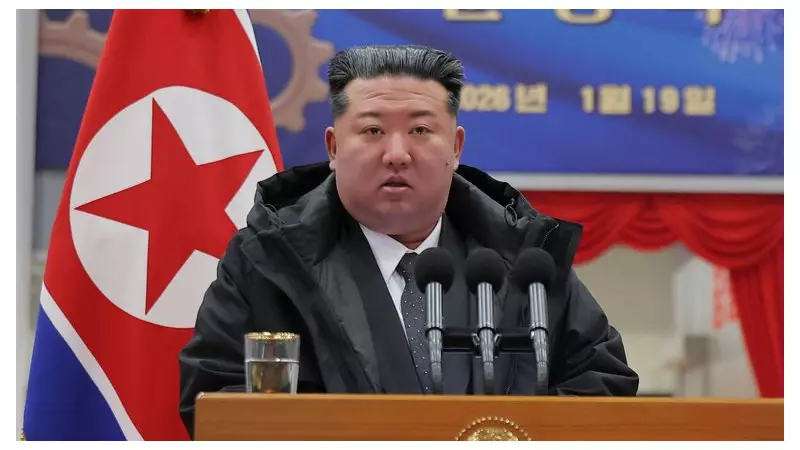
According to state media reports from the Korean Central News Agency (KCNA), Kim Jong Un removed Yang Sung Ho from his position as vice premier in charge of the machine-building industry. The dismissal was announced on Tuesday, following a speech by the North Korean leader marking the completion of the first phase of renovations at the Ryongsong Machine Complex in the country's northeast region.
Kim Jong Un accused the vice premier of causing what he described as "unnecessary man-made confusion" during the modernisation works. He stated that the project had suffered "not a small amount of economic loss" due to what he characterised as irresponsible and incompetent management by officials involved in the initiative.

Agricultural Metaphor for Failure
In his remarks, the North Korean leader employed vivid agricultural imagery to illustrate his criticism of the dismissed official. "To speak figuratively in simpler words, he was like a goat yoked to pull an ox cart," Kim Jong Un declared during his speech. "Could we expect a goat to pull a cart for an ox?"
He framed the dismissal as an "incidental mistake in our practice of personnel appointment," suggesting that Yang Sung Ho had been fundamentally mismatched to the responsibilities of his position. The public nature of this criticism represents an unusual approach for the typically secretive North Korean leadership.
Economic Context and Timing
The dismissal occurs at a politically significant moment, with North Korea preparing for its first Workers' Party congress in five years. South Korea's intelligence service has indicated that the gathering is likely to convene later in January or February, where new political and economic priorities are expected to be established.
Kim Jong Un emphasised that authorities had wasted "large amounts of funds and labour" on the Ryongsong project, with the munitions industry sector consequently bearing a heavier burden as a result of the mismanagement. This criticism aligns with the leader's recent efforts to address what he has previously termed defeatism, irresponsibility and passiveness within North Korea's economic sectors.
Broader Pattern of Discipline
While public rebukes of senior officials remain relatively uncommon in North Korea, Kim Jong Un has occasionally criticised or removed high-ranking figures in attempts to restore discipline or assign blame for economic difficulties and policy failures. The country's economy has faced substantial challenges in recent years, including significant setbacks during the COVID-19 pandemic.
According to South Korea's central bank, North Korea's economy grew by 3.7% in 2024. However, analysts suggest the country may struggle to achieve rapid economic expansion due to several structural factors:
- A highly centralised economic system
- Ongoing international sanctions
- Substantial resources directed toward weapons programmes
KCNA reported that Kim Jong Un had previously criticised Yang Sung Ho during a party meeting last year, indicating that the vice premier's performance had been under scrutiny for some time before his eventual dismissal. The public nature of this latest rebuke suggests an intentional demonstration of authority as the regime approaches its important political gathering.