In a surreal moment that captured the nation's political mood, a darts crowd at London's Alexandra Palace enthusiastically sang "Keir Starmer's a wanker" during a World Darts Championship match on New Year's Day. The incident, involving player Ryan Searle, underscores a broader cultural phenomenon where the Labour Prime Minister has become a focal point for widespread, amorphous public rage barely a year into his tenure.
A Unifying Refrain of Discontent
The chant has transcended its origins to become a standard soundtrack at venues across the United Kingdom. It is heard regularly at football grounds, nightclubs, and music festivals, wherever large groups gather. This crude slogan has evolved into a peculiar unifying force, bridging ideological divides. A recent far-right march in Bristol against Starmer's government was met by a left-wing counter-protest bearing the sign "We hate Keir Starmer more than you."
Public approval metrics paint a stark picture. Starmer's ratings began plummeting almost immediately after he entered Downing Street and have now dropped below 20%. A YouGov poll revealed he is more disliked by the British public than controversial international figures like Benjamin Netanyahu or Hamas. This positions him as arguably the most unpopular Prime Minister in modern history, achieving a level of national disdain that took previous leaders years to cultivate.

Decoding the 'Wanker' Critique
The specific choice of insult is revealing. Compared to the more brutal epithet directed at his predecessor, Boris Johnson, during the Partygate scandal, "wanker" carries a more dismissive, piteous tone. It implies not just degeneracy but a bashful cowardice and a lack of backbone. This perception stems from Starmer's technocratic, managerial style, which critics from both left and right deride as devoid of core ideology or moral mission.
For some, the rage is a performative act of hedonistic nihilism, often seen in sporting and far-right spaces. Stickers reading "MORE GEAR LESS KEIR" adorn public infrastructure, positioning Starmer as the antithesis of a rebellious, exciting figure—he is seen as sober, boring, and emotionally austere. For the progressive left, however, the disdain runs deeper. They see a leader emblematic of a broken Westminster model, obsessed with triangulation and "fixing things" rather than articulating a transformative vision.
The Price of Being a 'Small Target'
Analysts suggest that Starmer's political strategy, designed to make him the "smallest possible target," has backfired spectacularly. His cautious rhetoric, piecemeal reforms, and outreach to traditionally hostile media outlets like The Sun were intended to minimise conflict. Instead, they have broadcast a vulnerability that the public has instinctively seized upon. Voters have a genius for intuiting a politician's deepest fear and exploiting it, and Starmer's apparent desire to be inoffensive has made him a magnet for contempt.
This phenomenon raises alarms about the increasingly coarse and personal nature of political discourse. Yet, it also offers a strange, purifying clarity. In a nation fractured by profound disagreements, disdain for the Prime Minister has become a rare point of consensus. The six-syllable chant serves as a howl of discontent, a cathartic release valve for frustrations with a political system perceived as failing to address macroeconomic disenfranchisement, technological disruption, and social alienation.
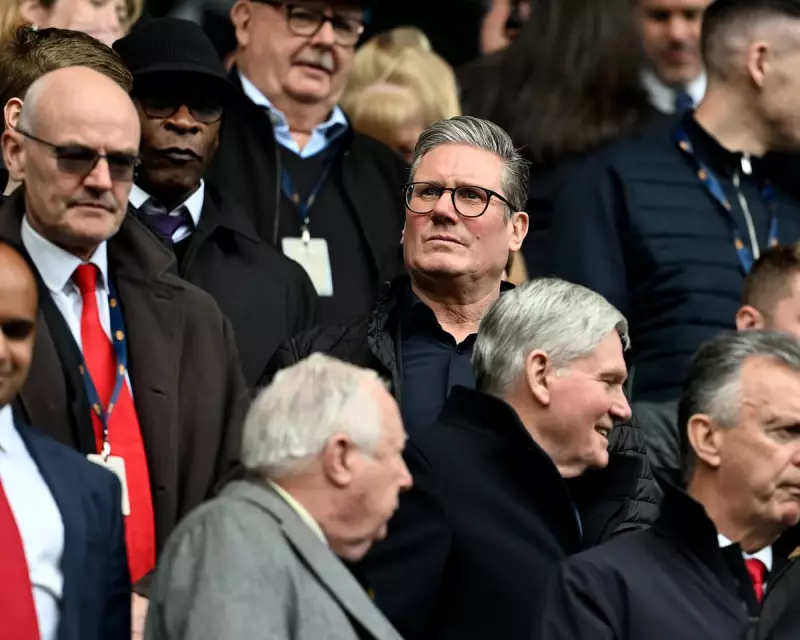
The enduring image of Keir Starmer watching a football match at Manchester City's Etihad Stadium on 31 March 2024 now seems a poignant precursor to his current reality. He entered office pledging to heal divisions, and in a bitterly ironic twist, he has succeeded—by becoming a universally accepted object of derision. Where this collective, directionless anger leads the country remains one of the defining questions of his premiership.