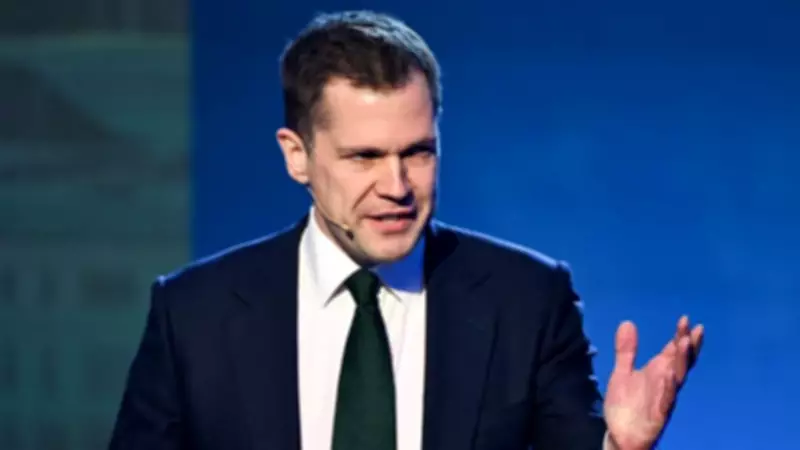
In his inaugural address as Reform UK's Treasury spokesperson, Robert Jenrick positioned himself as a "reassuring revolutionary," aiming to merge traditional fiscal conservatism with the party's disruptive agenda. Delivered in the City of London, the speech sought to project credibility to voters and markets alike, yet immediate policy contradictions and internal discord cast doubt on this ambitious balancing act.
Blending Old and New: Jenrick's Fiscal Vision
Jenrick, a former senior Conservative minister, emphasized reverence for established economic institutions, pledging to maintain the Office for Budget Responsibility and the independence of the Bank of England. This move is designed to soothe financial markets, which reacted negatively to Liz Truss's mini-budget during her brief premiership. However, he simultaneously championed Reform UK's radical proposals, including repealing the Equality Act, fast-tracking major infrastructure projects like Heathrow's third runway, and implementing aggressive welfare cuts.
Critics question whether such a fusion is feasible, noting that Truss's own radical economic agenda led to market turmoil. Jenrick distanced himself from her legacy, despite serving in her government, by vowing never to play "fast and loose" with public finances and promising a crackdown on welfare spending.

Internal Disagreements and Policy U-Turns
Reform UK's credibility faces early challenges, as evidenced by Jenrick's admission of a significant U-turn on tax and spending commitments. On his first day in the role, he acknowledged that party leader Nigel Farage had "drawn a line under" previous pledges totaling £90 billion. This shift highlights the party's struggle to present a unified front.
Further inconsistencies emerged regarding the two-child benefit cap. Initially, Reform UK proposed scrapping the cap to encourage larger families, then modified the stance to abolish it only for working British citizens, and has now reinstated it universally. This rapid evolution undermines the party's claim to fiscal responsibility.
Divergent Views on Key Policies
Disagreements extend to other critical areas, such as the pensions triple lock. Jenrick asserted his longstanding support for protecting pensioners, promising an upcoming announcement. However, moments later, Farage told journalists that the triple lock remains "open for debate," emphasizing that all policies are subject to discussion within the party.
As an opposition group, Reform UK currently enjoys some leeway in refining its platform. Yet, if it aspires to be seen as a credible alternative, greater consistency and internal cohesion are essential. The party must ensure all members are "singing from the same hymn sheet" to avoid the pitfalls that have plagued rival political entities.
Jenrick's attempt to bridge conservative economic stewardship with revolutionary reform is a high-stakes gamble. Whether he can truly embody the "reassuring revolutionary" persona while navigating internal divisions will be a key test for Reform UK's electoral prospects and overall credibility in the political landscape.