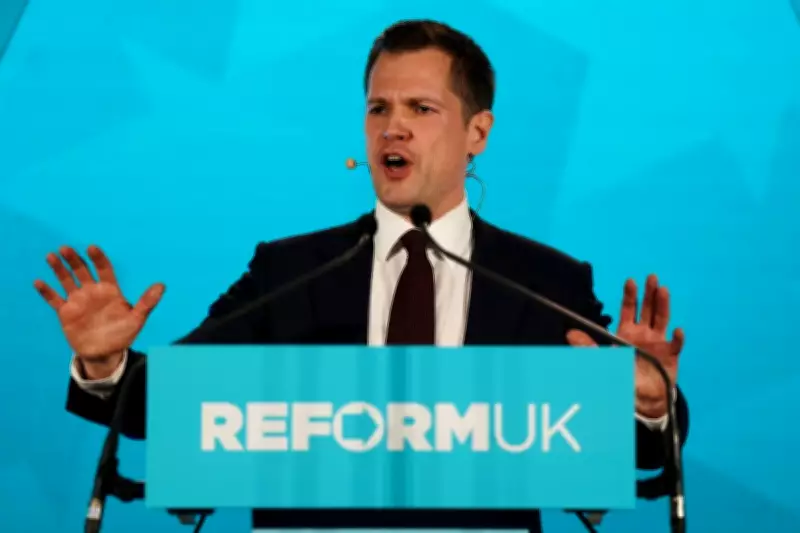
Robert Jenrick, the newly appointed Treasury spokesman for Reform UK, is set to deliver a sharp critique of the Bank of England in his first major public address in this role. The Newark MP will accuse the central bank of having taken its eye off the ball on inflation while also targeting what he describes as excessive quantitative easing policies.
Commitment to Independence with Major Reforms
Jenrick is expected to reaffirm Reform's commitment to the independence of the Bank of England but will pledge to strip the institution of distractions that have been loaded onto it over recent years. The party's spokesman emphasized that Reform will demand the Bank become a more open institution with better private sector representation on the Monetary Policy Committee.
This criticism comes after Reform leader Nigel Farage and his top team have vocally pushed for mammoth reforms to the central bank throughout the past year. Farage has previously lashed out at what he called dinosaur bureaucrats at the Bank regarding their views on stablecoins and other financial matters.

Quantitative Easing Under Fire
Jenrick's speech will specifically target the Bank's quantitative easing program, which involved creating billions of pounds to purchase UK bonds from commercial lenders. This policy was designed to help keep interest rates low and support the economy during various crises including the 2008 financial crisis, the eurozone debt crisis, the Brexit referendum, and the pandemic.
The Bank has since initiated a quantitative tightening program where it sells these bonds for less than it paid for them. To finance the initial bond purchases, the Bank of England created new central bank reserves for commercial banks, on which it paid interest at its official rate.
Reform has criticized the substantial profits generated by major banks following this measure, particularly after interest rates soared. Farage has argued that reclaiming these profits would not constitute a tax but rather would mean banks were not going to get free money anymore.
Support for Budget Watchdog with Reforms
In his City debut as Reform's shadow chancellor, Jenrick is also expected to express support for the Office for Budget Responsibility while calling for its reform. He will state that the party is happy to have its homework marked by the OBR but believes the institution requires significant changes.
The OBR is far from perfect, Jenrick will acknowledge, but he will emphasize that the impetus for its creation was a desire to instill fiscal discipline something Reform wholeheartedly endorses. Rather than abolishing the OBR, Reform plans to reform it by breaking up what Jenrick describes as a cosy consensus and ensuring diversity of opinion within the organization.
Jenrick will outline plans to run competitions for superforecasters to join the OBR and pay competitive salaries to those who most accurately model the impact of Treasury decisions. This approach represents part of Reform's broader strategy to bring fresh perspectives to economic forecasting and policy evaluation.
Opposition to Labour's Economic Plans
After being unveiled as the party's shadow chancellor during a Westminster press conference on Tuesday, Jenrick thanked Farage for allowing him to oppose what he called the wrecking ball that is Rachel Reeves, Labour's shadow chancellor. Jenrick pledged to put together the most comprehensive plan to fix the UK economy, positioning Reform as a serious alternative to both Conservative and Labour economic policies.
Jenrick clinched the Treasury brief after speculation that party veterans Richard Tice and Zia Yusuf had been interested in the position. His appointment signals Reform's intention to present a credible economic alternative as the party continues to build its policy platform and public profile ahead of future elections.