
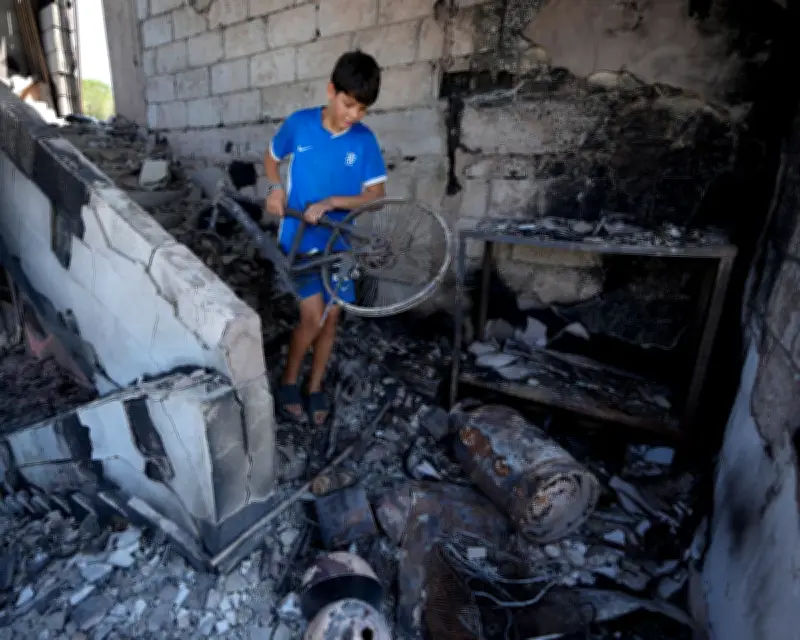
An Israeli airstrike in southern Lebanon killed one person and injured 11 others on Wednesday, according to the Lebanese health ministry, in one of the deadliest bombings since the start of the June ceasefire. The strike hit the town of Tebnine, targeting a cemetery, and also bombed the town of al-Mansouri, forcing families to flee.
Displacement order issued for first time since ceasefire
The Israeli military issued a displacement order about 30 minutes before the strike, saying it was destroying Hezbollah's infrastructure in response to the group's violation of the ceasefire. This marked the first time Israel has issued such an order since the June ceasefire began. During the recent round of fighting that started on 2 March, displacement orders were a near daily occurrence, displacing more than 1 million people in Lebanon.
On the same day, two Israeli troops were killed and seven wounded in an explosion in south Lebanon, with the origin unknown. In recent weeks, Israeli troops have been wounded by booby-trapped vehicles and mines laid by Hezbollah in the area.
Continued occupation and bombings
Since the June ceasefire, Israel has occupied swathes of Lebanon as part of a so-called security zone, continuing to bomb parts of the area and kill people who come near. This approach mirrors Israel's strategy in Gaza, where it occupies more than 60% of the strip under its 'yellow line' and carries out bombings. Israeli Prime Minister Benjamin Netanyahu earlier this year ordered the army to seize control of 70% of the Gaza strip.
In Gaza, more than 1,200 people have been killed since the beginning of the October ceasefire, with at least 26 Palestinians killed by Israeli strikes over the past weekend. In Lebanon, Israel has continued mass demolitions in occupied areas, including a blast last week that used 700 tons of explosives around Beaufort Castle. Human Rights Watch has said the indiscriminate nature of the explosives could constitute the war crime of wanton destruction.
Negotiations continue
Talks between the Lebanese government and Israel for a more permanent peace are ongoing, with the two sides meeting in Rome on Tuesday. This was the seventh round of talks, expected to focus on the Ali Taher area in south Lebanon, where Israeli troops have been conducting detonations. The Lebanese government seeks Israel's withdrawal, while Israel wants the disarmament of Hezbollah.
So far, negotiations have resulted in three 'pilot zones' in south Lebanon where the Lebanese army has assumed control, testing whether it can prevent Hezbollah from entering and dismantle the group's infrastructure. Progress is slow, and the Lebanese government has asked for a quicker Israeli withdrawal, which Israel is unlikely to agree to.
The fighting this year started after Hezbollah launched rockets at Israel on 2 March in retaliation for the killing of Iran's late supreme leader, Ali Khamenei. Israel then began a bombing campaign and invaded south Lebanon. Since then, Israel has killed 4,321 people in Lebanon, while at least 40 Israelis, 38 of them troops, have been killed by Hezbollah.




