
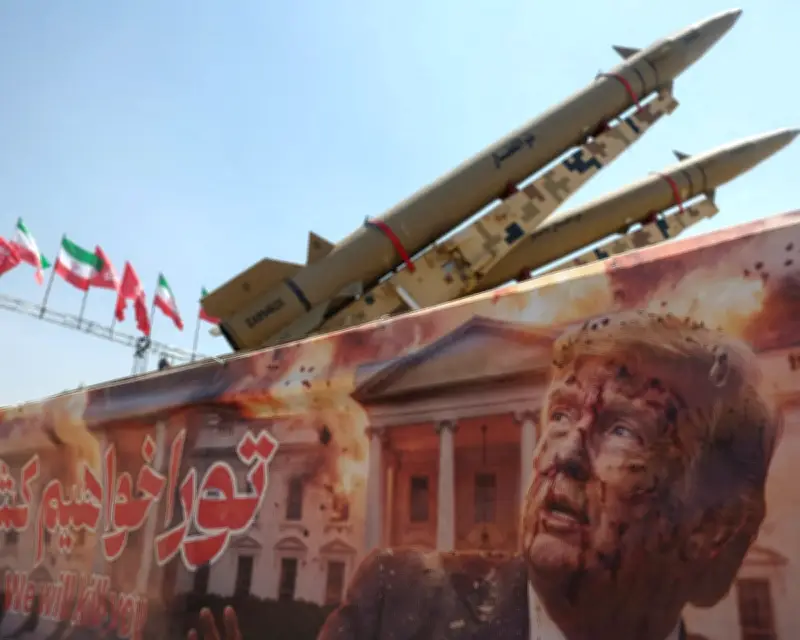
Iran, embroiled in an escalating five-month war with the US, continues to grapple with internal crises ranging from public executions and rising living costs to allegations of state broadcaster bias and destruction of café pavements. Very little in Iran occurs uncontested, but the threat of a long diplomatic deadlock, fueled by mutual distrust, is growing as the war broadens to include Yemen, Iraq, and Egypt. Advocates of escalation are winning in Iran, making a convergence of internal and external conflicts more likely.
Government fears social discontent over economy
President Masoud Pezeshkian frequently warns that conditions leading to bloody protests in January remain. At a recent supreme judicial council meeting, he argued: “Iran is engaged in a full-scale war. Today’s war is not just a war of missiles; the enemy has come to the conclusion that it cannot force the Iranian nation to surrender through military attacks. The most important battlefield today is the economy and livelihood of the people. If economic pressures cause social discontent to form and this discontent spreads, the enormous social capital that the people have created in support of the system will be lost.”
Dissent exists in the form of despair, as described by Tehran human rights activist Golshan Fathi: “The same sick cycle repeats … morning … the call to prayer, news of an execution … noon with power cuts, afternoon the water stops … dusk, the anxiety of war and renewed attacks on cities, and at midnight, the earth trembles. … Every day we don’t live, we just practise enduring.”
Political protest and public executions
Dissent also manifests as political protest, including opposition to public executions. Critics question why trials are held in secret courts while punishments occur in public gallows. The Nation’s Union party warned that ignoring protests over executions could have “devastating consequences” and urged academics and religious scholars to intervene.
Azar Mansouri, a reformist ally of Pezeshkian, warned that a vocal group portrays negotiated agreements with the US as retreat. “War is not just a confrontation between military forces and armies. It is the destruction of the economy, the erosion of social capital, the spread of despair, the emigration of elites, the increase in poverty and the loss of opportunities for development,” she said.
Opposition to war and hardliner influence
A “we do not want war” statement signed by 268 political activists called for a public vote, believing the majority opposes war. Another letter from 1,000 activists linked to former president Mohammad Khatami warned that “the contemporary experience of Iran is that war has no winners.” These initiatives reflect fear that diplomats are losing and Iran is being edged into a forever war that benefits Israel.
Hardliners oppose negotiations with America, fueled by Donald Trump’s erratic behavior, and voice their stance through street rallies and unofficial billboards. Their sway lies in deep-state support within the military and the office of Supreme Leader Mojtaba Khamenei, whose absence from public view complicates resolving the negotiation controversy.
Café closures and broadcaster bias
The closure of cafes or destruction of sidewalks around them is seen as an attempt to shape debate. Hardliner Saeed Jalili described cafes as anti-Islamic “third spaces” that oppose Islam’s philosophy of marriage. Allegations of broadcaster bias have also emerged, with the conservative newspaper Jomhouri-e Eslami complaining about “an addiction to violating the dignity of one’s political opponents.” The national broadcaster IRIB is seen as a platform for hardliners, and its censorship of President Pezeshkian and chief negotiator Mohammad Bagher Ghalibaf has sparked government criticism.
The government stated: “Censorship of the president’s speech, unilateral destruction of the government’s performance, and efforts to destroy the memorandum of understanding … are no longer media criticism; they are a stand against national cohesion, empathy, and unity.” Calls for an overhaul of IRIB’s accountability are growing, especially since less than 12% of the country watches it, leaving audiences to turn to hostile foreign satellite channels.
Economic toll of war
Unprecedented economic pressure accompanies this tension. Majid-Reza Hariri, head of the Iran-China chamber of commerce, warned that food rationing might become necessary within six months. Gholamhossein Mohammadi, deputy minister of labour, reported that more than a million jobs have been lost due to the war. Year-on-year food inflation reached 134% in July, with overall inflation at 84%, forcing Iranians to change their diets. The real value of the minimum wage has plummeted.
Azadeh Mokhtari wrote: “Society has reached a point where ‘I don’t have the patience’ and ‘I don’t have the energy’ have become everyday phrases. No one asks: ‘How are you?’ any more because everyone knows the answer.” The war’s toll extends to tourism, with all 400 hotels on Kish Island shut after US bombing. As many as 30,000 Iranians visited medical centres during the wars in 2025 and 2026. Civilian facilities like Bushehr meteorological centre and airport have been destroyed, and Chabahar maritime watchtower is completely destroyed, with 12 bridges and two tunnel openings damaged—repairs that will take decades.
Corruption scandal involving trusts
A bombshell revelation on national television by Zabihullah Khodayian, head of the General Inspection Organisation, exposed foreign-exchange corruption among secretive government-sponsored trusts set up to evade US sanctions. One trust given $200m had not returned the money and had left the country. A further 229 individuals owed the state a total of €23.5bn, and cases are being opened against nearly 50 individuals. The lack of transparency raises the possibility of a major scandal involving Iran’s elite, undermining talk of social cohesion.




