A Front-Row Seat to History: Witnessing Iran's 1979 Revolution Unfold
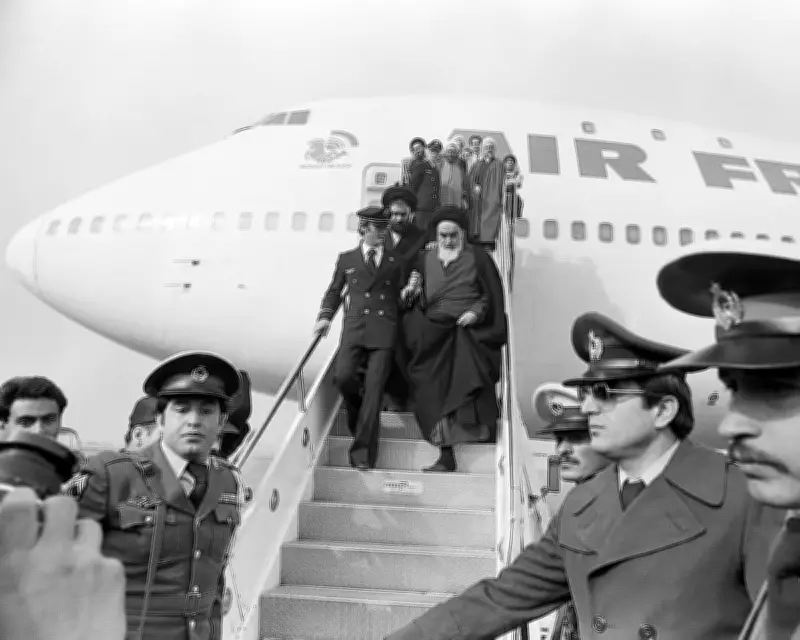
As Iran grapples with ongoing turmoil, the echoes of its 1979 revolution resonate powerfully, offering stark lessons about foreign intervention and the unpredictable nature of political upheaval. Paul Taylor, a journalist who had a ringside seat to those transformative events, shares his firsthand account, revealing how the fall of the US-backed Pahlavi dynasty and the rise of an Islamic republic under Ayatollah Ruhollah Khomeini unfolded with a mix of idealism and brutal reality.
An Unprecedented Interview with a Revolutionary Leader
In 1978, as a young Reuters correspondent in Paris, Taylor befriended exiled Iranian revolutionaries, leading to a historic opportunity. Through these connections, he became the first foreign journalist to interview Ayatollah Khomeini shortly after the cleric arrived in France from exile in Iraq. The meeting took place in a modest bungalow in Neauphle-le-Château, where Khomeini, speaking through an interpreter, declared there would be no compromise with the shah and that Iran would become an Islamic republic, defiantly stating that the US could not stop it.
When Taylor asked about the treatment of foreign oil companies, Khomeini's response—"We will cut off the hand of the foreigner"—was later softened by aides as a metaphor, but it hinted at the uncompromising stance to come. At the time, many reporters, including Taylor, were influenced by urbane exiles who portrayed Khomeini as a father figure for a progressive movement against a tyrannical regime, obscuring the more radical forces at play.

The Revolution's Complex Aftermath and Lasting Structures
Following the revolution, Taylor was in Tehran from November 1979 to July 1980, covering critical events such as the seizure of the US embassy, which radicalized the movement and pushed liberals out of power. He witnessed the first presidential election, won by his former interpreter Abolhassan Banisadr, and the failed US raid to rescue hostages. Khomeini's strategic masterstroke was the creation of parallel security forces, including the Revolutionary Guards and Basij militia, which prevented military coups and consolidated clerical power.
Revolutionary tribunals led by mullahs operated alongside ordinary courts, while elected institutions like the president and parliament coexisted with the supreme leader's office and a guardian council of hardline clerics, who held real authority. This dual power structure, reminiscent of Lenin's description in revolutionary Russia, has persisted for 47 years, with the Shia clerics emerging as the core revolutionaries due to their network of mosques, charismatic leadership, and oil-funded patronage.
Foreign Wars and Internal Repression: A Familiar Pattern
Like the French and Russian revolutions, Iran faced foreign aggression aimed at preventing the spread of its ideology. The Iran-Iraq war, launched with western backing, rallied national support behind the revolution but also enabled a reign of terror domestically. Mass arrests, kangaroo-court trials, and summary executions targeted so-called "taghoutis" (devils), similar to the class-based persecution in earlier revolutions. Taylor reflects on whether journalists should have anticipated the erosion of women's rights and imposition of strict morality codes sooner, noting that initial optimism was fueled by promises of social justice and increased opportunities for women in education.
However, the triumph of repressive fundamentalism was not inevitable in early 1979. Many Iranians, including communist intellectuals, voluntarily adopted conservative dress to show solidarity, only to see universities purged and freedoms curtailed as Islamist forces gained control. Taylor's subsequent visits during the reformist presidency of Mohammad Khatami (1997-2005) highlighted attempts at liberalization that were ultimately blocked by hardliners like Ali Khamenei, Khomeini's successor.

Lessons from History: The Perils of Foreign Meddling
Taylor warns against repeating past errors, such as the 1953 US-UK coup that reinstated the shah after the nationalization of oil, or Khomeini's rise fueled by anti-US sentiment. He expresses concern that current foreign interference, exemplified by the assassination of Khamenei and support for regime change, may not lead to liberation but rather perpetuate cycles of violence and instability. The rapid succession of Khamenei's hardline son as supreme leader offers little hope for reform, and Taylor argues that external powers often seek to weaken Iran rather than foster genuine prosperity and freedom.
In conclusion, Taylor's experience underscores that history often repeats itself in grotesque ways. Foreign meddling has consistently shaped Iran's destiny, from British trade monopolies in the 19th century to modern conflicts, often with devastating consequences. As the world watches Iran today, the lessons of 1979 remind us that simplistic interventions can backfire, leaving a nation trapped in a cycle of repression and external manipulation, deserving better but likely facing worse outcomes.