Hungary's Historic Election Tests Orbán's 16-Year Rule
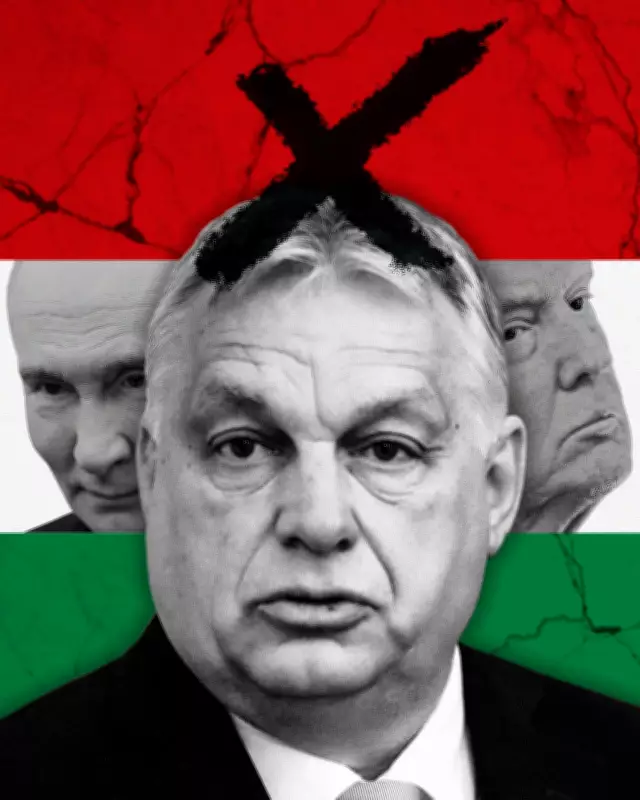
Hungarians head to the polls in what analysts describe as the most consequential election since the country's democratic transition in 1990. Prime Minister Viktor Orbán, who has transformed Hungary into what critics call a "petri dish for illiberalism," faces the real possibility of being ousted after sixteen consecutive years in power.
The Zebra Scandal: Symbol of Elite Corruption
The campaign has been dominated by corruption allegations against Orbán's inner circle, most notably symbolized by zebras spotted on properties connected to the prime minister's family and associates. Drone footage revealed a sprawling northern Hungarian estate belonging to Orbán's father, featuring manicured gardens, swimming pools, and underground garages. Nearby, zebras from a property owned by Lőrinc Mészáros—Hungary's richest man and Orbán's closest friend—were captured darting across the countryside.
"They became a symbol of the limitless corruption of the whole system," declared Ákos Hadházy, an independent Hungarian MP who organized protest "safari tours" to the area last autumn. The zebra imagery has proliferated across Hungary, appearing on plush toys at demonstrations, in social media posts, and even plastered over government billboards by activists.
Opposition Surge and Democratic Erosion
Most polls indicate Orbán's Fidesz party could lose power, potentially rattling global far-right movements and fundamentally altering Hungary's antagonistic relationship with the European Union. However, opposition supporters express concerns that polls might underestimate Fidesz support or that Orbán could retain power through institutional manipulation even if losing the popular vote.
"Hungary stands at a historic crossroads once again," stated Anita Orbán of the opposition Tisza party, which has surged in polls and leads most surveys. "This moment carries powerful echoes of the past." The election coincides precisely with the twenty-third anniversary of Hungary's overwhelming vote to join the European Union.
Zoltán Kész, a former Fidesz member, described Orbán's tenure as a "coup in slow motion" that replaced tanks with lawyers and clientelism. The government systematically weakened checks and balances, rewriting election laws for partisan advantage, placing loyalists in control of approximately eighty percent of national media, and restructuring the judiciary.
"We've come to the point in Hungary when we obviously can no longer talk about a real democracy," Kész asserted. "It's really a state capture that has been going on in Hungary with all the institutions that are supposedly independent."
Péter Magyar: The Insider Turned Opposition Leader
The opposition's momentum has been fueled by Péter Magyar, a former Fidesz insider who began publicly accusing Orbán's party of siphoning state funds while presenting itself as Hungary's defender. Magyar's hastily formed party has climbed to the top of polls as corruption became voters' primary concern.
Magyar faces a formidable government campaign featuring AI-generated billboards portraying him as a danger to Hungary and a stooge of both the European Union and Ukrainian President Volodymyr Zelenskyy. Orbán has framed the election around national security, positioning himself as the only leader capable of keeping Hungary out of the Ukraine conflict, while Magyar focuses on domestic issues like corruption crackdowns and public service improvements.
Global Far-Right Connections and International Implications
The election's international significance was highlighted in a January video featuring nearly a dozen right-wing leaders—including Italy's Giorgia Meloni and Matteo Salvini, France's Marine Le Pen, and Germany's Alice Weidel of the Alternative für Deutschland—endorsing Orbán and praising his political model. "Europe needs Viktor Orbán," Weidel declared in the campaign material.
This week, U.S. Vice President JD Vance campaigned alongside Orbán in Budapest, echoing Fidesz's rhetoric against the European Union and Ukraine. Former President Donald Trump publicly posted support stating, "I AM WITH HIM ALL THE WAY!"
"He is the absolute poster boy of this whole movement of the illiberal, anti-European, extreme right," said Daniel Freund, a German Green MEP monitoring democratic backsliding in Hungary. "He is the icon and the example that others follow."
Budapest has evolved into a hub for think tanks and conferences promoting Hungary as what one local journalist termed a "Christian conservative Disneyland" where the global far right feels welcome. This reputation has grown despite Hungary's declining press freedom rankings, accusations of democratic backsliding, and status as the European Union's most corrupt country.
Voter Anxiety and Uncertain Outcomes
Despite opposition momentum, uncertainty permeates the campaign. Undecided voters, Hungarians abroad, and allegations of vote-buying and gerrymandering could still sway results. In Kecskemét, fifty miles south of Budapest, many residents expressed reservations about Magyar and fears about Hungary being drawn into the Ukraine conflict.
"There's a level of palpable anxiety among people," observed Katalin, an eighty-one-year-old resident. "I don't think that the Ukrainian people want a war, but their leader might." Another elderly voter, Zsuzsi, trembled while expressing concerns about migration and European Union influence should the opposition prevail.
Regardless of Sunday's outcome, analysts agree the election marks the beginning of a broader reckoning with Hungary's illiberal experiment. "Under normal circumstances, you lose an election, so what?" Kész reflected. "You go in opposition, you come back in four years. That is a normal democracy, but this is not normal."
Fidesz has spent sixteen years stacking state institutions, media, and the judiciary with loyalists, suggesting Orbán's political system could endure even without him. "Even under ideal circumstances, change will not happen overnight," Kész concluded. "If you look at the state of the education system, healthcare, courts, public services—these need to be built up again from scratch. There's a lot of work to be done by a new government."