
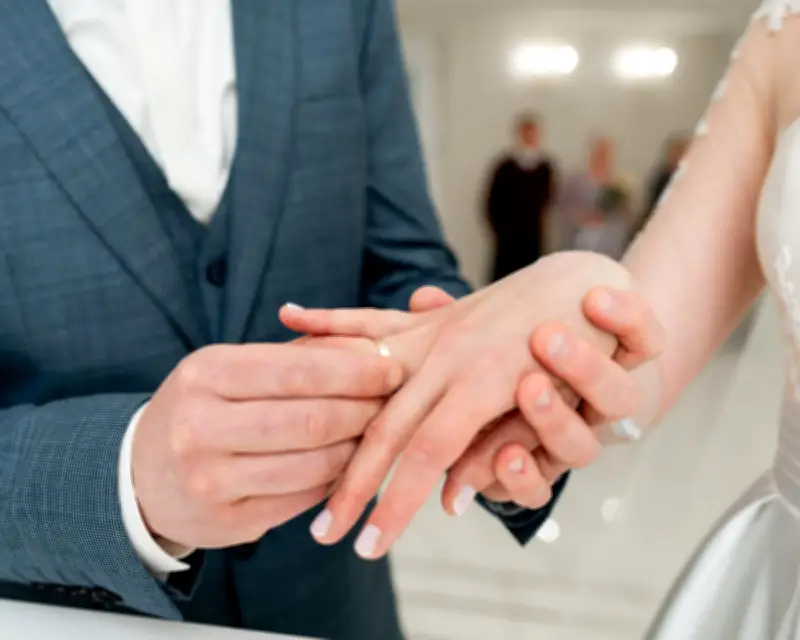
Humanist weddings are deeply personal and meaningful, not casual compromises, according to Mair Garland, a humanist celebrant responding to a recent article by Rachel Connolly. In her piece, Connolly expressed discomfort at the idea of a humanist service led by someone in skinny jeans and a black T-shirt, but Garland, who admits to owning several pairs of skinny jeans, clarifies that such attire is not typical for celebrants, though she remains open to couples' dress codes.
Humanist Ceremonies: A Misunderstood Tradition
Garland, writing in a letter to the Guardian, challenges Connolly's perception that humanist ceremonies lack the formality of traditional religious weddings. 'On the contrary,' she writes, 'humanist celebrants are knowledgeable, passionate and unashamedly geeky about creating meaningful non-religious ceremonies that are deeply personal to couples and their families.'
The letter comes amid growing interest in non-religious ceremonies, particularly with the forthcoming legalisation of humanist marriage ceremonies in England and Wales. Currently, humanist weddings are legally recognised in Scotland, Northern Ireland, and the Channel Islands, but couples in England and Wales must have a separate civil ceremony to make their marriage legal. This is set to change, with the Law Commission recommending legal recognition for humanist and other belief-based ceremonies.
The Art of Crafting a Personal Ceremony
Humanist celebrants like Garland focus on tailoring each ceremony to the couple's story, values, and preferences. Unlike religious ceremonies, which follow a set liturgy, humanist ceremonies can include readings, music, and rituals that reflect the couple's unique bond. 'A non-religious ceremony needn't be unceremonious or casual,' Garland emphasises, inviting Connolly to attend a humanist wedding to see 'what the fuss is about.'
The letter highlights a broader debate about what makes a good wedding ceremony in modern times. Connolly's original article, published on 29 July, argued for 'flirting and chaos' over elaborate affairs, but Garland counters that humanist ceremonies offer a meaningful alternative that is neither chaotic nor lacking in ceremony.
Impact and Future of Humanist Weddings
The legal recognition of humanist marriages is expected to increase their popularity. According to Humanists UK, around 4,000 humanist weddings took place in Scotland in 2023, and the organisation has long campaigned for legal recognition in England and Wales. Once legalised, couples will be able to have a single, legally binding ceremony that is both personal and meaningful, without the need for a separate civil partnership.
Garland's letter underscores the professional and dedicated nature of humanist celebrants, who undergo rigorous training and accreditation. 'We are not just officiants; we are storytellers, ritual designers, and support systems for couples navigating one of life's most significant moments,' she explains.
As the conversation around ceremonies evolves, humanist celebrants like Garland are at the forefront, offering a thoughtful, personalised approach that resonates with many modern couples. The forthcoming legal changes will only expand their reach, allowing more people to celebrate their love in a way that truly reflects who they are.




