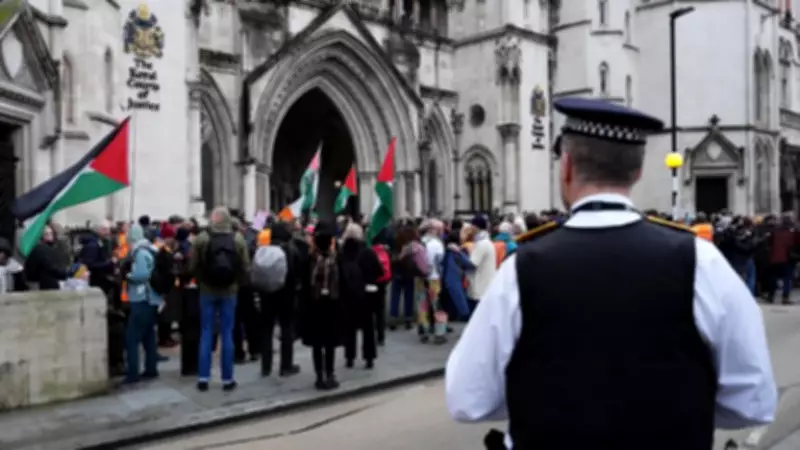
High Court Strikes Down Government's Terror Ban on Palestine Action
In a landmark legal decision, the High Court has overturned the UK government's designation of Palestine Action as a terrorist organisation, declaring the ban a disproportionate interference with fundamental human rights. The ruling, delivered on Friday 13 February 2026, specifically cited violations of the freedom of expression and freedom of assembly under the Human Rights Act, marking a significant victory for civil liberties advocates.
Legal Challenge and Court Findings
Huda Ammori, co-founder of Palestine Action, launched the legal challenge after former Home Secretary Yvette Cooper's decision to proscribe the group, which took effect in July last year. The ban had placed Palestine Action on the same legal footing as extremist groups like ISIS and al Qaeda, making membership or support punishable by up to 14 years in prison. Even minor acts, such as wearing a T-shirt or carrying a sign with the group's name, could result in a six-month sentence.
In her ruling, Judge Dame Victoria Sharp acknowledged that Palestine Action "promotes its political cause through criminality," referencing actions by members that included breaking into RAF Brize Norton and spray-painting aircraft. However, she concluded that the blanket ban was disproportionate, as it unduly restricted rights protected by the Human Rights Act. The court found that only a small number of members had engaged in acts amounting to terrorism, insufficient to justify the sweeping prohibition.

Government Response and Appeal Plans
Home Secretary Shabana Mahmood expressed disappointment with the ruling, stating she disagrees with the court's assessment and intends to appeal the decision to the Court of Appeal. In a statement, Mahmood defended the government's "rigorous and evidence-based decision-making process," noting that the court had acknowledged Palestine Action's involvement in terrorist acts and promotion of violence. She emphasized that the ban still permits peaceful protests in support of Palestinians, aiming to balance security concerns with civil liberties.
Despite the High Court's ruling, Palestine Action will remain outlawed for now, as the government pursues its appeal. The Metropolitan Police confirmed that expressing support for the group remains a criminal offence, and they will continue to monitor and gather evidence for potential enforcement actions. Since the ban's implementation, nearly 3,000 arrests have been made, according to the Defend Our Juries group, which organizes protests against the proscription.
Broader Implications and Public Reaction
Ms. Ammori hailed the ruling as "a monumental victory both for our fundamental freedoms here in Britain and in the struggle for freedom for the Palestinian people." She criticized the ban as an attempt to appease pro-Israel lobby groups and weapons manufacturers, rather than a genuine counter-terrorism measure. Her legal team, led by Raza Husain KC, argued that the ban was unprecedented and compared Palestine Action to historical movements like the suffragettes, highlighting the diverse backgrounds of those affected, including priests, teachers, and retired military officers.
Public figures, such as Normal People author Sally Rooney, have supported the challenge, with Rooney expressing concerns that her financial contributions to the group could impact her ability to publish in the UK. The case has also intersected with other legal proceedings, including the recent acquittal of six Palestine Action activists over a 2024 break-in at an Israeli-linked defence firm in Bristol, where charges like aggravated burglary were not proven.
Legal expert Joshua Rozenberg explained that the court ruled the former home secretary's decision breached her own policy and failed on additional grounds, such as a lack of consultation before the ban. This decision underscores ongoing tensions between national security measures and the protection of human rights, setting a precedent for future cases involving political activism and terrorism designations in the UK.