Senate Chamber Brought to Standstill by Controversial Protest
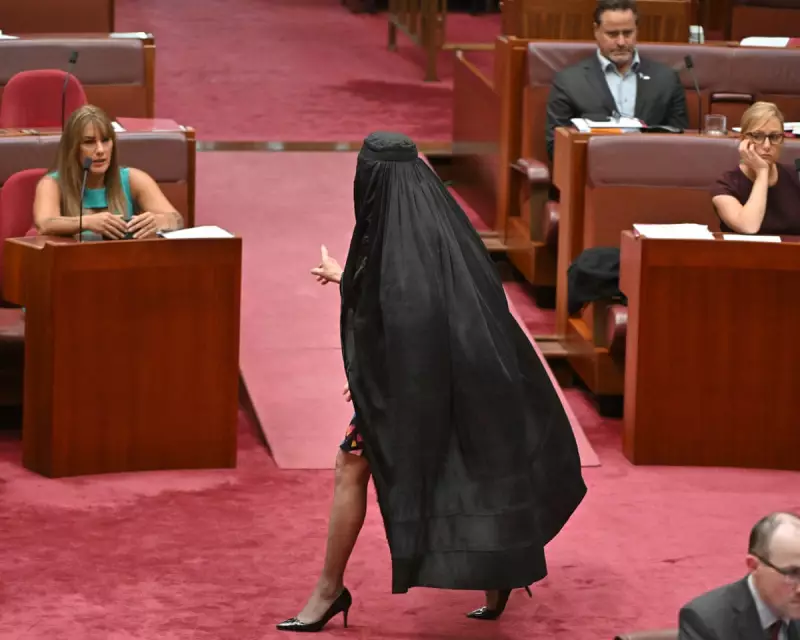
One Nation leader Pauline Hanson has triggered widespread condemnation after staging a repeat of her controversial 2017 burqa protest within the Senate chamber at Parliament House in Canberra. The political firestorm erupted on Monday when Hanson entered the Senate wearing the full-face Islamic covering, deliberately violating parliamentary dress regulations and forcing the temporary suspension of proceedings.
The Senate descended into chaos as Hanson refused multiple requests to remove the garment, with fellow senators expressing outrage at what many described as a disrespectful stunt targeting Muslim Australians. The dramatic confrontation resulted in Hanson being formally ejected from the chamber after more than an hour of suspended proceedings.
Cross-Party Condemnation and Heated Exchanges
The political backlash was immediate and crossed party lines. Nationals senator Matt Canavan did not hold back in his criticism, stating that Hanson's actions had "debased the parliament" and amounted to "ridiculing Muslim Australians." His comments reflected the broad consensus among political leaders that the protest was inappropriate and offensive.
Independent senator Fatima Payman, who wears a hijab and practices the Muslim faith, delivered particularly powerful criticism. "She is disrespecting a faith, disrespecting Muslim Australians," Payman declared, demanding immediate action. "This needs to be dealt with immediately before we proceed, it's disgraceful."
The condemnation extended across the political spectrum with Greens leader Larissa Waters labelling the stunt an "insult" while Labor Senate leader Penny Wong stated the behaviour was "not worthy" of parliament. Even Liberal Senate leader Anne Ruston joined the criticism, asserting "this is not the way you should be addressing this chamber."
Security Claims Questioned as Motivation
Hanson attempted to justify her protest by claiming the burqa presented a national security risk, citing similar requirements to remove helmets in banks and other secure locations. However, when pressed by journalists to provide specific examples of security incidents involving burqas, Hanson could not name a single instance.
"I can't answer you that question," Hanson admitted when asked for data supporting her security concerns. Instead, she deflected responsibility, suggesting journalists should "call ASIO" for information about security threats. This failure to substantiate her claims undermined the central argument behind her proposed legislation to ban the burqa nationwide.
The protest occurred after Hanson was denied leave to introduce her private senator's bill seeking to ban the face covering across Australia. Following this rejection, she left the chamber and returned wearing the black, ankle-length garment, sparking the immediate outrage that would lead to the Senate's suspension.
Historical Context and Political Fallout
This incident marks the second time Hanson has employed this controversial tactic, having first worn a burqa in the Senate in 2017. That earlier protest prompted then-Liberal senator George Brandis to deliver a powerful rebuke, calling it "an appalling thing to do" that mocked the Islamic community.
Senator Canavan noted the lack of originality in Hanson's approach, commenting that "Pauline Hanson needs some new material because... she recycled this from eight years ago." He questioned the political wisdom of the stunt, suggesting that while it might appeal to a "small fringe in our society," middle Australia would not appreciate "the parliament being debased like this."
Following her ejection, Hanson and her One Nation colleagues held a fiery press conference where she defended her actions and expressed frustration at being blocked from introducing her proposed ban. Despite the controversy, she denied contributing to social discord, instead framing the protest as necessary to highlight what she called "this oppressive, radical, non-religious head garb."
Guardian Australia reported that senators were discussing whether to pursue a formal censure motion against Hanson, indicating the political consequences may extend beyond Monday's dramatic events. The incident has reignited debates about religious freedom, security concerns, and appropriate conduct within Australia's highest parliamentary chambers.