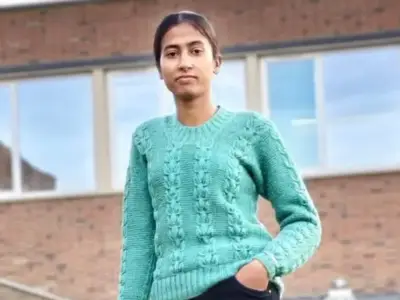
Scarlett, now 20, smiles and dances in a video like any other teenager enjoying time with friends. Yet the unmade hotel room in the background hints at a far darker reality. The footage was captured during a period when she would vanish for weeks, a time she describes as being "off my face on drugs."
A Digital Archive of Trauma
This clip is one of many stored on a damaged iPad, a harrowing digital diary documenting four years of systematic abuse. From the age of 14, Scarlett was groomed, trafficked across Manchester, and raped by dozens of men. She only escaped the cycle at 18.
"I knew I would not be able to get hold of this stuff ever again if I didn't keep this," she explains, justifying her decision to preserve the painful evidence.

Scarlett represents one of thousands of vulnerable girls failed by police, social services, and successive governments. A promised national inquiry into grooming gangs has recently descended into chaos after victims and potential chairs withdrew, sparking fresh outrage.
"Sometimes I feel like our stories have been hijacked," Scarlett states. "There's been all this talk about grooming gangs this year, but no one's been speaking for me."
From Middle-Class Childhood to Grooming Gang Prey
Scarlett's childhood in a Manchester middle-class family, attending private school and riding her horse, belies the horror that followed. Her life deteriorated after her parents separated and she was diagnosed with ADHD. It spiralled out of control after a violent attack by a gang, where she was kicked, held at knifepoint, and set on fire.
In the aftermath, feeling broken, she was raped by the gang's leader. "I was just a different person now," she recalls. She was then introduced to an older girl, 'Leila', who initially acted as a protective sister figure. Their relationship, however, became the gateway to exploitation.
They would frequent hotels to take drugs. Scarlett soon realised that while she was asleep, Leila was having sex with men who arrived. The exploitation turned direct when two men arrived with condoms and drugs; Scarlett woke up disoriented, evidence of sex around her, and saw cash being handed over.
"I'd not realised what had been going on for all these months and now she was kind of like prostituting me out," Scarlett says.
Placed into the care system by her desperate father from age 14, the grooming continued unabated. Men would collect her from care homes. The gangs also used her to deal drugs. The abuse was so routine she would sometimes only know she had been raped by waking up with bruises and fingerprints on her body.
"I got to the point where I just thought I would end up dead," she admits.
A National Scandal, Multiple Victims, and Systemic Failure
Scarlett has connected with other survivors, like Danielle, 21, from Peckham, London. Danielle entered care after being raped at 11. She describes being held prisoner and raped by a gang of mainly black men in Croydon. "You just have to do what they tell you to do to be able to survive," she says.
Danielle challenges the narrow focus on ethnicity, stating her attackers were "all different colours and of all different ethnicities." She argues, "There are so many people out there that are raping girls."
Both women report catastrophic failures by authorities. Danielle says police never followed up her reports, and care staff would shout that they "can't be bothered looking for us" when she went missing.
Another victim, 'Zara', was just 11 when she was first assaulted after being lured to a shed. Now 15, she is still threatened by her abusers and is too scared to go out alone, having missed years of school.
Despite a government-commissioned review by Baroness Casey highlighting a major failure to record suspect ethnicity—with available data showing an over-representation of Asian suspects in some forces—the lack of consistent national data hampers understanding.

Police acknowledge the evolving nature of the crime, with grooming increasingly moving online via platforms like Snapchat. The Metropolitan Police says it is reviewing around 9,000 cases and has seen a threefold increase in solved child sexual exploitation cases in the past year.
Greater Manchester Police, now investigating Scarlett's case, states child protection is a priority and that a victim's experience today "would be much improved." Snapchat says it works closely with law enforcement to combat such activity on its platform.
For the survivors, however, trust is low. "It's been going on for so many years now and it doesn't look like it's going to stop anytime soon," says Danielle. "They just sit back... they're not the ones that are being raped... so they just throw you away."
Scarlett, holding her broken iPad as testament, offers a grim warning: "At least people are waking up to the fact grooming gangs have not gone away – there's probably one in a town near you right now." Not one of her abusers has been brought to justice.