
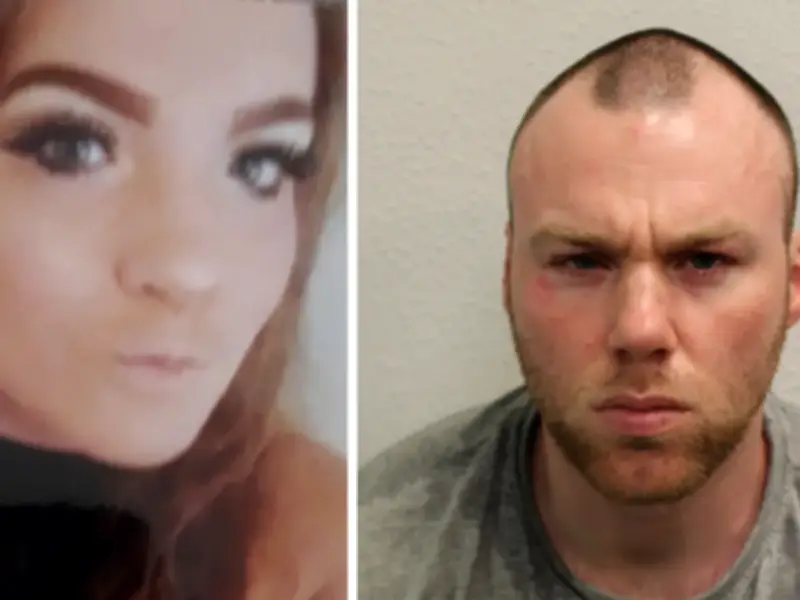
A coroner has raised concerns to the Home Secretary after a vulnerable 18-year-old known to the authorities was murdered by her abusive boyfriend. Natasha Hill was killed by her 33-year-old boyfriend Scott Clifford at an address in Sewell Road in Thamesmead in April 2018. Clifford beat Natasha so viciously that the attack left her with fatal head trauma and more than 50 other injuries.
Fatal Attack and Conviction
She was found cold and unresponsive by paramedics after Clifford had called them to his grandfather's home in South East London, claiming she had fallen down the stairs. Clifford was caught out when paramedics spotted him trying to wash his clothes as they battled to save her life. He received an 18-year sentence for murder in August 2019.
Clifford had attacked Natasha at least twice before her death—one in which a witness described the defendant "treating her like a rag doll", and that the attack was "like something out of American wrestling", jurors heard in the criminal trial. Natasha’s family previously claimed that "at least 20 different agencies" who were "supposed to keep a vulnerable woman safe" failed the 18-year-old who grew up in care.
Coroner's Report and Recommendations
A coroner has now raised concerns to the Home Secretary Shabana Mahmood as well as the Chair of the National Police Chief’s Council (NPCC) and the Education Secretary about the circumstances surrounding Natasha’s death. The Prevention of Future Deaths report was also sent to Natasha’s family, Basildon Hospital, the National Police Service, the Met Police, Essex Police and Essex County Council, among others.
In his report, Dr Julian Morris found that Natasha self-harmed and misused alcohol and drugs in the years leading up to her death. During this period, she was groomed by Clifford and in April 2017 was "set on a pathway for child sexual exploitation". A Child Abduction Warning Notice (CAWN) was issued against Clifford and Natasha was assessed as high risk. Over the following months Natasha went missing for periods of time and her abuser fell out of touch with his probation officer.
According to the coroner, Natasha had signs of abuse across multiple police jurisdictions. Once she turned 18 in January 2018, the CAWN automatically lapsed and no vulnerable adult action plan was put in place by the authorities so none of them were actively looking for her to safeguard her. Within a week of turning 18 she moved in with Clifford and had ongoing, regular injuries. The level of violence increased post Natasha turning 18, requiring hospital treatment.
Response from Authorities
Natasha was then pronounced dead at his home address in the early hours of April 15, 2018. Dr Morris recommended that vulnerable teenagers approaching 18 should be formally reviewed by an adult safeguarding team and that thought should be given to creation of a young person’s team covering the transition from under-18 to adult. The coroner also suggested CAWNs could be extended beyond the age of 18 and that one single national policy for policing and child sexual exploitation should be created that all local police forces and authorities adhere to.
In response to Dr Morris’ report, the Home Office said it was "working to create a consistent, victim-centred response to child sexual exploitation" and was investing £6.1m into its Child Sexual Exploitation Taskforce this year. In his response, NPCC Chair Chief Constable Gavin Stephens said: "If a case with the same horrific circumstances experienced by Natasha presented today, safeguarding partners would be expected to adopt a fundamentally different approach, recognising that vulnerability, exploitation and coercive control do not cease when a young person reaches adulthood. Although transitional safeguarding remains an area of practice development rather than a statutory framework, it is now widely recognised that safeguarding responses should be driven by vulnerability and risk, not solely by age."




