Green Party Secures Historic Victory in Gorton and Denton Byelection
In a stunning political upset, the Green Party has achieved a landmark victory in the Gorton and Denton byelection, dealing a significant blow to Keir Starmer's Labour government. Hannah Spencer, a local plumber and Green Party councillor, has been elected as the party's first Member of Parliament in northern England, overturning Labour's substantial 13,000-vote majority from the previous election.
Labour's Dramatic Decline in Traditional Stronghold
The results reveal a dramatic shift in political allegiance in this Manchester constituency. Labour finished a distant third in the tightly contested race, trailing the Greens by 5,616 votes, while Reform UK secured second place with 10,578 votes. This outcome represents a staggering 25.3% decline in Labour's vote share compared to the 2024 general election results.
This marks the first time in nearly a century that the Gorton area of Manchester will not be represented by a Labour MP, signaling a profound transformation in the political landscape of this traditionally Labour-dominated region.

Factors Behind the Green Party's Success
The Greens' energetic campaign proved decisive in securing this historic victory. Spencer gained near-instant local recognition as "Hannah the plumber," while thousands of volunteers traveled from across the United Kingdom to support her candidacy. The party successfully positioned itself as a credible anti-Reform alternative, capitalizing on growing discontent with mainstream political options.
Labour sources acknowledged that the party's stance on Gaza had not been forgiven by many of its Muslim voters, an issue the Greens effectively leveraged in the Manchester side of the constituency. "Gaza has not been forgotten or forgiven," revealed a Labour councillor within the constituency, expressing concern about the security of other Labour seats.
Internal Labour Concerns and Leadership Scrutiny
The result has intensified concerns among Labour MPs that Starmer's government is alienating voters on the political left in its efforts to counter the rise of Nigel Farage's Reform UK. The outcome will also prompt further examination of the prime minister's controversial decision to block Andy Burnham from standing as the Labour candidate in a city where he enjoys substantial public support.
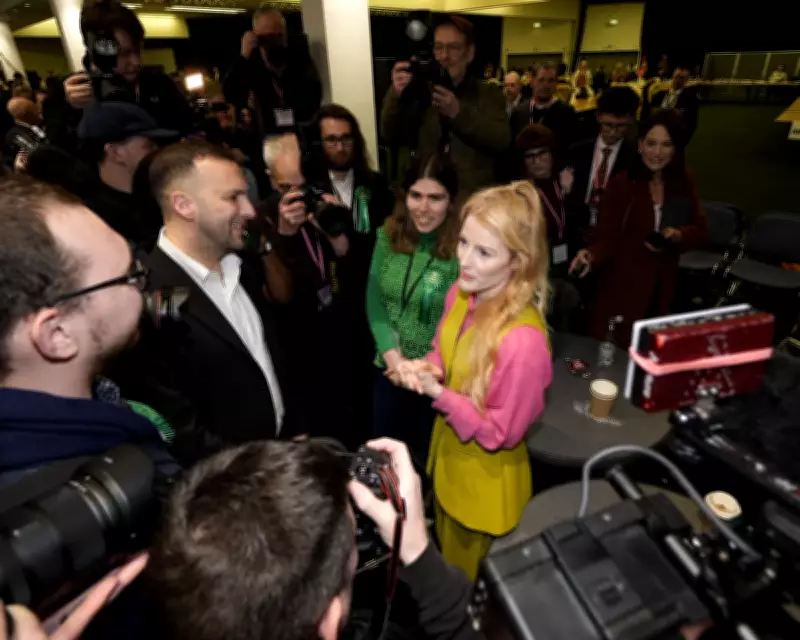
Labour's deputy leader, Lucy Powell, confirmed the defeat to journalists at the Manchester Central convention complex, acknowledging that "the Greens have managed to win that argument that they were the best placed" to represent voters opposed to Reform UK. When questioned about Starmer's future, Powell maintained that the prime minister remained "resolute in his job" despite the electoral setback.
Campaign Dynamics and Electoral Controversies
Turnout in the closely watched seat reached 47.6%, slightly lower than during the 2024 general election. The campaign became increasingly contentious, with Labour and the Greens exchanging accusations of dirty tricks and questionable polling practices. Labour had framed the byelection as a choice between "unity and hope" versus the "toxic division" represented by Reform UK.
Reform UK faced its own controversy when the party was summoned before the high court over letters purporting to be from a "concerned neighbor" that failed to carry the required political imprint as mandated by electoral law. The party attributed this to an error by its printing supplier, which accepted responsibility for the oversight.
Strategic Implications for UK Politics
This victory establishes the Green Party as a serious political force capable of challenging traditional party dominance in Westminster byelections. The result suggests that Labour's strategy of moving toward the political center to counter Reform UK may be costing the party support among its traditional left-wing base.
The byelection was triggered by the resignation of former MP Andrew Gwynne on health grounds in January. Gwynne had been under parliamentary investigation for offensive messages sent in a WhatsApp group of local Labour figures prior to his departure.

As political analysts assess the broader implications of this electoral upset, the Green Party's breakthrough in northern England represents a potential realignment in British politics, with traditional party loyalties being tested in unprecedented ways.