Grassroots Mobilization Counters Hard-Right Surge in Manchester Constituency
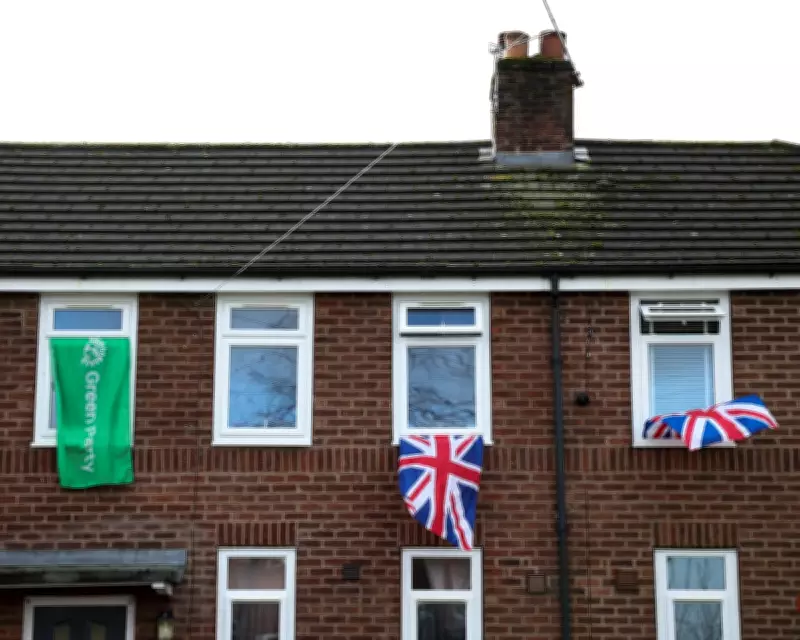
In the Gorton and Denton area of Manchester, a visible display of political allegiance has emerged with Green Party and union flags prominently hung in windows. This symbolic act comes as the hard right sets its sights on this diverse parliamentary constituency, sparking a determined grassroots fightback from local residents who feel increasingly threatened by divisive political rhetoric.
Legacy of Racist Murder Haunts Current Political Climate
Selina Ullah, whose brother Ahmed Iqbal Ullah was murdered in a racist attack in 1986 when he was just 13 years old, represents the deep historical context of this community's struggle against prejudice. "There was revulsion," she recalls of the national response to her brother's death. "There was such an outpouring from people from all backgrounds who came and stood by us."
Now, four decades later, Ullah fears that solidarity is weakening as society becomes "desensitised" to Islamophobic, racist, and homophobic comments. "We're not horrified that somebody can say these things any more," she observes. "And that means a worse thing can happen. The public's tolerance level of what is acceptable is changing."

Reform UK's Controversial Candidate and Amplified Rhetoric
Matt Goodwin, the GB News presenter running for Reform UK in the Gorton and Denton byelection, has become a focal point for community concern. Goodwin has previously argued that UK-born people from minority ethnic backgrounds are not necessarily British and that Europe faces "civilisational erasure."
While Gorton and Denton ranks only 291 out of 650 seats in social conservatism according to pollsters Electoral Calculus, residents report a noticeable shift in atmosphere. For the first time in years, the hard right appears to have a genuine chance of making inroads into Manchester's inner city.
Multiple Hard-Right Parties Converge on Constituency
Reform UK is not alone in targeting the area. The far-right party Advance UK, whose leader Ben Habib suggested some migrants crossing the Channel should be left to drown, is fielding candidate Nick Buckley. Meanwhile, the culturally conservative SDP, whose leader William Clouston called mass migration "a form of colonisation," is also contesting the seat.
This convergence of hard-right voices has created what residents describe as a toxic political environment with real-world consequences for minority communities.
Community Impact and Personal Experiences
Idowu Morafa, who runs Across Ummah, a community interest company tackling health inequalities and food poverty, reports increased hostility. "We had a case of a woman who said a dog was released to chase her children because of all this uproar," she reveals. "People are telling us that racism is affecting their mental health."
Raluca Terry-Enescu, a Romanian citizen with settled UK status living in the constituency, experienced targeted harassment after challenging pro-Reform posts online. Her Facebook photos were doctored to make it appear she supported Reform, then posted without her consent. "I'm worried about Reform," she admits. "They might want me to be denied British citizenship because I'm on maternity leave and get child benefit like anyone else."
Local Voices Emerges as Grassroots Response
In response to this divisive climate, neighbors in Gorton and Denton formed Local Voices, a grassroots organization that emerged after former Labour MP Andrew Gwynne was suspended for insulting constituents. The group organizes citizens' assemblies, community organizing training, and election hustings focused on everyday concerns.
"We're at a really challenging moment," says Beth Powell from Local Voices. "Sometimes we feel like we're on the front foot, creating beautiful, positive energy... but then, over time, it feels like it's not enough to just do lovely work, we have to have a say over how power is used in our name."
Hustings Reveal Community Tensions and Hopes
At a hustings hosted by Local Voices in February, Goodwin pulled out at the last minute claiming concerns about "bias." The diverse, cordial gathering nevertheless proceeded, with Dr. Charles Leyman Kachitsa, a Malawi-born academic on Greater Manchester's race equality panel, expressing cautious optimism.

"When people come openly, it's an opportunity to tackle the issue head on," he noted. "The shift toward justice, it's unstoppable. Whatever government comes, they might delay it a bit but it will not stop."
Concerns for Minority Rights and Community Cohesion
Jeremy Hoad, organizer of Levenshulme Pride, the region's largest free local Pride event, voices particular concern about the climate for trans people and other minorities. "The impact of the rise of the right wing is one of destabilization and fear," he warns. "There's a reactionary agenda affecting people's lives every day to remove rights, dehumanize, and alienate people."
Amina Lone, a former Labour councillor whose grandfather migrated from Kashmir in the 1950s, understands why some neighbors might consider voting for Reform. "We're not an extreme country," she asserts. "But when you're ignoring people and their concerns, whether it's about migration, women's rights, religion, or jobs, then people will say: 'Let it burn. Let's see what we can rebuild from the ashes.'"
Continuing Ahmed Iqbal Ullah's Legacy
At the Ahmed Iqbal Ullah race relations resource center, the specialist race and migration library founded in the schoolboy's memory, head Maya Sharma reports increased challenges to their work. "People are feeling far more emboldened coming into our library and asking us questions like: 'What about white histories?'" she observes. "Or we've had people who come in and say: 'Well, it wasn't a racist murder. It wasn't racism.'"
As the 40th anniversary of Ahmed's murder approaches, the community faces a critical test of whether decades of progress in race relations can withstand the current political pressures. The flags in windows represent not just political affiliation but a visible commitment to solidarity in the face of division.