Government Reverses Decision to Postpone 30 Local Elections After Legal Challenge
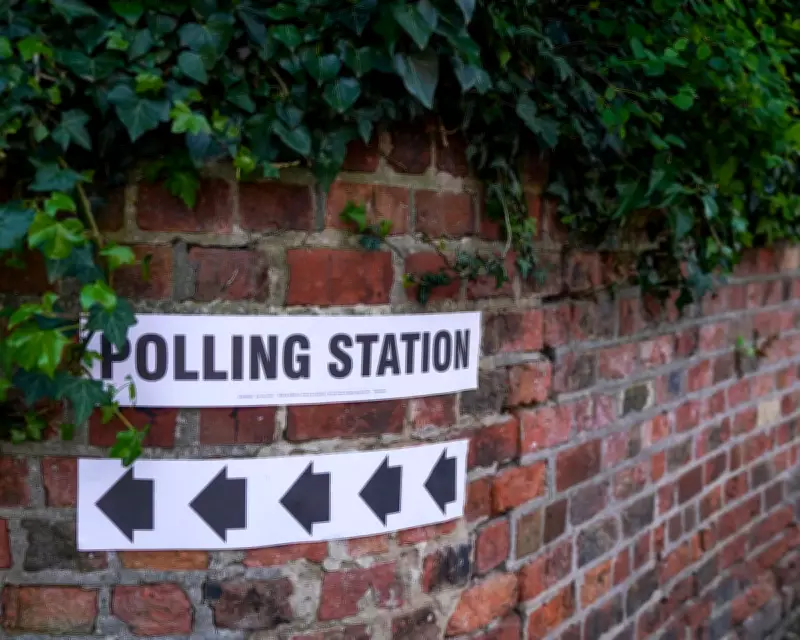
The UK government has executed a significant policy reversal, abandoning its plan to postpone local elections affecting approximately 4 million citizens across 30 local councils in England. This dramatic U-turn comes in response to mounting legal pressure and political criticism, with the government citing "legal advice" as the primary reason for restoring the democratic process.
The Original Postponement Plan and Its Rationale
In January, the Ministry of Housing, Communities and Local Government announced that local elections would be postponed as part of broader efforts to reorganize England's local government structure. The plan involved transitioning from the current two-tier system of district and county councils to single-tier "unitary" authorities, with elections for these new councils scheduled for 2027.
Government officials argued that holding dozens of elections for just one year represented unnecessary expense, suggesting that existing councillors could continue serving during the transition period. However, this decision would have created a two-year delay in some areas, particularly affecting nine councils that had already postponed their 2025 elections for similar reasons.

Legal Pressure Forces Government Retreat
The government's reversal stems directly from legal challenges initiated by Reform UK through the judicial review process. A letter shared on social media by Reform leader Nigel Farage revealed that Housing and Communities Secretary Steve Reed decided to reinstate the elections "in the light of recent legal advice," indicating the government recognized it would likely lose in court.
While the official MHCLG press release mentioned only "legal advice" as the reason for the U-turn, the specific context involves Reform UK's legal challenge, which forced the government to back down rather than face potential defeat in the courts.
Affected Councils and Political Distribution
The 30 councils affected by the original postponement plan represent diverse political landscapes across England:
- Labour-controlled councils (21): Including Adur District Council, Basildon Borough Council, Blackburn with Darwen Council, Cannock Chase District Council, Chorley Borough Council, City of Lincoln Council, Crawley Borough Council, Exeter City Council, Hyndburn Borough Council, Ipswich Borough Council, Norwich City Council, Peterborough City Council, Preston City Council, Redditch Borough Council, Rugby Borough Council, Stevenage Borough Council, Tamworth Borough Council, Thurrock Council, Welwyn Hatfield Borough Council, West Lancashire Borough Council, and Worthing Borough Council
- Liberal Democrat-controlled councils (2): Cheltenham Borough Council and Pendle Borough Council
- Conservative-controlled councils (5): East Sussex County Council, Harlow District Council, Norfolk County Council, Suffolk County Council, and West Sussex County Council
- Independent-controlled council (1): Burnley Borough Council
- Green-controlled council (1): Hastings Borough Council
Political Context and Opposition Criticism
While government ministers initially framed the postponement as a sensible resource allocation during local government reorganization, opposition parties vehemently objected, characterizing the move as an affront to democratic principles. Critics noted that the high percentage of Labour-run councils affected suggested political motivations, with accusations that Downing Street sought to mitigate expected poor local election results in May.
Several Labour MPs expressed concerns not only about the election delays but also questioned whether such extensive council reorganization represented the best use of resources and attention during challenging economic times.
Reactions to the Policy Reversal
The government's U-turn has received overwhelmingly positive responses across the political spectrum. Conservatives, Reform UK, Liberal Democrats, and Greens have all welcomed the restoration of elections while simultaneously criticizing ministers for attempting to postpone them initially.

Local government groups described the situation as an avoidable error, with one representative stating the government "has lost a fight it should never have picked." Florence Eshalomi, the Labour MP who chairs the Commons housing, communities and local government committee and opposed the original plan, commented: "I welcome this development. As I argued previously, democracy is not an inefficiency that should be cut out during local government reorganization process."
Political Implications for the Government
This reversal represents a significant political setback for the government, resetting the "days since a humiliating U-turn" counter to zero. Beyond the embarrassment of being forced to back down by Reform UK's legal challenge, the government now faces potentially even more challenging local election results.
The situation highlights the delicate balance between administrative efficiency and democratic principles, demonstrating that even well-intentioned structural reforms cannot justify delaying fundamental democratic processes without facing substantial legal and political consequences.