Autocracy's Western Rise Meets Global South Resistance
In recent years, a troubling trend has emerged across Western nations, where autocratic tendencies are gaining ground amidst political shifts. However, a closer examination reveals that this rise is far from inevitable, as evidenced by the robust democratic aspirations flourishing in the Global South. While some in long-standing democracies show willingness to abandon their systems, many who have endured autocratic rule are actively fighting for freedom, highlighting a stark global contrast.
Western Democracies Under Strain
The stability of Western democracies is increasingly threatened by internal forces. In countries like Britain, Germany, and France, far-right political parties are ascending, capitalizing on economic stagnation and growing inequality. Similarly, in the United States, figures such as Donald Trump continue to undermine democratic norms. These movements often attract working-class members of ethnic majorities who feel neglected by governing elites, leading them to embrace anti-democratic rhetoric despite its lack of practical benefits.
To counter this alienation, pro-democracy parties must adopt more inclusive strategies. This involves rejecting unchecked globalization, improving social services, and addressing affordability crises. A shift away from identity-based politics toward broader appeals is essential, alongside challenging wealthy interests that perpetuate the status quo. The viability of democracy itself hinges on these efforts, making it a critical but achievable project for political leaders.

Global South's Democratic Momentum
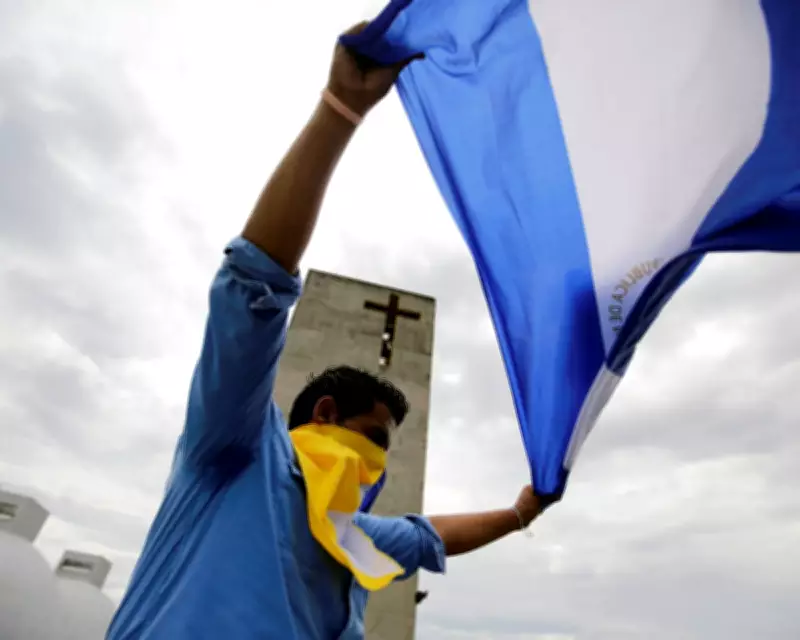
Contrastingly, the Global South demonstrates a profound commitment to democratic principles. From Hong Kong to Nicaragua, and Russia to Uganda, masses have repeatedly taken to the streets to protest autocracy, often risking detention or death. These movements have achieved notable successes, such as ousting autocratic leaders in Bangladesh, Sri Lanka, Brazil, and Poland, or thwarting coup attempts in South Korea.
Yet, autocratic regimes often respond with brutal repression, as seen in Iran, Russia, Belarus, Cuba, Nicaragua, Hong Kong, and Uganda. Leaders relying solely on force, like Syria's Bashar al-Assad, find themselves vulnerable when challenges arise. Others, such as Russia's Vladimir Putin, fear popular uprisings, leading to interventions like the 2014 invasion of Ukraine. Even subtler tactics, like manipulating elections in Hungary or Belarus, backfire when pro-democracy forces prevail.
The Flaws of Autocratic Governance
Autocracy remains unpopular due to its inherent unaccountability. Governments like Hungary's under Viktor Orbán misuse funds for personal gain while neglecting public services, and Egypt's Abdel Fattah el-Sisi prioritizes vanity projects over basic needs. China, often cited as an exception, faces economic slowdowns linked to its authoritarian policies, such as demographic issues from the one-child policy and suppressed consumer spending.
Compared to democratic neighbors like Taiwan, South Korea, and Japan, China struggles to escape the middle-income trap, a challenge few autocracies overcome. The 2019-2020 Hong Kong protests against Chinese Communist Party rule underscore this discontent. While Singapore offers a rare example of stable autocracy, its model is limited to a city-state, and globally, democracies remain the preferred choice for accountable governance.
A Call to Action for Democracy
Western democracies are indeed navigating a difficult era, requiring renewed efforts to serve all societal members and reinforce legitimacy. However, despair is unwarranted. The Global South's persistent demand for governments that answer to the people—through free media, civil society, competitive parties, and peaceful protests—serves as a powerful reminder. Ultimately, the global yearning for democracy highlights that autocracy's rise is not a foregone conclusion, and defenders of democratic values must continue their fight.