
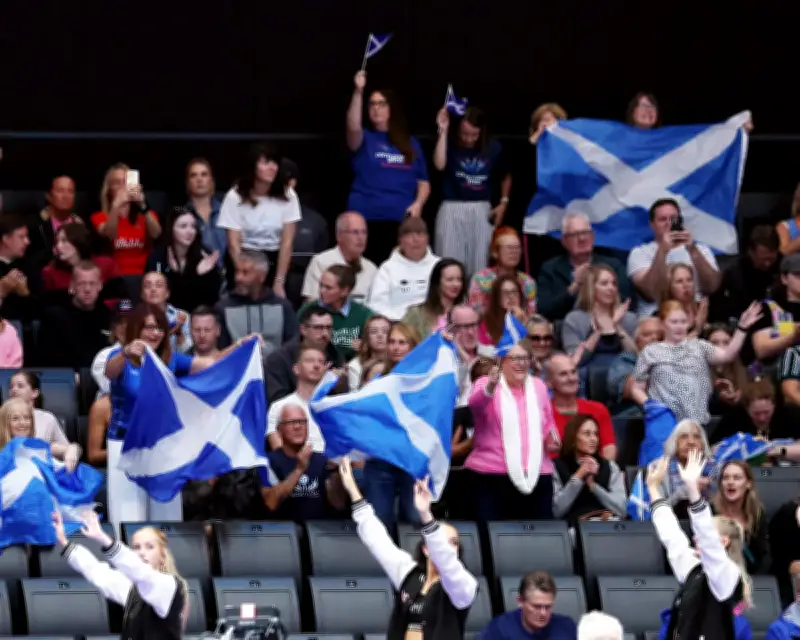
The chief executive of Glasgow 2026, Phil Batty, has declared this year's Commonwealth Games a “phenomenal” success, asserting that the revamped format has secured the event's future for another century. In an interview with the Guardian, Batty praised the 11-day competition, which featured only 10 sports compared to the 19 held in Birmingham four years ago, as a model for financial sustainability ahead of the 2030 Games in Amdavad.
A resounding endorsement from the top
“What a phenomenal 11 days,” Batty said. “I have had absolute pride in the way that the city and the Commonwealth has come together. These Games have not only exceeded expectations. They have demonstrated that major events can flex and evolve to be fit for purpose in the future.”
He added: “What we’ve seen here in Glasgow is that you can put on an incredible Games, which is different but still feels as brilliant as it ever has been, and is ready for the next 100 years. And these Games have proved once and for all that the Commonwealth Games are relevant, the Commonwealth Games matter, and the Commonwealth Games are here to last.”
Batty’s enthusiasm was echoed by Katie Sadleir, chief executive of Commonwealth Sport, who said the Games had “absolutely exceeded my expectations.” She noted, “People are talking about it on the streets. I’ve met with athletes. I’ve met with Commonwealth Games Associations and everyone is going away buzzed about what happened.”
Criticisms and concerns
Despite the upbeat assessments, the Games faced several criticisms, including a notable absence of star athletes such as Britain’s 800m Olympic champion Keely Hodgkinson, Canadian swimmer Summer McIntosh, and Olympic 100m champion Julien Alfred. Limited TV visibility and a lack of sell-out crowds also drew attention. However, organisers pointed to strong international viewership figures, with 11.4 million watching in Australia on Channel 7 and close to four million in Canada on CBC. They did not disclose UK viewing numbers for live coverage on TNT/HBO Max or the Five highlights show.
The opening ceremony reportedly peaked at around 800,000 viewers on Channel 5, with an additional 50,000 on TNT, significantly lower than the five million who watched the 2022 ceremony on the BBC.
Financial prudence and investment
Organisers highlighted the event's projected spend of £162.6m, a fraction of the £543m spent on Glasgow 2014 and the £680m on Birmingham 2022. They also noted £4.7m invested in upgrades, including a new track and replacement pitch at Scotstoun Stadium and improvements to Tollcross International Swimming Centre.
Sadleir defended the decision to partner with Warner Brothers Discovery (WBD) over the BBC, which reportedly made a bid that was a “fraction” of WBD’s offer. “The BBC has been a fantastic partner for a very long period in terms of the Commonwealth Games, and we are doing BBC Radio, so they are involved,” she said. “But I look after the Commonwealth movement of 74 countries, and it is my responsibility to look globally in terms of viewership.”
Streaming shift and future outlook
Some British athletes expressed concern that their medal-winning performances received less attention due to the lack of BBC coverage. However, Sadleir insisted that the shift to streaming reflects broader consumption trends. “We are so pleased with the WBD deal,” she said. “The world is moving in terms of how people are consuming sport. I’ve been sitting in the stands with people watching the live sport and seeing them watching HBO Max with their four screens and they’re streaming it.”
She added: “Linear is still very important, but where we’re moving to is a much wider look and feel about how people are consuming the Games. And for £4.99 for 600 hours compared to 200 hours in Birmingham, we are very pleased with that relationship. We have a very young demographic that we are trying to attract. Those people aren’t watching linear TV; they are streaming and watching it on their phones and devices.”
As the Commonwealth Games look ahead to Amdavad in 2030, the Glasgow 2026 model—leaner, more cost-effective, and digitally focused—appears to have set a new template that organisers believe will ensure the event’s longevity and relevance in a rapidly evolving sports landscape.




