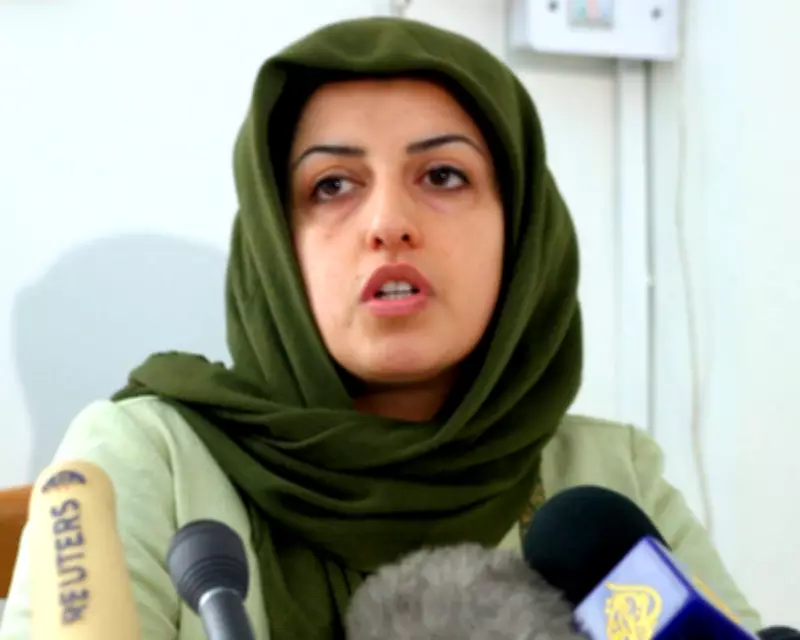
Narges Mohammadi's persistence and courage have deeply angered the Iranian regime, as noted by The Guardian. The critically ill Nobel peace laureate requires freedom, not bombs, as Iranians' human rights face attacks from both the regime and the US-Israel war.
Mohammadi's Critical Condition
In a forthcoming memoir smuggled from her cell, Mohammadi writes: "Authoritarian regimes do not always need an executioner's rope. Sometimes, they simply wait for the human body to fail – and then make sure no help arrives, or they create conditions in which death can come easily." Long denied adequate treatment, she is now in critical condition after a suspected heart attack in March, experiencing chest pain, loss of consciousness, and extreme weight loss. She was moved to hospital this month, with authorities approving transfer to specialist care in Tehran only this week. Supporters fear she will be sent back to prison if her condition improves.
International Calls for Release
Over 110 fellow Nobel laureates have called for her immediate and unconditional release. The 54-year-old won the peace prize in 2023 for her fight against the oppression of women in Iran and promoting human rights and freedom. Her persistence and courage have angered the regime, resulting in multiple jailings. Her case represents many Iranians whose human rights are under double attack.

Double Attack on Human Rights
The government's brutal crackdown on protests killed thousands of Iranians in January. The following month, the US and Israel launched their illegal and reckless war on Iran. UN experts warn the conflict dramatically worsened the human rights situation, describing Iranians as "under attack from outside and from within." Thousands of Iranians, including civilians, have been killed by US and Israeli strikes. Police stations and security facilities where detainees are held have been targeted. While some Iranian dissidents abroad saw opportunity in the war, others warned against it. Inside the country, protesters were horrified as the war's toll on ordinary Iranians became clear.
War's Impact on Repression
The US president threatened that "a whole civilisation will die" prior to the truce, and this week declared the ceasefire to be "on life support." Israel's defence minister remarked last month that "we are awaiting a green light from the US" to return Iran "to the dark and stone ages." The war has made a vicious regime more hardline, led to Iran's longest ever internet blackout, and provided cover for increasing repression. One journalist cited by Amnesty International said "never before have the streets been so fully dominated by agents standing up for the Islamic Republic." Security forces have detained people for taking footage or photographs of strikes. Iranian officials regard any dissent as siding with the enemy and threatened "a blow more severe" than the January massacre. A surge in executions has seen state killings carried out almost daily under more secretive and brutal conditions.
Call for Freedom and Ceasefire
The death penalty is fundamentally wrong, as is the punishment of those who peacefully express political views. Mohammadi and all political prisoners should be freed unconditionally. However, a US administration that claims to care for Iranians has only intensified repression and endangered them with strikes. A lasting ceasefire is essential to human rights in Iran.