Five years after a violent mob stormed the US Capitol, the anniversary of the January 6 attack has laid bare the enduring and bitter divisions within American politics. While leading Democrats, alongside families of fallen police officers, observed a solemn moment of silence, congressional Republicans were largely silent or sought to recast the history of the day.
A Day of Democratic Condemnation and Republican Silence
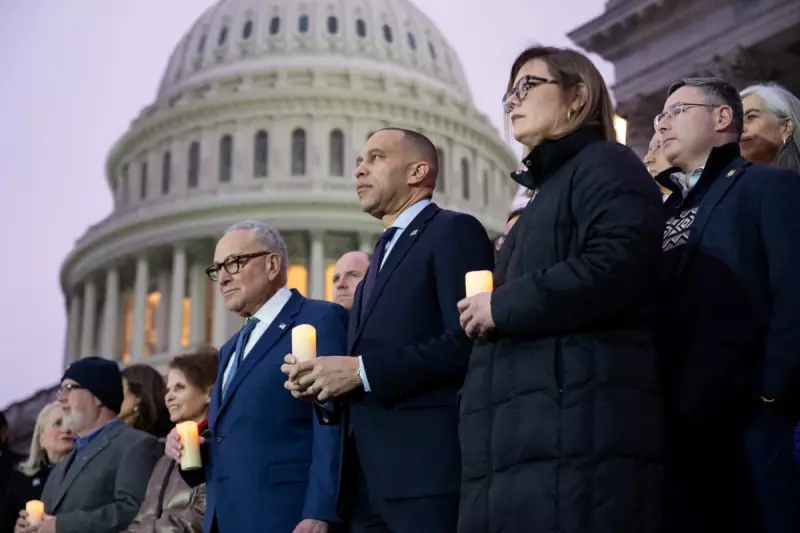
On Tuesday, Senate Majority Leader Chuck Schumer and House Minority Leader Hakeem Jeffries led Democratic lawmakers in a poignant tribute. They were joined by relatives of the US Capitol police officers who lost their lives in the 2021 insurrection. The Democrats then convened an unofficial hearing to examine the lasting impact of the attack, using the occasion to deliver a fierce rebuke of former President Donald Trump.
Jeffries accused Trump and far-right allies in Congress of attempting to "rewrite history and whitewash the horrific events of January 6." He sharply criticised the wave of pardons issued by Trump, who returned to office nearly a year ago and swiftly cleared almost everyone convicted or charged in connection with the violence. "It's been a Trump-inspired crime spree," Jeffries stated, questioning why Republicans would not condemn this behaviour.

In stark contrast, most Republicans marked the day with silence. The few who commented, like Congressman Mike Collins, propagated a grossly misleading narrative on social media, describing the event as a peaceful tour. The White House communications director, Steven Cheung, used the anniversary to attack Democrats and the media, promoting a website with a distorted timeline of the day's events.
Voices from the Aftermath: Police Testimony and a Rioter's Regret
The Democratic hearing featured powerful testimony that underscored the human cost of the attack. Former US Capitol Police officer Winston Pingeon described being assaulted by rioters who claimed "President Trump sent us." He expressed outrage at the pardons, stating, "We cannot accept violent felons being pardoned and released back into our neighborhoods without consequence."
In a remarkable act of contrition, Pam Hemphill, a rioter who refused the pardon offered to her, testified to "make amends." She declared, "Accepting that pardon would be lying about what happened on January the sixth. I am guilty, and I own that guilt," adding that she had fallen for the president's lies.
The controversy also extended to a commemorative plaque. Congress has legally mandated the installation of a plaque at the Capitol honouring the officers who responded to the attack, but House Speaker Mike Johnson, a Republican, has yet to install it. Democratic Congressman Jamie Raskin demanded action, noting the plaque was "gathering dust in a closet somewhere."
Protests, Politics, and the Path Forward
A small group of protesters, some wearing apparel indicating they had received pardons, gathered in Washington DC. They marched from the White House to the Capitol, where they were stopped by police before a smaller delegation was allowed to lay flowers for Ashli Babbitt, the rioter fatally shot during the insurrection.
The political rift was further illustrated in the Senate. Republican Senator Thom Tillis, who is not seeking re-election, offered a nuanced critique. While criticising Democrats on other issues, he also condemned Trump's pardons, warning they sent a dangerous message that such actions could be excused with the "right president in office."
Enrique Tarrio, the pardoned former leader of the Proud Boys, indicated that such anniversary marches would likely continue, framing them as part of an ongoing political battle. As the nation reflects on an attack that resulted in nine deaths and threatened the peaceful transfer of power, the fifth anniversary underscores that the events of January 6 remain a potent and unresolved fault line in American democracy.