
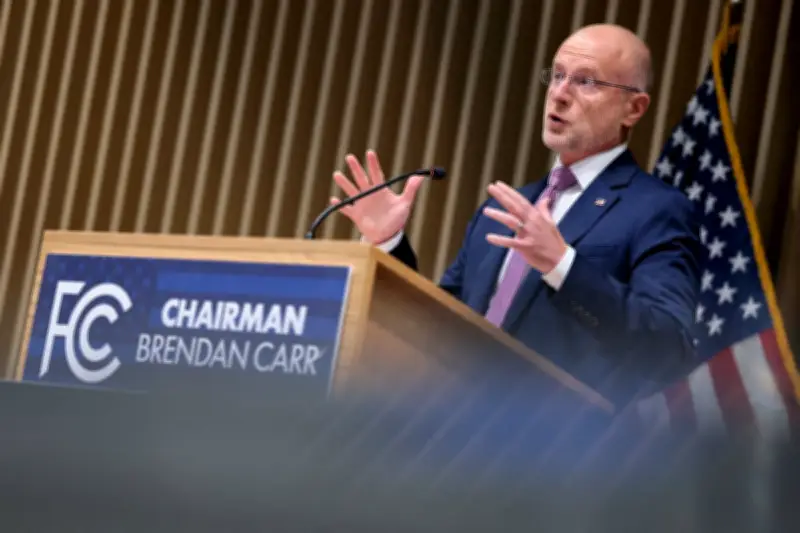
The Federal Communications Commission (FCC) voted 2-1 along party lines on Thursday to repeal the 39% national cap on local TV station ownership, a long-standing rule that prevented any single company from owning stations reaching more than 39% of U.S. TV households. The decision, a win for media conglomerates seeking to expand their reach, particularly conservative-leaning companies like Sinclair Broadcast Group and Nexstar, was met with immediate criticism from press freedom advocates who called it unlawful and harmful to local journalism.
FCC's rationale for the repeal
In a presentation endorsing the move, the FCC's media bureau told commissioners that the cap was no longer necessary in the current media environment. Instead of promoting competition, the bureau argued, the cap "constrains" local television networks from increasing their scale. FCC Chair Brendan Carr, a Trump appointee, led the initiative, supported by fellow Republican commissioner Olivia Trusty, who said she did not see it as a "silver bullet" for all competition issues but viewed it as a meaningful step to help broadcasters.
Carr argued that repealing the cap would benefit local broadcasters, though large media conglomerates will most immediately benefit. "The FCC has the authority to modify the cap as we did today, and it is the right policy answer [if] you care about the future of trusted local news," Carr said. "It's time to restore balance to the broadcast airwaves. Repealing the national cap will provide essential relief for local broadcasters by restoring a healthy counterbalance for the growing leverage and power of national programmers."
Democrat opposition and legal concerns
The lone Democrat on the FCC, Anna M Gomez, voted against the repeal, calling it "unlawful" and a departure from statutory boundaries. "Today's decision to eliminate the 39% national audience reach cap is unlawful on its face and a profound departure from both statutory boundaries and longstanding broadcast policy," Gomez said. "Congress set this cap in federal law, and only Congress can change it. I cannot support an action that so plainly violates the law and exceeds the Commission's authority while simultaneously overlooking the real-world consequences for the public we serve."
The 39% cap originated from a 2003 compromise hammered out by congressional negotiators. The FCC's vote comes as the $6.2bn merger of Nexstar and Tegna is on hold after a California judge issued a temporary injunction. In March, the FCC granted a waiver of the ownership cap to approve that deal, asserting its "authority" to do so.
Industry reaction and political ties
Nexstar, in particular, has appeared to stay in Carr's good graces. Nexstar was one of two major local TV station owners that quickly pre-empted broadcasts of Jimmy Kimmel's late-night show after it drew Carr's ire in September 2025. Chris Ripley, CEO of Sinclair, said on an earnings call on Wednesday that he "couldn't be happier" about the overturn.
However, the 2-1 vote drew heavy criticism from press freedom and media pluralism advocates. A group of protesters demonstrated outside the FCC building in Washington, holding photos of Carr's face with the word "shame" on it. Matt Wood, vice-president of policy and general counsel at Free Press, an advocacy organization, said in a statement: "Changing this limit requires congressional action, but Carr doesn't care. He'll do whatever it takes to clear the way for Trump-aligned billionaires to swallow up stations wherever and whenever they please. The result would be just one or two dominant broadcasters in every market, deep job cuts for journalists and an influx of bargain-basement content disguised as local news. This spells disaster for the local communities that broadcasters are supposed to serve."
Legal challenges ahead
Clayton Weimers, executive director of Reporters Without Borders North America, called the move not just deregulation but "consolidation in the interest of the powerful." "The FCC has abandoned one of the last significant safeguards against excessive concentration of media ownership in the United States," Weimers said. "Americans are already confronting the collapse of local news, rising political pressure on independent media and an increasingly toxic online information space. Rather than strengthening media pluralism, the FCC is accelerating its erosion."
Free Press said after the vote that the group and its "allies" would challenge the decision in court. In a press conference after the FCC's monthly meeting, Carr responded: "If it goes to the courts, it goes to the courts. And we'll litigate it and see where it goes."




