
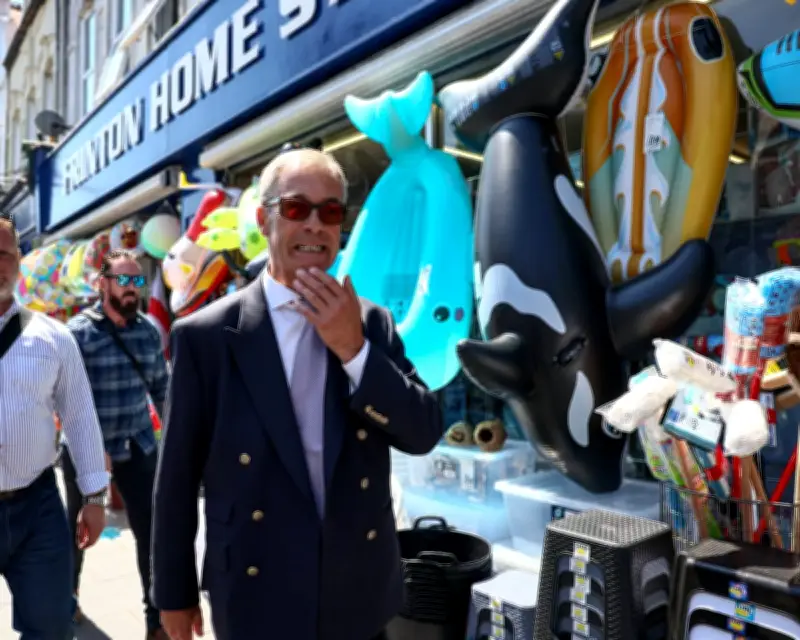
Nigel Farage's political influence has waned significantly this summer, with his approval ratings sinking since Andy Burnham took office as prime minister. The Reform UK leader has held just two press conferences since May's local elections, and his Clacton byelection on 13 August may backfire due to broadcasters' balance rules.
Farage's Reduced Visibility
This time last year, Farage was dominating the political agenda with weekly press conferences on crime and immigration. Now, he's expected to hold his first London press conference in over three months next week. An aide explained, "Burnham was always going to get a lot of oxygen at this stage of the cycle. Why would we waste key announcements?"
Reform UK disputes that Farage is invisible, pointing to his social media presence and occasional broadcast appearances. However, the Guardian's April revelation that Farage accepted an undeclared £5m gift from crypto-billionaire Christopher Harborne has made him less eager to face journalists.
Clacton Byelection: A Quixotic Quest
Farage called the Clacton byelection to rally local support, but it's become a solo effort as other major parties declined to stand. Count Binface is the most prominent among 33 novelty opponents, but no one expects him to win on 13 August.
Broadcasters are wary about featuring Farage due to strict candidate balance rules during elections, meaning his re-election bid might have backfired. Reform sources say he'll be more visible later in August.
Filling the Gap: Jenrick and Yusuf
Reform has fielded Zia Yusuf, home affairs spokesperson, and Robert Jenrick, Treasury spokesperson, to challenge Burnham's policies. Jenrick's press conference on Thursday painted a nightmarish vision of tax inspectors at deathbeds to finance social care.
Farage insists Reform isn't a one-man band, but only a handful of frontbench roles are filled, with no health or defence spokespersons. Professor Robert Ford of the University of Manchester said, "It's always a net minus for Reform when the second stringers have to come out because the lead singer is unavailable. Nobody particularly likes the tunes when they're sung by somebody else."
Badenoch's Rising Profile
Kemi Badenoch has also held a series of press conferences, sometimes without a specific policy, taking questions from all journalists. Allies say it's a response to research showing voters like her more with exposure, and to counter Burnham's policy rush.
Deeper Malaises and Polls
Reform was braced for a Burnham bounce, but slipping behind Labour in two polls this week after 300-plus consecutive leads is disappointing. Farage's media love soured even before the Harborne gift, with grumpy appearances in December over racism allegations he denies.
Ford notes a reversed feedback loop: last year's success brought attention and more success; this year, the process appears negative. He said, "Last summer really was the halcyon days for them. They'd had the amazing local election results. They'd overtaken Labour and the Tories in the polls. That then generated bursts of new media attention."
Falling Approval Ratings
Farage's personal approval ratings have sunk significantly, including a rise in strong disapproval. Ford highlights this matters for tactical voting: "You're more motivated to tactically coordinate to keep out somebody you strongly dislike than someone you mildly dislike."




