Farage's Energy Sermon at the Pump Derailed by War Queries
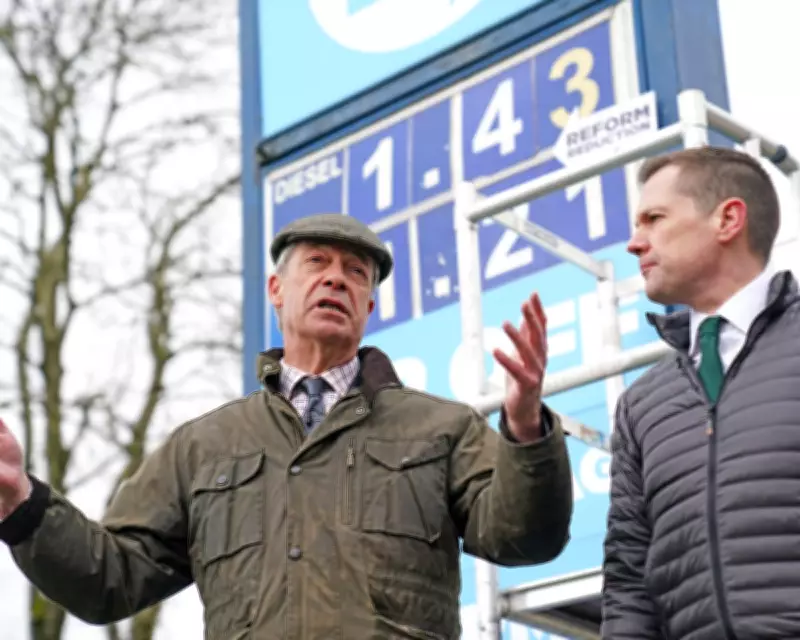
Nigel Farage, the leader of Reform UK, attempted to shift focus to domestic energy concerns with a staged petrol station event in Derbyshire, but the spectacle quickly ground to a halt when questions turned to the ongoing conflict in Iran. Accompanied by former Conservative minister Robert Jenrick, Farage presided over a publicity stunt where fuel prices were temporarily lowered, yet the gathering underscored deeper political tensions and a growing disconnect with public sentiment.
A Cost-Free Campaign Stop
True to form, Farage ensured the event came at no personal expense, a hallmark of his political career. Reform UK even provided a coach for journalists traveling from London, though it arrived nearly empty, highlighting a lack of media interest. The stunt itself involved Jenrick adjusting pump prices—diesel down to £1.43 per litre and unleaded to £1.21—a fleeting gesture that Farage framed as a critique of government energy policies.
Farage launched into a fiery sermon, accusing politicians of perpetuating a con on petrol prices and vowing to dismantle net zero commitments. He promised aggressive drilling and fracking initiatives, claiming he could secure Britain's energy future in mere days. However, his rhetoric lacked coherence, blending recklessness with what critics described as half-witted assertions, such as mischaracterizing the country's gas reserves as a crisis rather than a normal operational state.
Avoiding the Elephant in the Room
Throughout the presentation, neither Farage nor Jenrick addressed the elephant in the room: the impact of global conflicts, particularly the war in Iran, on oil and gas prices. It was as if the timing were purely coincidental, a strategic omission that did not go unnoticed. When journalists finally broached the topic, Farage's demeanor shifted dramatically.
Sky News and other outlets pressed him on Reform UK's inconsistent stance on the war. Last week, Farage had advocated for bombing Iran in alignment with American interests, while party figures like Richard Tice and Andrea Jenkyns echoed similar hawkish sentiments. Jenrick, meanwhile, offered a more cautious view but deferred to his colleagues' aggression. This patchwork of positions left Farage appearing deranged and snippy under scrutiny.
The Fading Reflection of a Political Figure
Farage's responses revealed a leader struggling to maintain relevance. Once celebrated for his ability to tap into public grievances, he now seemed out of touch, especially as most Britons oppose following Donald Trump into an illegal war. His attempt to have it both ways—claiming Britain lacked military resources for involvement while criticizing Keir Starmer's stance—only muddled his message further, inadvertently validating Starmer's approach.
The event concluded abruptly after just 35 minutes, a stark contrast to Farage's typically lengthy press engagements. He left looking fed up and bored, his Midas touch seemingly deserted. As he touted his closeness to Trump, praising the president's affinity for Britain, many observers recalled Trump's past insults toward UK leaders and servicemembers, underscoring the unreliability of such alliances.
In the end, Farage's Derbyshire stunt served as a metaphor for his political trajectory: a flashy spectacle that ultimately highlighted more questions than answers, leaving him a fading figure in an era demanding serious leadership.