
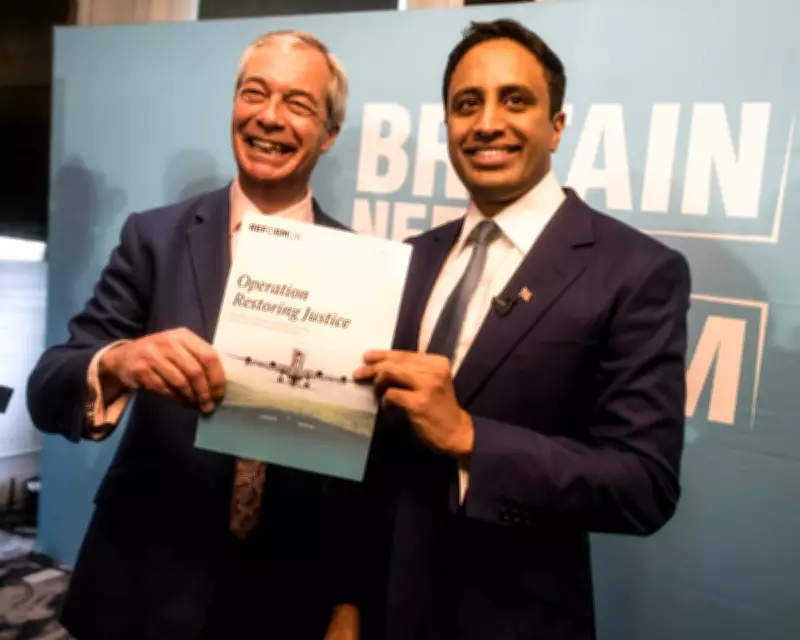
Farage Takes Center Stage at Reform UK's Dover Event
Nigel Farage, the leader of Reform UK, recently asserted his dominance over the party's public appearances, despite announcing key appointments last week to move beyond his one-man band image. In a carefully orchestrated event in Dover on Monday morning, Farage ensured he remained the focal point, introducing Zia Yusuf, the party's Home Office spokesperson, and controlling the subsequent media questions.
Yusuf's Controversial Immigration Proposals
Zia Yusuf, billed as Reform's shadow home secretary—though he holds no parliamentary seat—delivered a 30-minute speech that escalated into a hardline and deranged tirade on immigration. He argued that nowhere in the UK is safe due to foreign influxes, proposing drastic measures such as detaining all small boat arrivals and deporting up to 288,000 people annually. Yusuf, the son of immigrants, controversially suggested that if he could relive the 1980s, he would have his own family deported to set an example.
His speech included bizarre ideas like a televised national lottery to redistribute British-born individuals to other countries, including war zones, for entertainment value. Yusuf also targeted legal migrants, advocating for the revocation of indefinite leave to remain status and implementing local schemes where white people could vote monthly on which foreigners to deport, framing it as a gameshow to revive British spirit.
Farage's Underlying Control and Ideological Shifts
Throughout the event, Farage maintained tight control, giving the introductory and concluding remarks, and handling media interactions. His own speech echoed far-right themes, decrying diversity and legal migration costs estimated at £200 billion, while ignoring Brexit-related expenses. Farage positioned himself as a center-right figure, despite normalizing far-right ideas and claiming to combat extremism, a stance critics find contradictory.
Yusuf's rhetoric grew increasingly extreme, touching on radicalization among Muslims and calling for a return to Judaeo-Christian values, an odd stance for a Muslim man. He proposed banning burqas to prevent confusion with Antifa activists or ICE agents and suggested mandatory church attendance, though he exempted himself. Farage interjected during Q&A, asserting his theological superiority over archbishops and reinforcing xenophobic sentiments.
Public and Political Reactions
The event highlighted Reform UK's hardline immigration policies, which have been condemned by Christian leaders as unchristian. Yusuf's proposals, including stopping churches from being used by other faiths, reflect a vision that appeals only to the party's core supporters. Critics argue that such policies are divisive and lack democratic accountability, given Yusuf's non-MP status.
This Dover appearance underscores Farage's reluctance to share the limelight and the party's shift towards more extreme positions, raising questions about its broader appeal in British politics.




