Political Image Sparks AI Manipulation Debate
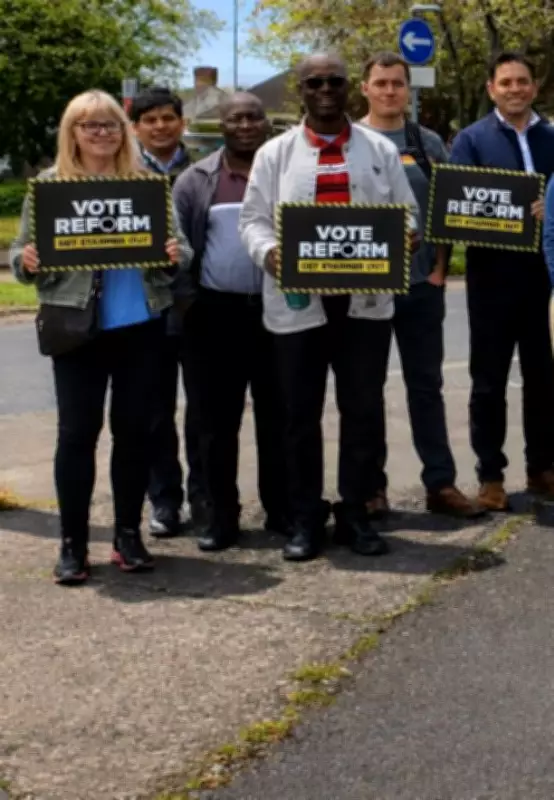
After Reform UK deputy leader Richard Tice posted a photograph depicting an apparent campaign event on Sunday, social media platforms erupted with speculation about the image's authenticity. Numerous X users immediately questioned whether the picture represented legitimate campaign documentation or what some termed "pure AI slop." The controversy highlights growing concerns about artificial intelligence's role in political communication and visual propaganda.
Five Telltale Signs of Digital Manipulation
Experts in digital forensics and social media investigators have conducted detailed analyses of the image, identifying multiple anomalies that suggest either significant editing or complete AI generation. These professionals point to specific visual irregularities that commonly appear in artificially created or heavily manipulated images.
1. Anatomical Anomalies in Hands and Fingers
Upon close examination, several figures in the photograph display unusual hand characteristics. One woman appears to possess six fingers on one hand, while another exhibits both extra digits on one hand and abnormally elongated fingers on the other. Most notably, a man wearing a beige jacket shows three fingers that are disproportionately long and sausage-like in appearance. These anatomical inconsistencies represent classic hallmarks of AI image generation, as artificial intelligence systems frequently struggle with rendering human extremities accurately.

2. Text and Symbol Distortions on Campaign Signs
The campaign signs held by supposed supporters should clearly read "Get Starmer Out," but instead display garbled text that more closely resembles "Get Stuppence out." Additionally, the Reform UK arrow symbol appearing on multiple signs appears distorted and irregular. AI image programs typically experience difficulty generating coherent text and maintaining consistent graphical elements, making such distortions strong indicators of artificial creation or manipulation.
3. Facial Blurring and Feature Irregularities
Multiple faces throughout the image exhibit significant blurring and smearing effects, with one man appearing to have closed, misaligned eyes. This lack of facial definition and clarity contrasts sharply with other elements in the photograph and suggests either poor editing or AI generation that hasn't properly rendered human facial features.
4. Unnaturally Perfect Geometric Patterns
Forensic analysis reveals suspiciously perfect geometric patterns in the image's background elements. The concrete surface displays an unnaturally regular pattern, while railings show pixel-perfect vertical lines that rarely occur in authentic photographs. Experts note that AI-generated images often contain such mathematically perfect geometric elements that don't appear in real-world photography.
5. Suspicious Object Placement and Floating Elements
A man wearing a red T-shirt and white jacket appears disconnected from the campaign sign he supposedly holds, with the placard seemingly floating in front of him rather than being properly grasped. This spatial inconsistency and questionable object placement represent another common characteristic of AI-generated or poorly edited images where elements don't properly interact within three-dimensional space.
Political Response and Official Statement
Reform UK has officially denied allegations that the photograph is entirely AI-generated. A party spokesperson clarified their position, stating: "The photograph is real, however the version Richard Tice posted was slightly edited using AI, mainly to increase the brightness." This acknowledgment of AI editing, while maintaining the image's fundamental authenticity, represents a significant admission in the ongoing debate about political communication standards in the digital age.
The controversy surrounding this image underscores broader concerns about artificial intelligence's expanding role in political campaigning and public discourse. As AI technology becomes increasingly sophisticated and accessible, questions about authenticity, manipulation, and ethical standards in political visual communication are likely to intensify across the political spectrum.