Former South Korean Leader Receives Life Sentence for Martial Law Declaration
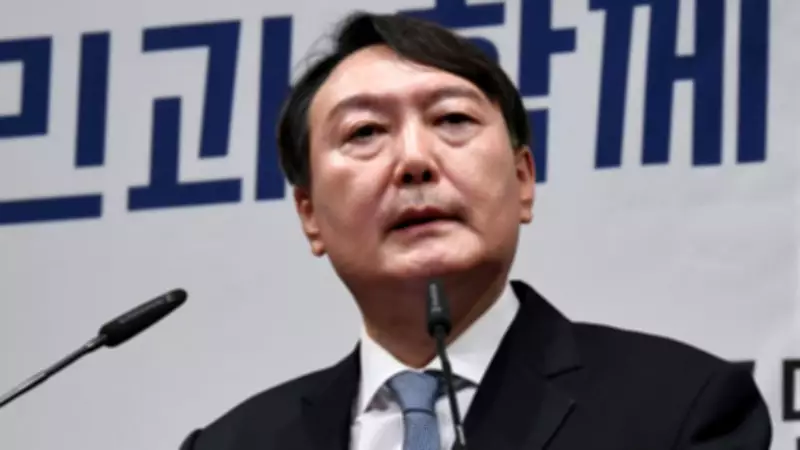
Former South Korean president Yoon Suk Yeol has been sentenced to life in prison after a court found him guilty of abuse of authority and rebellion for declaring emergency martial law in December 2024. The 65-year-old conservative leader plunged the nation into turmoil with his unprecedented decision to mobilize military and police forces in an illegal attempt to seize control of the opposition-controlled National Assembly.
Court Delivers Historic Ruling
Judge Jee Kui-youn told a packed courtroom on Thursday that Yoon's actions constituted clear acts of insurrection. "It is the court's judgment that sending armed troops to parliament and using equipment to try to make arrests all constitute acts of insurrection," the judge declared. The court emphasized that "an enormous social cost was incurred" because of the martial law declaration, which lasted only six hours before being blocked by parliamentary vote.
Several former military and police officials who enforced the martial law decree received sentences alongside Yoon. Former defence minister Kim Yong Hyun received a 30-year prison term for his central role in planning the measure and mobilizing military forces. Yoon's defense team indicated they would consider appealing the sentence, arguing the court ignored key legal principles regarding evidence.

Unprecedented Martial Law Declaration
Yoon's imposition of martial law marked the first such declaration in South Korea in over four decades. The proclamation granted sweeping powers including:
- Suspension of all political activities
- Control over media and publications
- Authorization for arrests without warrants
Security analyst Professor Michael Clarke noted at the time that the martial law appeared to be an attempt by Yoon to thwart his political opponents. The move followed two years of legislative deadlock between Yoon's conservative People Power Party and the liberal Democratic Party, which controlled parliament.
Political Background and Career Trajectory
Yoon's path to the presidency was unconventional. Born in 1960 during military dictatorship, he studied law and began his career as a prosecutor. He gained national attention prosecuting former presidents Park Geun Hye and Lee Myung Bak for corruption. Despite having no prior political experience, Yoon won the 2022 presidential election by a narrow 0.73% margin.
His presidency was marked by significant policy shifts from his liberal predecessor Moon Jae In. Yoon pursued:
- Strengthened military alliances with the United States and Japan
- Hostile stance toward North Korean unification efforts
- Increased military and financial aid to Ukraine
Domestic Struggles and Controversies
Domestically, Yoon faced numerous challenges and scandals that eroded his popularity:
Legislative Obstacles: With parliament dominated by opposition parties, only 29% of Yoon's proposed legislation passed until January 2024. He relied heavily on presidential vetoes, using them more frequently than any leader since military rule ended in 1987.
Family Scandals: Yoon's wife, Kim Keon Hee, faced multiple controversies including a conviction for bribery related to accepting a £1,730 Dior handbag as a gift. She is currently serving a 20-month prison sentence.
Media Relations: Despite initially cultivating positive relationships with journalists, Yoon's administration later conducted raids on newsrooms of critical journalists, whom he described as spreading "fake news."
Arrest and Legal Proceedings
Yoon's dramatic fall from power included a prolonged resistance to arrest. In January 2025, presidential security forces prevented investigators from detaining him during a six-hour standoff. He was finally arrested twelve days later when police returned with 3,200 officers.
In January 2026, Yoon received an additional five-year sentence for resisting arrest, fabricating the martial law proclamation, and bypassing required cabinet procedures. His supporters maintained visible presence throughout the legal proceedings, while critics demanded even harsher penalties including the death penalty.

The life sentence represents a dramatic conclusion to a presidency that began with narrow electoral victory and descended into constitutional crisis. The case has established significant legal precedents regarding presidential authority and the limits of emergency powers in South Korea's democratic system.