A prominent French historian who spent over a month in Gaza has revealed what he describes as "utterly convincing" evidence that Israeli military forces actively supported looters attacking humanitarian aid convoys during the conflict.
Eyewitness Account of Systematic Sabotage
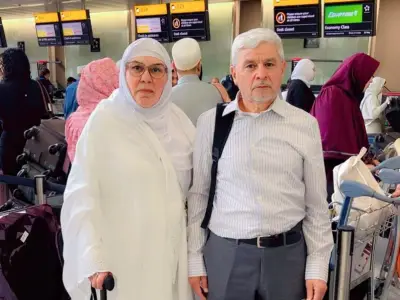
Jean-Pierre Filiu, a professor of Middle East studies at Sciences Po university in Paris, entered Gaza in December 2024 and remained until shortly after the second temporary truce in January 2025. His eyewitness account, published as "A Historian in Gaza," describes systematic Israeli attacks on security personnel protecting aid deliveries.
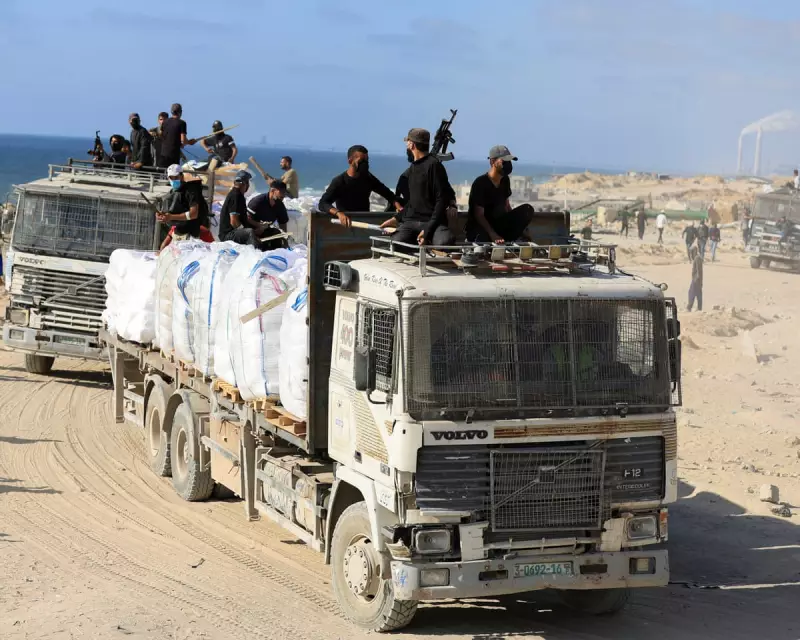
Filiu witnessed an incident near al-Mawasi, a designated humanitarian zone crowded with displaced Palestinians, where 66 trucks carrying flour and hygiene kits attempted a new route from the Kerem Shalom checkpoint. Hamas had recruited armed guards from local families to protect the convoy, but it quickly came under fire.

"It was one night and I was a few hundred metres away," Filiu writes. "And it was very clear that Israeli quadcopters were supporting the looters in attacking the local security teams."
Deliberate Targeting of Aid Protection
The historian describes how Israeli forces killed two local notables sitting in their car while preparing to protect the convoy. Despite this, the UN considered the loss of only twenty trucks an improvement over previous incidents where nearly entire convoys were looted.
Filiu argues Israel's rationale was to discredit both Hamas and the UN while allowing "clients" among the looters to redistribute aid to expand their support networks or resell it for cash. This occurred while famine threatened parts of Gaza, according to international humanitarian agencies.
UN agencies confirmed at the time that law and order had deteriorated significantly after Israel began targeting police officers guarding aid convoys. Israel considered all Gaza police part of Hamas, which has governed the territory since 2007.
Pattern of Aid Disruption
The French academic also accused Israeli forces of attacking a new route recently opened by international aid organisations to avoid looting blackspots. "The World Food Programme was trying to set up an alternative route to the coastal road and Israeli bombed the middle of the road," Filiu told the Guardian. "It was a deliberate attempt to put it out of action."
His accusations echo those made in an internal United Nations memo that described Israel's "passive, if not active benevolence" toward gangs responsible for looting in Gaza.
While Israel denied deliberately obstructing aid or supporting looters, Prime Minister Benjamin Netanyahu did admit that Israel had assisted the Popular Forces, an anti-Hamas militia that included many looters among its recruits.
Broader Implications for International Law
Filiu, who has visited Gaza for decades, expressed shock at the scale of destruction, noting that "anything that stood before" in the territory had been "erased, annihilated." The conflict began with Hamas's October 2023 raid into Israel that killed approximately 1,200 people, mostly civilians, with 250 taken hostage. Israel's subsequent offensive killed nearly 70,000 people, mostly civilians, and reduced much of Gaza to rubble.
The historian warned that the conflict represents a "universal tragedy" with profound implications. "It's a laboratory of a post-UN world, of a post-Geneva convention world, of a post-declaration of human rights world," Filiu said. "This world is very scary because it's not even rational. It's just ferocious."
The situation in Beit Lahia in the northern Gaza Strip on June 25, 2025, where Palestinians from clans held guns and melee weapons to secure aid trucks, illustrates the ongoing security vacuum and desperate measures required to ensure humanitarian supplies reach those in need.