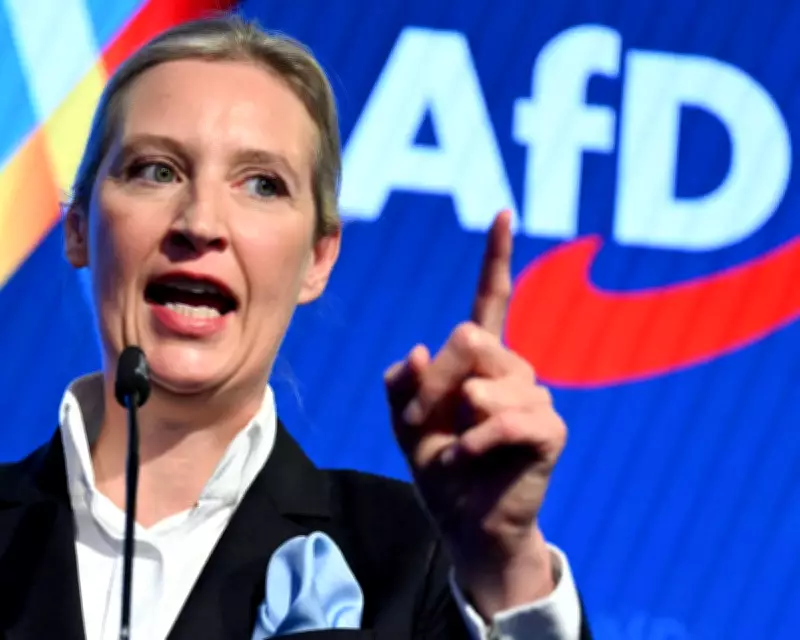
As exit polls emerged from the German general elections in Berlin on 23 February 2025, Alternative für Deutschland party co-leader Alice Weidel addressed supporters, symbolising a broader political shift sweeping across the continent. While European governments express anxiety about Donald Trump's potential trade threats, Nato uncertainties, and territorial ambitions, the most significant danger lies not in military invasion but in ideological transformation from within.
The Transatlantic Revolution
A year following Trump's return to the White House, his "second American revolution" is extending its influence across the Atlantic with increasing sophistication. What began with Steve Bannon's efforts in 2018 has evolved into a coordinated partnership with JD Vance's rising prominence and Trump's renewed presidency. The White House's National Security Strategy from November explicitly advocates strengthening "patriotic" European parties including Reform UK, Germany's AfD, France's Rassemblement National, Hungary's Fidesz, and Spain's Vox.
These nationalist, populist, and sometimes far-right movements represent not isolated national phenomena but components of a shared intellectual project, reminiscent of cold war communist movements in their transnational coordination. They're increasingly bolstered by external support from a foreign power, creating a network that transcends traditional political boundaries.
A Radically Contemporary Movement
Contrary to portrayals as backward-looking or reactionary forces seeking to restore imagined pasts, Europe's new right demonstrates remarkable contemporary relevance. Through eighteen months of intensive research involving conversations with Hungarian intellectuals, French RN politicians, Orthodox Jewish philosophers, and American Maga supporters, a clear picture emerges of a hyper-modern movement with compelling analysis of liberal democracy's perceived failures.
Central to their worldview is the conviction that liberalism has collapsed alongside the globalised order it championed post-cold war. They argue that citizens have endured successive shocks stemming from liberalisation: the 2008 financial crisis, 2010 eurozone turmoil, 2015 refugee emergency, 2020 pandemic, and 2022 cost-of-living surge following Russia's Ukraine invasion.
Crisis and Legitimacy
Benedikt Kaiser, an emerging voice within the AfD's intellectual sphere despite past associations with neo-Nazi circles, articulates how these converging crises have eroded the postwar liberal order's legitimacy. Each emergency, the movement contends, exposed liberal governance limitations, overwhelmed state capacity, and fostered suspicion about governmental priorities. While banks received rescue packages, welfare payments faced reductions and home repossessions continued, creating what they perceive as disproportionate burdens on ordinary citizens.
Constructing New Coalitions
Capitalising on these crises, the new right has systematically built electoral coalitions targeting working-class voters experiencing relative declines in income, security, and social standing. Their policy agenda spans immigration controls, trade protectionism, nationalist foreign policies, and institutional reforms, unified by promises to restore shared national identity.
Borders become tools for distinguishing "real" nationals from outsiders. Tariffs transform into mechanisms for rebuilding domestic production and elevating work dignity. Foreign policy narrows to strictly defined national interests. Institutional resistance is overcome by attacking the "deep state" and discrediting expert guardians of the liberal order.
Media Mastery and Alternative Realities
The movement's success substantially relies on navigating fragmented media landscapes and dominating algorithmic information spaces. As public spheres splinter into online subcultures, they bypass traditional journalism to saturate digital platforms with narratives and slogans. Through permissive "free speech" interpretations, alliances with technology magnates like Elon Musk have formed, while "alternative facts" and edgy memes dominate attention economies.
US conservative writer Rod Dreher illustrates this divergence using Isabel Vaughan-Spruce, a Christian activist arrested twice in Birmingham for praying outside an abortion clinic. While she's achieved cult status within new-right information spheres, her story remains largely unknown to mainstream audiences, demonstrating how different realities now coexist.
The Unwinnable Position
Perhaps the movement's most effective strategy has been forcing mainstream parties into defensive positions where they appear as elite defenders rather than worker advocates, continuity champions rather than change agents. Established parties initially underestimated the threat, then often resorted to mimicking divisive rhetoric, particularly on migration, which frequently strengthened challengers rather than neutralised them.
Pathways to Response
Effective counterstrategies must begin by acknowledging the new right's critique of liberalism while developing political projects addressing working-class concerns through innovative engagement methods. Successful examples exist in Denmark, the Netherlands, Kentucky, and New York, where tailored approaches have yielded positive results.
Figures like Mark Carney and Anthony Albanese recognise that populists' associations with Trump's revolution could become liabilities. European Council on Foreign Relations polling indicates clear majorities across multiple countries now perceive Trump's re-election as harmful. If centrist forces recognise the international threat posed by this second American revolution and develop strategies transforming the new right's strengths into vulnerabilities, political centres could reinvent themselves as genuine national sovereignty defenders.
By leveraging connections between new right parties and Trump's movement, there remains potential to defeat this ideological transformation through coordinated, strategic responses that address root causes rather than merely symptoms of political discontent.