France's National Rally Faces Unexpected Setbacks in Local Elections
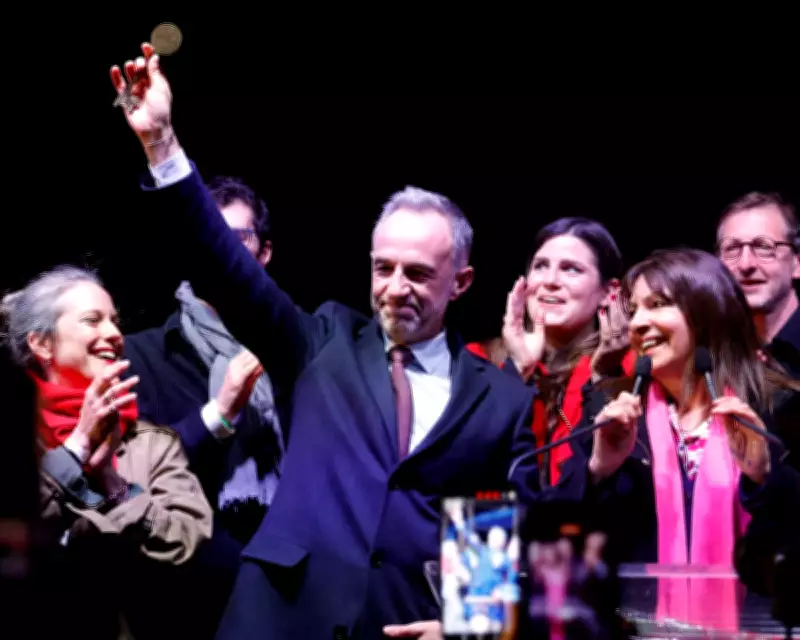
Socialist Party MP Emmanuel Gregoire has been elected as the mayor of Paris, marking a significant victory for the center-left in France's recent local elections. These elections, held just one year before a potentially seismic presidential vote, delivered crucial insights into the political landscape across Europe, particularly regarding the strength of far-right movements.
National Rally's Mixed Results and Strategic Implications
The Rassemblement National (National Rally) is not invincible, as demonstrated by last weekend's local elections in France. While the party hailed the results as "a major breakthrough"—now governing nearly 60 small to medium-sized towns, a sevenfold increase since 2020—it failed to capture its prime targets in larger cities. The far-right lost key battles in Marseille, Toulon, and Nîmes, often due to strategic alliances between left-leaning and moderate right-wing voters forming a "Republican front" to block their advance.
In conservative Nice, the National Rally secured a win through an ally, Éric Ciotti, but this victory came in a highly personal contest between right-wing rivals rather than a clear party triumph. These outcomes suggest that the National Rally might not be as unbeatable as recent polls have indicated, providing a glimmer of hope for mainstream political forces ahead of next year's presidential election.

High Stakes for France's Presidential Election
After a decade under President Emmanuel Macron, French voters are preparing for a presidential election that polls currently project could be won by either Marine Le Pen or Jordan Bardella of the National Rally. Some surveys even suggest a potential far-right victory in the second round, which analysts describe as one of the most significant threats to the European Union's architecture in history. Such an outcome could lead to "France first" policies, challenging European integration, reducing support for Ukraine, and reshaping NATO.
The local elections served as an important early test of the National Rally's strength, offering real-world clues about the possible dynamics of the upcoming presidential race. While the party made gains in smaller municipalities, its inability to conquer major urban centers indicates vulnerabilities that the traditional center-right, center-left, and Macron's centrists might exploit.
Lessons for Mainstream Political Parties
In Paris and Marseille, the center-left Socialist Party demonstrated it could win without the backing of Jean-Luc Mélenchon's radical left La France Insoumise, and that alliances with LFI often result in losses. Meanwhile, LFI, marginalized over allegations of extremism and antisemitism, managed symbolic wins in places like Roubaix but remains limited in its broader appeal.
The conservative Les Républicains and Macron's centrists suffered defeats in Paris and Lyon but captured several former leftist strongholds either separately or through alliances. A unified center and center-right bloc could theoretically defeat the far right, but this would require a single presidential candidate—a challenge with half a dozen potential contenders, including Edouard Philippe, the re-elected mayor of Le Havre.
Broader European Trends and the "Trumplash" Effect
Beyond France, there were tentative signs this week that Europe's populist far right may be encountering headwinds, possibly due to what some analysts term a "Trumplash." In Italy, Prime Minister Giorgia Meloni lost a high-stakes referendum on judicial reform, with 61% of voters aged 18 to 34 opposing it. While the immediate consequences are limited, the defeat undermines her invincibility and could hinder electoral law changes beneficial to her party.
In Slovenia, center-left incumbent Robert Golob narrowly defeated far-right nationalist Janez Janša, and in Hungary, Viktor Orbán faces potential ousting despite support from European populist allies and Donald Trump. In Denmark, the Social Democrats suffered their worst result in 120 years but remain the largest party, with Prime Minister Mette Frederiksen likely to form a new government. The far-right Danish People's Party improved but remains below its pre-2019 support levels, suggesting that rejecting Trump-style populism might yield electoral benefits.

These developments across Europe indicate that the far right is not having it all its own way, offering cautious optimism for mainstream political forces as they navigate the complex landscape ahead of critical national elections.