Trump's State of the Union Exposes Democratic Dilemma: Fight or Fold
For years, Democrats have clung to Michelle Obama's famous adage, 'When they go low, we go high.' This noble ethos has provided moral comfort but proven politically ineffective in the face of Donald Trump's relentless tactics. As Trump delivered a rambling, record-breaking State of the Union address lasting 107 minutes, the stark divide within the Democratic Party came into sharp focus. One faction upholds traditional decorum, while another embraces a more aggressive stance, recognizing that power, not politeness, dictates modern politics.
A Tale of Two Responses
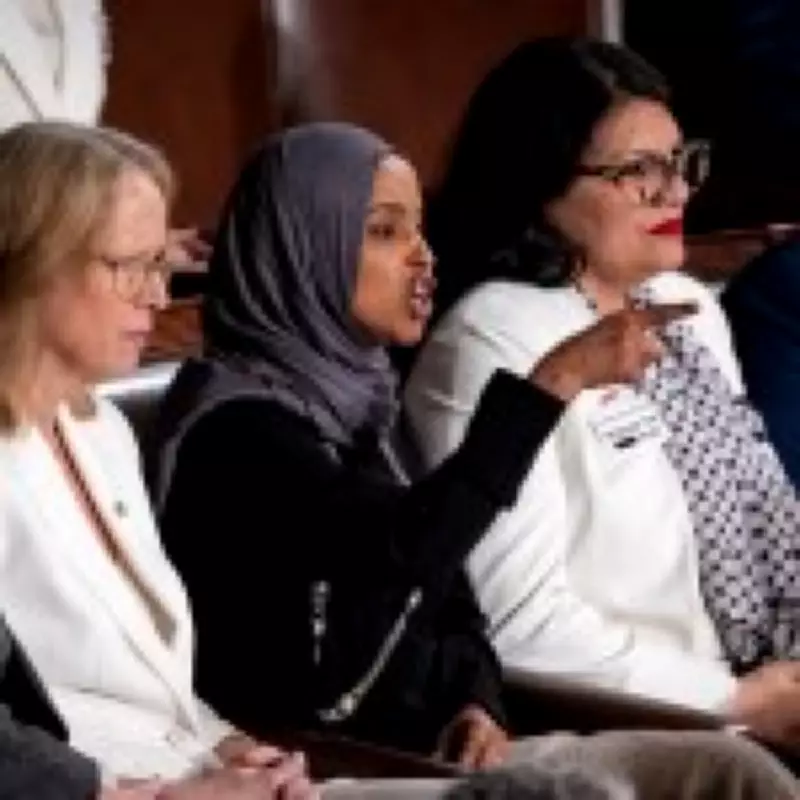
During the address, senior Democrats like Chuck Schumer and Elizabeth Warren adhered to protocol, applauding politely and treating the event as a standard presidential speech. In contrast, younger progressives such as Alexandria Ocasio-Cortez, Ilhan Omar, and Rashida Tlaib boycotted or protested, rejecting Trump's spectacle outright. This split underscores a critical juncture: should Democrats maintain dignity or match Trump's force to regain narrative control?
Trump's speech, filled with rhetoric on law and order and immigration threats, rang hollow given his 34 criminal convictions and liabilities for fraud and sexual abuse. His call to protect American citizens ignored the reality of aggressive ICE raids that have detained over 68,000 people and resulted in more than 30 deaths. The gap between his words and actions remains vast, challenging Democrats to respond effectively.

The Generational Clash
The older guard of the Democratic Party, including figures like Joe Biden and Elizabeth Warren, operates from an era where norms and civility held sway. They hope for unity and brevity, but expecting such from Trump is futile. Younger Democrats, often dismissed as theatrical or untested, grasp that applauding platitudes only normalizes Trump's abnormal behavior. They argue that etiquette cannot correct a leader who thrives on chaos and rule-breaking.
Trump's second term has seen institutions bend and capitulate at a breathtaking pace. He shows no fear of outrage or scolding, as evidenced throughout his first term. Clinging to the idea that proper behavior will restore normality is delusional. Strongly worded letters or bipartisan gestures have failed to change his course, proving that new strategies are essential.
Strategic Imperatives for Democrats
This is not a call for a race to the bottom but a recognition that times have changed. The younger cohort of Democrats represents the only feasible route to strategic dominance. They understand that upholding principles must coincide with getting 'in the arena' to fight Trump's narrative head-on. The question is no longer whether Trump will change but whether Democrats will adapt to counter his political force.
As the party navigates this crossroads, the slogan 'When they go low' must evolve. In 2026, it cannot mean surrendering power for peace; it must mean engaging fiercely to reclaim control. The Democratic Party's future hinges on this critical choice between dignified inaction and empowered confrontation.