
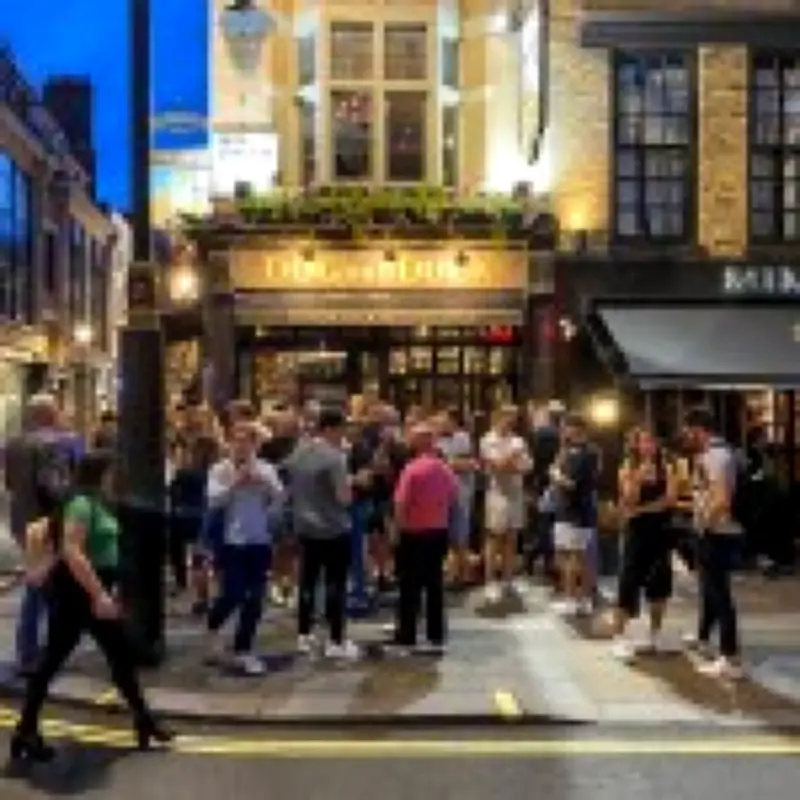
Westminster Council’s draft proposals targeting ‘vertical drinking’—the practice of standing while drinking in pubs—have sparked near-universal condemnation, but one unlikely voice has come out in support. Ross McCafferty, a self-described ‘pintsman’ and Opinion Editor, argues that despite the backlash, parts of the policy could drastically improve drinking culture in the capital.
What Are the Proposals?
The proposals, covering busy areas like Soho and the West End, encourage licensed premises to adopt table service, limit excessive drinking, and prevent customers from congregating in outside spaces. The aim is to curb the nuisance of pavement pint-drinkers and single-file queues at bars, which have become a common sight across central London.
Council leader Tim Barnes has stressed that the policy is not a ban on standing at the bar, but rather a measure to manage the flow of customers and reduce street congestion.
Why the Backlash?
Critics, including Mayor Sadiq Khan, publicans, and social media users, have decried the proposals as an overreach by a council often dubbed ‘London’s designated fun sponges’. Many fear it signals a return to pandemic-era restrictions, with QR codes and table service becoming the norm once again.
However, McCafferty argues that the policy’s focus on reducing pavement drinking and bar queues is long overdue. He recounts his daily winter commute past the Churchill Arms in Kensington, where he was forced to dodge crowds of drinkers spilling onto the pavement, some so far from the pub they seemed to be in a different postcode.
The Case for Table Service
McCafferty, who admits to getting ‘tennis elbow’ from lifting pints, says the single-file queue at bars is a ‘battle lost’—he once witnessed an entire hen do lining up from the bar to the door in a Bristol Wetherspoons. He believes that table service, while initially annoying, could eliminate these queues and make pub visits more efficient.
He also highlights the dangers of pavement drinking, noting that revellers often cross the street beer-in-hand, risking accidents. The Devonshire pub in Soho, which the council may have had in mind, has bouncers who physically push back crowds to prevent them from colonising the entire area.
Impact on London's Nightlife
The proposals come amid broader efforts to manage London’s nightlife, which has seen a surge in popularity for venues like the Churchill Arms and the Devonshire. While some fear the measures could stifle the city’s vibrant pub culture, McCafferty argues that curbing the worst excesses could make pubs more enjoyable for everyone.
He acknowledges the irony of a Tory council proposing such measures, but insists that the policy’s potential to improve the streets and reduce hazards outweighs the inconvenience of table service.
What Happens Next?
The draft proposals are still subject to consultation, and it remains to be seen whether they will be implemented in their current form. McCafferty hopes the backlash won’t deter the council from taking action on pavement drinkers and bar queues, which he describes as ‘twin scourges’ of London’s drinking scene.
As he puts it, ‘I’m in favour of this anti-pub proposal from a Tory council’—a sentence he never expected to utter.




