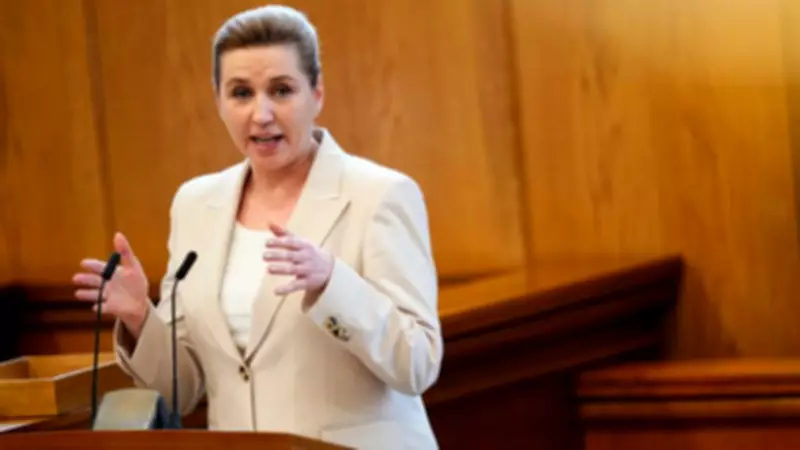
Danish Prime Minister Mette Frederiksen Announces Snap Election Amid Greenland Standoff
Danish Prime Minister Mette Frederiksen has declared that Denmark will hold an early election on March 24, 2026, as the country navigates a tense standoff with the United States over President Donald Trump's renewed interest in annexing Greenland. The announcement, made in the Danish parliament in Copenhagen, comes as Ms Frederiksen seeks to leverage a surge in public support for her defiant position on the Arctic island crisis.
Election Called to Capitalize on Political Momentum
"I have recommended to King Frederik that elections be held on March 24," Ms Frederiksen stated, moving the vote forward from the scheduled deadline of late October. Denmark's political landscape, governed by the Folketing with 179 seats—including representation from Greenland and the Faroe Islands—is poised for a decisive shift. Ms Frederiksen emphasized that this election will be critical for defining Denmark's future relationship with the United States and reinforcing European security.
"This will be a decisive election, because it will be in the next four years that we as Danes and as Europeans will really have to stand on our own feet," she said. "We need to define our relationship with the United States, and we must rearm to ensure peace on our continent."
Greenland Crisis Boosts Popularity Amid Domestic Challenges
Recent months have seen Ms Frederiksen, 48, actively rallying European leaders to counter President Trump's ambitions regarding Greenland. This diplomatic effort has provided a much-needed popularity boost for the prime minister, whose approval ratings had previously suffered due to public dissatisfaction over rising living costs and welfare pressures. Opinion polls indicate that her party, the Social Democrats, has rebounded from a low of 18% support in December to 22%, making it the highest-supported party currently.
Ms Frederiksen, who has held office since mid-2019, leads a coalition government with the Liberal Party and the centrist Moderate party. Despite a significant setback in the 2025 municipal elections, where the Social Democrats lost the Copenhagen mayoralty for the first time in 87 years, her handling of the Greenland dispute has revitalized her political standing.
Ongoing Tensions and International Implications
The conflict over Greenland escalated last month when President Trump threatened to impose new tariffs on Denmark and other European nations, though this was short-lived. Subsequent discussions among the US, Denmark, and Greenland focused on an Arctic security deal, but Ms Frederiksen and other officials have firmly refused to negotiate on sovereignty issues. "As everyone knows, the conflict over Greenland is not over yet. The government will of course continue to look after Denmark's interests," she affirmed.
President Trump later claimed to have "formed the framework of a future deal with respect to Greenland," but details remain unclear. The standoff has elevated Ms Frederiksen's international profile, building on her previous recognition for swift responses to the COVID-19 pandemic and bolstering European support for Ukraine.
Denmark, as a member of NATO and the European Union, last held a general election on November 1, 2022, resulting in a three-party coalition. The upcoming snap election, allowed under Danish law which permits the prime minister to call a vote at any point within the four-year cycle, is set to shape the nation's political and diplomatic trajectory in the face of ongoing global challenges.