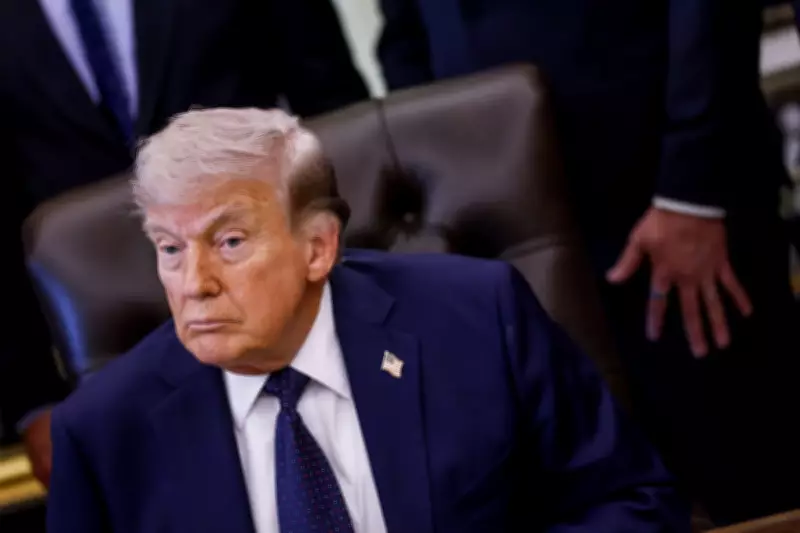
Following an armed man's attempt to breach the ballroom where Donald Trump was set to speak at the White House correspondents' dinner on Saturday, conspiracy theories immediately emerged questioning whether the event was staged. This rhetoric has become common in an era of fractured politics and deep distrust in government and media, experts say.
Conspiracy Theories as a Common Response
Scott Radnitz, a professor at the University of Washington who studies conspiracism, noted that conspiracy theories are a frequent response to significant political events, including assassination attempts. Online theories gain traction when truth is unclear and algorithms amplify sensationalism. People who distrust Trump are quick to suspect any political development involving him. "The administration does not have the best record of honesty and transparency when it comes to communicating with the public," Radnitz said. "People who already believe the worst about what Trump is capable of can easily tell a story about the latest event to conform to their existing views."
Trump's immediate claim that the incident justified a more secure ballroom, along with rightwing pundits' uniform messaging, heightened the conspiracy framing. While most major news organizations reported on the event, Radnitz cautioned that "people who have tuned out the 'legacy media' will have plenty of alternative accounts to choose from."

Normalization of Extreme Rhetoric
Clionadh Raleigh, founder of the Armed Conflict Location & Event Data project, pointed to the normalization of extreme rhetoric amid rising political violence. She cited early days of the Iran war, where "casual references to assassinating political leaders" became mainstream, lowering the threshold for violence. "The US is facing a particularly volatile mix: widespread access to firearms, persistent lone-actor threats, and an increasingly hyper-radicalized political culture," Raleigh said. "Disorder in the US is decentralized, opportunistic, and difficult to predict. And the risk extends across the political spectrum, to anyone in public office."
While many immediate conspiracy theories came from the left, neither party is immune. A December 2025 YouGov poll found most Republicans doubted Joe Biden's 2020 win, while about half of Democrats questioned Trump's 2024 legitimacy, though false election claims on the left haven't been endorsed by party leaders.
Conspiracy Theories from Trump's Former Allies
Trump has faced conspiracy theories from his own former supporters. Some right-wing figures have hinted he is the antichrist, suggested he staged the Butler assassination attempt, or claimed Israel is blackmailing him. Tucker Carlson, the former Fox News host, said he regretted voting for Trump and intimated that Trump is attacking Christianity. "Could there be a spiritual component to what we're watching?" Carlson asked on his podcast. "Could this be the antichrist? Well, who knows?" He also pushed theories about the FBI lying about the Butler shooter.
Comedian Tim Dillon said this month that people might not know the "full story" about the assassination attempt. "Maybe it was staged. Maybe it was faked. I think now is the time to just come out and say we staged the assassination attempt in Butler," he said.
Coalition of Conspiracy-Minded People
Joseph Uscinski, a political science professor at the University of Miami, said Trump's coalition was built on claiming victimhood by a deep state, opponents, and media. "That can only work for so long," Uscinski said. "Eventually, these conspiracy-minded people will turn their ire towards him. We shouldn't be shocked that they believe conspiracy theories." Radnitz added that when people are motivated by conspiracy theories, they see them everywhere. "In their worldview, the only explanation for why Trump hasn't fulfilled his promises is because he's also now part of the system. He is the system."