
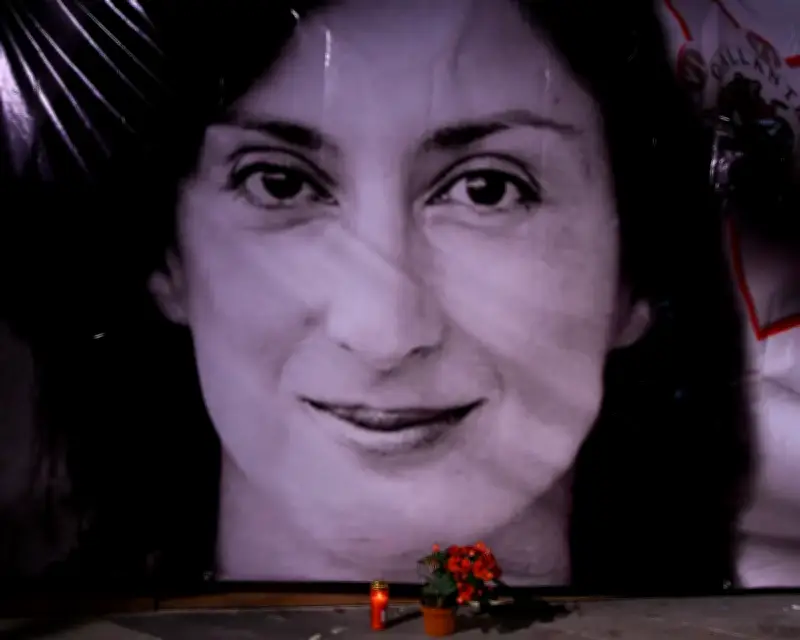
The acquittal of Yorgen Fenech, a wealthy Maltese businessman, on charges of complicity in the murder of journalist Daphne Caruana Galizia has triggered outrage and fears for press freedom in Malta and across Europe. The not-guilty verdict, delivered by a jury on Wednesday evening, has been denounced as “justice denied” by Caruana Galizia’s eldest son, Matthew, and has prompted opposition MPs to demand an immediate recall of parliament for debate.
Verdict stuns Malta after historic trial
Fenech, head of one of Malta’s most successful business families, was acquitted of both charges he faced: complicity in voluntary homicide and criminal association. The verdict came after a 55-day trial, the longest in Maltese history, and was unexpected despite always being a possibility. As family members broke down in tears, Fenech left the courthouse to chants of “mafia”. Caruana Galizia’s sister, Corinne Vella, told reporters: “This signals you can kill journalists with impunity.” Demonstrators later gathered outside parliament to demand action.
Although five other men were convicted for carrying out the assassination and procuring the bomb, Fenech’s acquittal leaves many questions unanswered. Prosecutors had accused him of paying €150,000 (£129,000) via a middleman to have Caruana Galizia killed. The case has been a symbol of the struggle against increasing attempts to silence reporters, and its outcome has sent shockwaves through the political establishment, which had hoped for a guilty verdict to demonstrate Malta’s ability to hold people accountable within the EU.
Journalists see chilling signal for press freedom
Juliette Garside, the Guardian’s European financial affairs editor, reported from Valletta that the verdict is a huge shock for campaigners. Reporters Without Borders said it was “beyond outraged”. Garside noted that Caruana Galizia’s family is bitterly disappointed, as the other convicted men had no power or political influence, and the prosecution of Fenech was the one that mattered most.
The case has been a landmark in the fight to protect press freedom in Europe. Caruana Galizia was killed in a car bombing in October 2017, after investigating corruption at the highest levels of Maltese politics. Her death triggered a political crisis that forced then-Prime Minister Joseph Muscat from office and galvanised a cross-European reporting team, the Daphne Project, to continue her investigations. The project, involving journalists from Reuters, the Times of Malta, Le Monde and Süddeutsche Zeitung, also pressed the Maltese police to investigate beyond the hitmen.
Broader implications for Malta and Europe
In Malta, the verdict has raised concerns about the chilling effect on journalism. The Times of Malta’s editorial headline read: “We’ve turned the clock back to 2017.” Garside said there is a sense among the Maltese media that this is a chilling verdict, and the prosecution is likely to appeal. The trial exposed close relationships between big business, police chiefs and regulators, which may feed into other pending corruption cases.
Across Europe, the case has intensified concerns about the silencing of government critics. A public inquiry into Caruana Galizia’s killing recommended Europe-wide laws to protect journalists from strategic lawsuits against public participation (Slapps), but no member state has yet implemented them. European Parliament President Roberta Metsola vowed to continue fighting for justice, and the European Commission has expressed concern after an unsuccessful car bomb attack on Italian investigative reporter Sigfrido Rannucci. In the UK, two private members’ bills to crack down on Slapps are expected to attract cross-party support. Garside said, “The fact that the public know what a Slapp is at all – and that there’s now a coordinated push to protect whistleblowers, journalists and victims of sexual assault from being sued by those who wish to silence them – is all because of what happened to Daphne. That is her legacy.”




