Mark Carney Emerges as Leading Voice for New Global Coalition
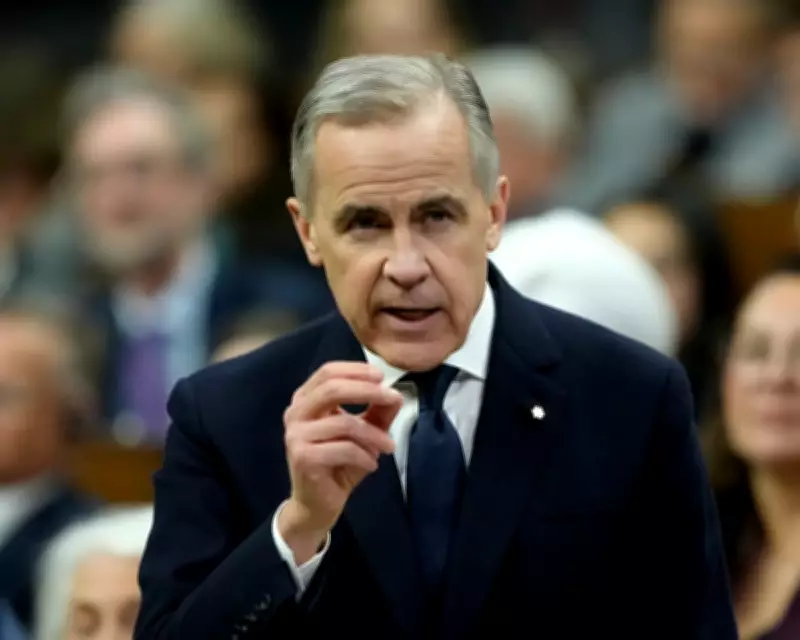
Former Bank of England governor Mark Carney has positioned himself as the prominent spokesperson capable of articulating a coherent platform around which nations committed to democratic values and international cooperation can unite. This development comes amid growing concerns about the disruptive impact of Donald Trump's presidency on established global norms and institutions.
Growing Consensus for Middle Powers Alliance
There is increasing agreement among political analysts and former leaders about the urgent need for a non-aligned coalition of middle powers. This proposed alliance would operate outside the traditional spheres of influence dominated by the United States, Russia, and China. The coalition would focus on maintaining world peace, promoting collective approaches to trade and security, and settling international disputes through established arbitration mechanisms.
Jonathan Freedland's analysis aligns with earlier assessments by both Mark Carney and former Prime Minister Gordon Brown, suggesting that Trump's recent actions and inflammatory rhetoric have left democratic nations with little choice but to strengthen their collective defences. All three figures have identified the necessity for countries committed to multilateralism to create alternative structures for international cooperation.

The Challenge of Building Political Consensus
To embark on what Carney describes as this "third path," political leaders including Keir Starmer must be forthright in convincing their electorates that such an international venture will require significant long-term investment. This represents a substantial political challenge that could potentially fracture already sceptical and disillusioned voter bases.
The work of building public support must begin immediately, with leaders needing to convince citizens that without such collective endeavours, their current way of life and the international order that supports it cannot be assured. This requires navigating complex domestic political landscapes while maintaining focus on long-term strategic objectives.
Rugby Analogy Highlights Need for New Approaches
One correspondent draws a compelling parallel between current political dynamics and the origins of rugby. Just as William Webb Ellis famously picked up the football and ran with it in 1823, creating a new game with different rules, Donald Trump has similarly disrupted established political conventions and is attempting to enforce his own version of international relations.
The analogy suggests that Trump's opponents continue to operate using outdated tactics and conventions that are no longer effective against his unconventional approach. To effectively counter this disruption, democratic nations may need to adopt new strategies and demonstrate greater collective strength, much like rugby players forming a coordinated scrum to halt an advancing opponent.
Systemic Weaknesses in Democratic Safeguards
Another perspective highlights deeper concerns about the adequacy of traditional democratic safeguards in the current political climate. The constitutional principle of "checks and balances" designed to prevent any single branch of government from accumulating excessive power appears increasingly vulnerable when facing actors who refuse to adhere to established norms and conventions.
This analysis suggests that consensus-based systems provide insufficient protection against determined efforts to circumvent or undermine institutional constraints. The current situation in the United States, where Trump has reportedly built a domestic paramilitary force for personal use, demonstrates how traditional safeguards can be bypassed by actors operating outside conventional parameters.
Call for Fundamental Democratic Reform
There is growing recognition that more durable and enforceable systems may be needed to replace or substantially strengthen existing democratic safeguards. This would likely require initiating a broad, non-partisan debate involving representatives from all branches of government and across the political spectrum.

While such discussions might naturally begin within opposition parties like the Democrats, their ultimate success would depend on achieving cross-party consensus and developing mechanisms with greater binding authority than current arrangements. This represents a profound challenge to conventional thinking about democratic governance and international relations in an increasingly unpredictable global landscape.
The emergence of Mark Carney as a leading voice advocating for collective action among democratic nations reflects both the urgency of current geopolitical challenges and the search for innovative responses to unprecedented political disruption. As middle powers consider their options, the coming months will likely see intensified discussions about alternative frameworks for international cooperation and democratic resilience.