California Sheriff's Ballot Seizure Sparks Election Integrity Concerns
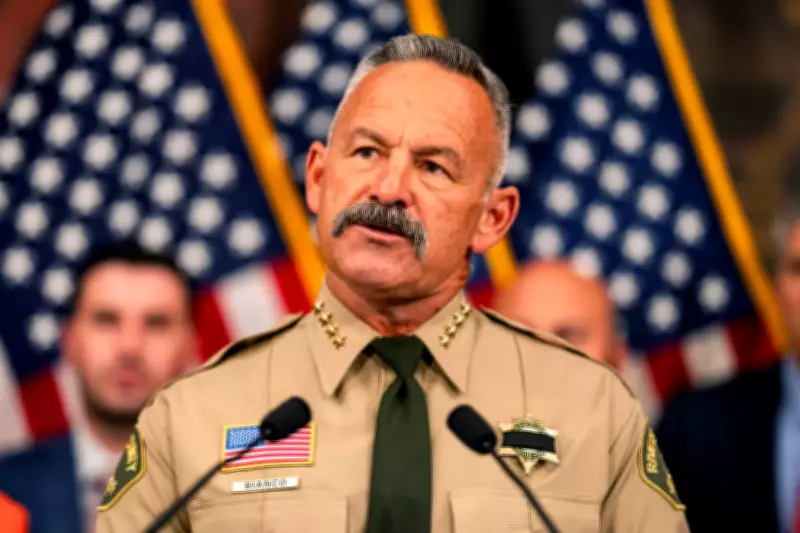
Riverside County Sheriff Chad Bianco's decision to seize approximately 650,000 ballots has ignited significant alarm regarding potential efforts to undermine confidence in the electoral system ahead of California's upcoming primary elections. The controversial move, based on unsubstantiated fraud allegations, has drawn sharp criticism from state officials and watchdog groups.
Warrants Issued for Ballot Seizure
Sheriff Bianco obtained warrants in February and March to confiscate ballots from a special election held last year, where voters overwhelmingly approved Proposition 50, a referendum to redraw California's congressional districts. The referendum passed by nearly 30 points statewide, with Riverside County supporting it by more than 82,000 votes, representing a nearly 13-point margin.
Despite the warrants remaining sealed, Bianco indicated his investigation stemmed from claims by a citizen activist group alleging a discrepancy of 45,896 between ballots cast and counted. However, no formal accusations of fraud or wrongdoing have been made, and no recount was requested.

Political Context and Legal Challenges
The timing of Bianco's actions coincides with his campaign for California governor, where he is competing in the June 2 primary to advance to the general election. This political backdrop has raised questions about potential motivations behind the ballot seizure.
California Attorney General Rob Bonta, a Democrat, filed a lawsuit last month to halt Bianco's investigation, describing it as an "amateur and dubious 'recount'" that threatens to "sow distrust and jeopardize public confidence" in upcoming elections. Bonta emphasized in a March 4 letter that seizing ballots based on vague allegations sets a dangerous precedent.
Bianco announced he was suspending the investigation due to "politically motivated lawsuits," though the attorney general's litigation continues. The sheriff maintains that politics played no role in his actions, asserting that investigations should proceed regardless of potential political consequences.
Disputed Allegations and County Response
Riverside County Registrar of Voters Art Tinoco has stated that county officials investigated the activist group's claims and found them to be misleading. Tinoco explained that activists used raw ballot submission numbers without accounting for signature verification processes, and when data was properly compared, only a minimal discrepancy of 103 ballots existed—well within California's acceptable limits.
Bianco told media outlets he planned to conduct a hand recount of the seized ballots and would consider similar actions for the June primary if questions arose about results. This approach has raised concerns about potential errors and disruption to election integrity protocols.
Connections to Election Integrity Movements
Bianco's actions mirror similar investigations in other states, including a Justice Department probe in Fulton County, Georgia, where authorities relied on disproven claims to obtain search warrants for 2020 election ballots. Legal experts note that obtaining such warrants requires demonstrating probable cause of criminal activity, which appears questionable in both cases.
The sheriff has connections to the Riverside Election Integrity Team, the citizen group pushing the allegations. Group member Shelby Bunch revealed in a 2024 podcast that she directly communicated findings to Bianco, who she described as "mindful" of their concerns.
Bianco was briefly affiliated with the Oath Keepers, a far-right extremist group, and aligns with the constitutional sheriff's movement, which asserts that sheriffs hold superior authority to federal officials. Other sheriffs associated with this movement have attempted to seize voting equipment and promoted false election claims.
Judicial and Political Relationships
The judge who approved the ballot seizure warrant, Jay Kiel, previously praised Bianco during his 2022 judicial campaign, stating "we're so fortunate to have Chad Bianco." A political action committee linked to Bianco contributed $10,000 to support Kiel's election, raising questions about potential conflicts of interest.

Bianco has denied any wrongdoing regarding judicial selection, noting it was impossible to predict which judge would be assigned. However, critics argue the relationship underscores potential political dimensions to the investigation.
Broader Implications for Election Security
Election experts warn that such investigations based on insufficient evidence can undermine public trust without substantiating actual wrongdoing. Katherine Reisner of the States United Democracy Center noted that similar cases typically result in prosecutors declining to pursue charges due to lack of evidence.
Darius Kemp of Common Cause California characterized Bianco's actions as "a blatant political ploy" designed to undermine voting systems. The episode highlights how unverified claims can translate into law enforcement actions that disrupt election processes and erode confidence in democratic institutions.
As California approaches its primary elections, the controversy surrounding Riverside County's ballot seizure serves as a cautionary tale about the intersection of law enforcement, political ambition, and election administration. The ongoing legal battle between state officials and local law enforcement will likely influence how similar allegations are handled in future elections.