Among the underrated later work of those revered sons of Manchester the Smiths, there is a completely jaw-dropping song simply titled London. Full of fury and excitement, it depicts a Mancunian as he boards a train, traveling to the capital full of ambition and hope, but also gripped by a gnawing ambivalence. Andy Burnham, whose love of the band is hardly a surprise, may well recognize not only its defining theme, but the song's accidental encapsulation of his decision to try to make his way to the House of Commons, in a line crooned by Morrissey in slightly mocking tones: "And do you think you've made the right decision this time?"
Even if some observers only give him a 45% chance of winning, it looks like Burnham has, particularly when it comes to his pitch for power. Eleven years ago, let us not forget, a somewhat different incarnation of the future Greater Manchester mayor was one of four candidates for the Labour leadership, along with Jeremy Corbyn, and chose to stage one of his launch events at the City of London HQ of the auditing firm Ernst & Young. There he said he might back further benefit cuts, and claimed that too many people associated Labour with "giving people who don't want to help themselves an easy ride." In 2022, he told me this was the result of bad advice: "I listened to people that I shouldn't have, really. It was tone-deaf … it wasn't me. It wasn't authentic."
Some look at the 2026 model and see the same brazen shape-shifter. But having watched him close-up, I would argue that his progress over the last decade or so – he first became mayor of Greater Manchester in 2017 – has really been a contrasting story of rising certainty and self-confidence, deepening engagement with some of the more vibrant forces on the center-left – such as Compass, the pressure group that gives a platform to both Labour and non-Labour voices – and the resulting ability to connect with crowds that most political figures would leave cold (witness two recent appearances at Glastonbury). But his most important attribute is a reflection of the dead end reached by Keir Starmer: the fact that Burnham has a lot of actual ideas. Remember those?

This week, he spoke at the Great North Investment Summit in Leeds, an event centered on devolution. He talked about people's complete loss of faith in politics, and made one of his most well-trodden arguments: that for 40 years, this country has simply been on the wrong path. In keeping with an unabashedly partisan account of the UK's past disasters and missteps, he lamented the "draining away of economic, social and political power" from the north of England, compounded by "deregulation, privatization … and austerity," and local economies whose wealth was siphoned "into the hands of people for whom life was already very good." The signs of this shift include "people paying over the odds for the daily basics: energy, housing, water, transport."
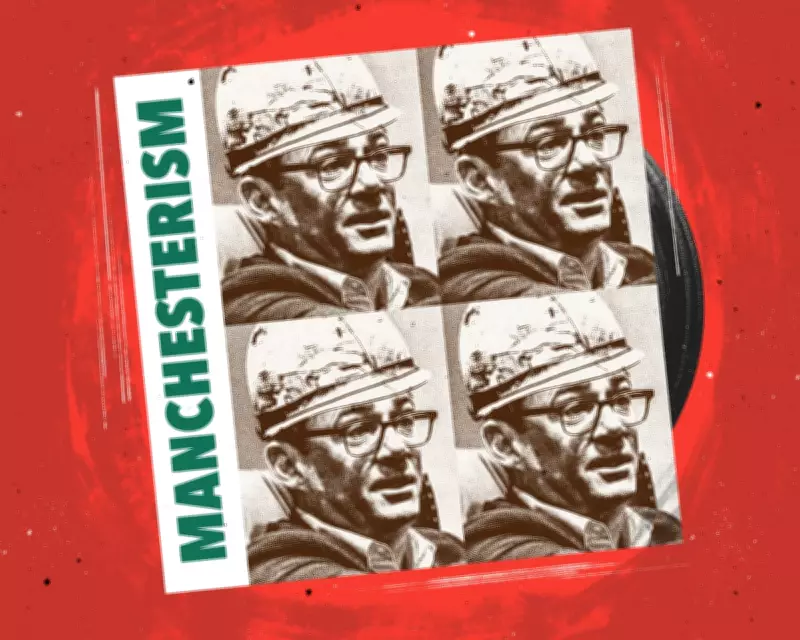
This is not particularly sophisticated stuff, but that is surely part of its power. Burnham's conception of the north's recent past is the crux of "Manchesterism" – the work-in-progress credo, with its backhanded reference to 19th-century free-trade Manchester liberalism, that he now draws on whenever he speaks. It begins with an account of history that emphasizes deindustrialization, and the convulsions of the 1980s (Margaret Thatcher is referenced in the first 35 seconds of his first Makerfield campaign video, soundtracked by Elbow's One Day Like This). There is also a pointed emphasis on social housing, and the fact that rising so-called welfare bills are an indication of economic and social failure rather than worsening national delinquency.
The worst of modern capitalism, Burnham insists, is cynically extractive and socially damaging (shades here of Ed Miliband's old argument about the difference between "predators" and "producers"). In its view of Westminster's dysfunctional dominance, meanwhile, Manchesterism offers something so far monopolized by Nigel Farage: a specifically English critique of our broken systems of politics and power, the product of Burnham's reinvention as a political outsider.

The core of all this is what Mathew Lawrence, the director of the thinktank Common Wealth, calls "the productive state," in a new book about Manchesterism that he has co-authored of the same name. "Where the market coordinates and the welfare state redistributes, the productive state produces: directly owning and operating capital in essential sectors, participating in markets as builder and provider rather than as regulator or redistributor," Lawrence says. "It is the return of sovereign economic control of the economy's foundations."
Reflected in Burnham's pledge to bring energy and utilities under "stronger public control," this foundational principle partly inspired one of modern Manchester's ubiquitous features: the Bee Network. These yellow buses – with their uniform £2 fare – have finally brought order and coordination to a public transport system torn asunder by the Thatcher government's deregulation of 1986. There is an interesting historical parallel here: just as the blessed Margaret avenged postwar social democracy at 40 years' distance, so Burnham is set on "rolling back the 80s."
And then there are the overarching vibes, and what the word "Manchester" evokes. No one should swallow any idea of the city as a progressive utopia: rough sleepers have long bedded down in the shadow of impossibly pricey apartments, and there is a painful income, wealth and influence gap between Greater Manchester's north and south. But Burnham's Manchesterism is clearly intended to build on the unquestionable successes that began with the miraculous regeneration delivered by the former city council leader Richard Leese and his chief executive Howard Bernstein. It conjures up images of a city center where consumerist wonderment sits in the midst of a culture that is both entrepreneurial and collectivist. If Manchester has a prevailing spirit, this is probably it – and the UK could do with a lot more of it.
Perhaps in response to Burnham's radicalism, things are now moving fast at the top of Labour, as evidenced by Rachel Reeves's new commitment to a summer of cost-of-living activism and that supposed Blairite Wes Streeting's conversion to the idea of a wealth tax. Meanwhile, Burnham's naysayers make sneering reference to the gilt market, and question how much his agenda might actually cost.
Personally, I like Manchesterism for much the same reason as I like that aforementioned Smiths song: its ferocity, bile, energy and sense of purpose. Who knows what will happen in Makerfield, where the odds are so finely balanced? If Burnham became PM, how would he re-orientate Whitehall to even start to deliver what he wants in short order? So far we only know this: that his ideas have brought ideological oomph – not to mention hope – to a Labour party that was in dire danger of reducing politics to technocratic misery. And for that, we should be truly thankful.