
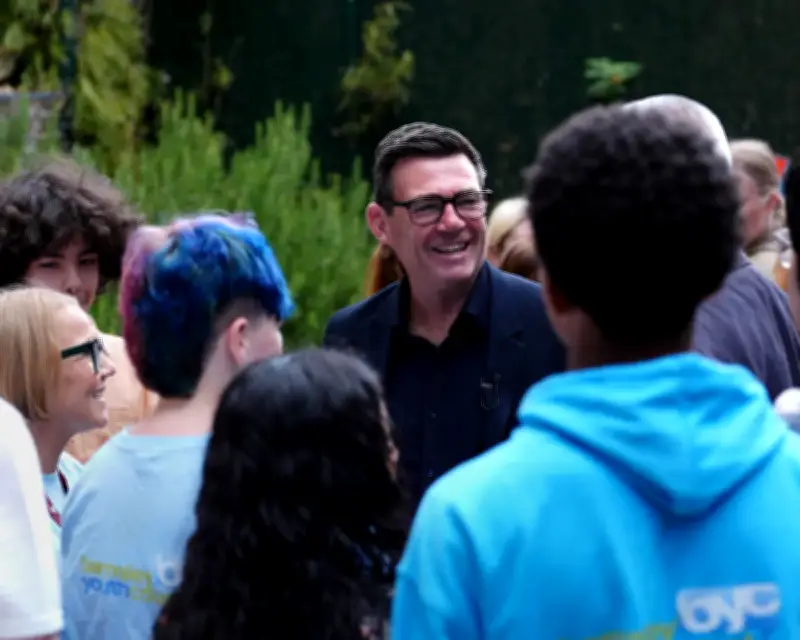
Andy Burnham, the Mayor of Greater Manchester, has embarked on a national listening tour, a move that political analysts say could redefine his political trajectory and signal a new approach to engaging with the electorate. The tour, which began in August 2026, aims to gather grassroots opinions on key issues such as housing, public services, and regional inequality.
The Tour's Objectives and Scope
Burnham's tour is designed to take him to towns and cities across the UK, with a particular focus on areas that have felt neglected by Westminster. According to his office, the initiative is part of a broader effort to build a 'people-powered' policy agenda, one that challenges the top-down decision-making that has dominated British politics.
In a recent speech in Leeds, Burnham stated, 'We need to listen before we lead. The days of Westminster knowing best are over. This tour is about handing the microphone to the people who have been ignored for too long.' This sentiment has resonated with many, as voter apathy and distrust in political institutions have reached record levels.
Key Issues on the Agenda
Housing affordability has emerged as a central theme, with Burnham hearing firsthand accounts of families priced out of their communities. In Manchester, he highlighted the need for a 'right to home' policy, which would guarantee secure, affordable housing for all. This, he argues, is not just a social issue but an economic one, as unstable housing undermines productivity and health.
Public services, particularly the NHS and social care, are also prominent. Burnham has criticized the underfunding of these services and called for a 'national care service' to address the growing crisis. He has repeatedly cited statistics showing that 7.5 million people are currently on NHS waiting lists, a figure he describes as 'a national scandal.'
Political Implications and Reactions
The tour has been widely interpreted as a precursor to a potential leadership bid, either for the Labour Party or as a platform for a new political movement. Burnham, however, has remained coy, insisting that his focus is on 'the issues, not the positions.' Nonetheless, his popularity among Labour members and the broader public makes him a formidable figure in any future leadership contest.
Reactions have been mixed. Supporters praise his authenticity and willingness to engage with ordinary people, while critics argue that the tour is a thinly veiled exercise in self-promotion. A spokesperson for the Conservative Party dismissed the tour as 'a listening exercise without a plan,' but Burnham's team counters that the policy proposals will emerge directly from these conversations.
Impact on Regional Politics
Burnham's tour has also reignited debates about devolution and regional governance. In Newcastle, he called for greater powers for metro mayors, arguing that 'local leaders know their communities best.' This has been welcomed by other mayors, including the Mayor of West Yorkshire, Tracy Brabin, who joined Burnham for a town hall event in Bradford.
The tour's timing is significant, coming ahead of the next general election, which is expected within two years. Burnham's ability to galvanize support outside London could prove crucial in shaping the national conversation and influencing party policy.
Public Engagement and Future Steps
Engagement has been impressive, with over 10,000 people attending events in the first month alone. The tour has utilized digital platforms to reach a wider audience, including live-streamed Q&A sessions and an online portal for submitting ideas. Burnham's team has committed to publishing a report summarizing the findings, which will be used to inform a 'People's Charter' for the UK.
As the tour continues, Burnham is expected to visit all four nations of the UK, with stops planned in Scotland, Wales, and Northern Ireland. This cross-border approach underscores his ambition to address issues that affect the whole of the UK, not just England.
Conclusion
Andy Burnham's national listening tour represents a bold experiment in participatory politics. Whether it leads to concrete policy changes or serves as a springboard for his political ambitions, it has already succeeded in injecting fresh energy into public discourse. In an era of political disillusionment, Burnham's message of listening and empathy may well be the antidote that many are seeking.




