
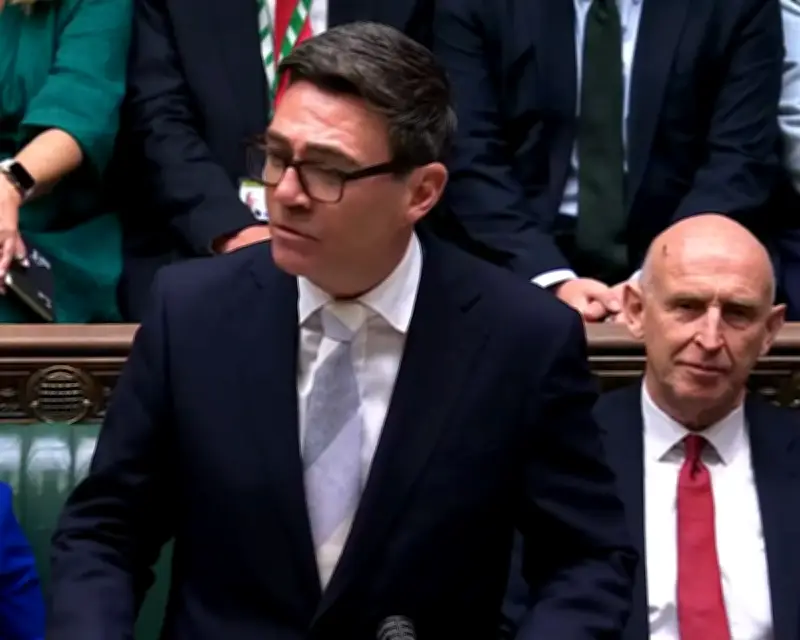
Andy Burnham's first appearance at the Commons dispatch box as prime minister was overshadowed by the news that his predecessor, Keir Starmer, had resigned as MP for Holborn and St Pancras. The announcement came just hours before Burnham's statement on the government's direction to negotiate, a move that many saw as an attempt to grab headlines on the first day of the new parliamentary session.
Starmer had previously insisted he would remain an MP until the next general election, but he said in his statement that he had only latterly realized that this would be incompatible with his ambitions on the international stage. This U-turn was a defining feature of his two years in office, according to political commentators.
Burnham's Call for Unity and Positive Vibes
Burnham, who had mixed feelings about Starmer's decision, began his speech by praising his predecessor. He said Starmer had given a lifetime of service, created a platform for change, and made the Labour party electable again. The new PM then moved to the heart of his message: less policy, more positive vibes.
Burnham had not come to the Commons to pick a fight with the opposition. Instead, he hoped they would listen to him, realize he was right, and then work with him. He acknowledged this was a big ask, especially with Kemi Badenoch as leader of the opposition, who is so disinhibited she can pick a fight with herself. But he was willing to offer a hand of friendship.
Key Policy Areas and Challenges
Burnham ran through a wishlist of priorities. He noted small boat crossings were down, more prison places were needed for the right kinds of prisoners, and defence would be sorted later. He also addressed the cost of living, saying the country has been in decline since 1980.
“I will be relentless about achieving change and growth,” he said, adding that he had taken Manchester and now would take the UK. He emphasized the need to stay upbeat, as the country had had enough of being told it was falling apart. He concluded that the next decade could be better than the last, though this was not entirely comforting given the previous ten years.
Badenoch's Response and the Road Ahead
Badenoch tried to sound as if she had listened and would work at finding common ground, but her tone was patronizing. “I’ll be gentle,” she said, before going on to say that almost everything Burnham had said was totally wrong. She dismissed the decline in small boat crossings as a coincidence and argued that Margaret Thatcher’s actions were irrelevant since she had been born after Thatcher took office.
Burnham responded by pointing out that Badenoch had just picked a shadow chancellor who was the author of Liz Truss’s mini-budget. Badenoch looked shell-shocked, and she will need to up her game before the next prime minister’s questions. Burnham also noted that he could have saved her the air fare to Rome, where she had fantasized that Giorgia Meloni told her not to do a deal with Reform.




