Bangladesh Nationalist Party Announces Majority Win in Landmark Election
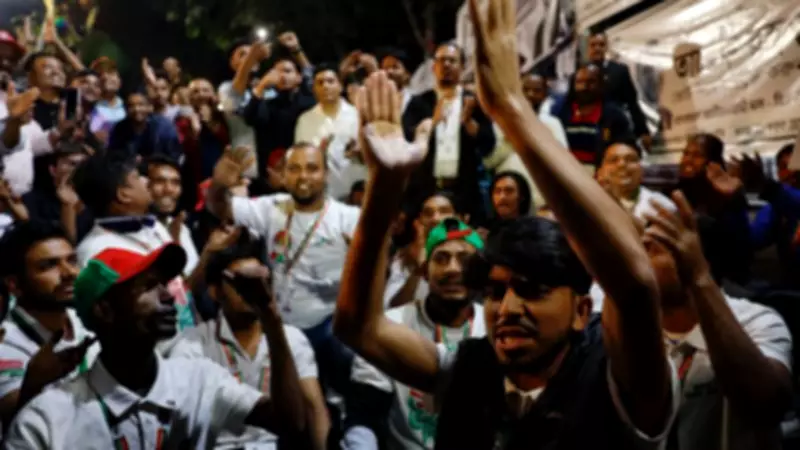
The Bangladesh Nationalist Party (BNP) has asserted a majority victory in the country's historic election, the first since the Gen Z-led uprising of 2024. According to the party's media unit, the BNP has secured enough parliamentary seats to govern independently, although the Election Commission has not yet finalized the official results. This claim follows reports from several local media outlets corroborating the party's success.
Key Figures and Political Context
The BNP is led by Tarique Rahman, the prime ministerial candidate who returned to Bangladesh in December after 17 years of self-exile in London. At 60 years old, Rahman is the son of former prime minister Khaleda Zia, who passed away in December. The election was largely viewed as a two-way contest between the BNP and an 11-party alliance headed by the Islamist Jamaat-e-Islami, conducted under heightened security amid concerns over democratic erosion and escalating political violence.
A decisive outcome is considered vital for reinstating political stability in Bangladesh, a Muslim-majority nation with a population of 175 million. The July 2024 student-led revolt, which the United Nations estimates resulted in 1,400 fatalities, led to the ousting of prime minister Sheikh Hasina, who subsequently went into exile in India. Hasina's Awami League party has been banned from all political activities since then, with an interim government led by Nobel Peace Prize laureate Muhammad Yunus assuming control.

Election Details and Constitutional Changes
Alongside the parliamentary election, voters participated in a referendum on constitutional amendments, including the introduction of a two-term limit for the prime minister and measures to enhance women's representation. Bangladesh's parliament comprises 350 seats, with 300 directly elected from single-member constituencies and 50 reserved for women.
The BNP, founded in 1978 by Tarique Rahman's father, Ziaur Rahman, has predominantly been in opposition to the Awami League over the past two decades. The party boycotted multiple elections, alleging systematic vote rigging and political repression under Hasina's administration. Rahman's exile to the United Kingdom stemmed from numerous corruption and criminal cases pursued by Hasina's government, charges he has consistently denied. These cases were dropped following the collapse of Hasina's government, facilitating his return to Bangladesh.
International Reactions and Future Implications
The BNP's victory claim has elicited supportive messages from regional leaders. Indian prime minister Narendra Modi expressed that "India will continue to stand in support of a democratic, progressive and inclusive Bangladesh," while Pakistan president Asif Ali Zardari congratulated "the people of Bangladesh on their successful, peaceful polls." Zardari further emphasized Pakistan's commitment to "democratic partnership and shared progress ahead."
This election marks a pivotal moment for Bangladesh, potentially ushering in a new era of governance after years of political turmoil. As the nation awaits official confirmation from the Election Commission, the BNP's assertion of a majority victory underscores the shifting dynamics in South Asian politics, with implications for regional stability and democratic processes.