
Barking and Dagenham has been named the least friendly place in England, according to the Community Life Survey, which measured how often residents talk to neighbours, feelings of isolation, community connection, local pride, and involvement in civic activities. To test the findings, our reporter visited the East London borough and spoke to residents with contrasting views.
Market bustle vs. survey verdict
On a grey Thursday afternoon, Barking's market street was lively, with shoppers bargaining, couples chatting outside cafés, and people enjoying early pints. The market has operated along this street for centuries, and its 80 stalls were recently revitalised. Plans to add a large fish market at Dagenham Docks to replace Smithfield and Billingsgate were deemed financially unviable.
Zabi Hullh, who moved to Barking nine years ago, runs a busy corner shop on the market strip. He described Barking as a temporary and transactional place. "A lot of people go elsewhere to work in the day, and then only come back at night to sleep," he said. His brother listened nearby.
John and Bobby Bradford, lifelong Barking residents, disagreed. They called the borough "very friendly" and said they know their neighbours well. John, a former BBC lighting technician, said, "We know our neighbours very well." Bobby added, "It seems no more or less lonely than anywhere else."
Divergent views on community and challenges
Lola Adams, who visits Barking Market to share the Gospel when her schedule allows, also praised locals as conversational and "willing to engage." She said, "I think loneliness is a state of mind. You can be with people and still be lonely. Faith, not religion, is what will help you. Knowing that someone is there with you."
Other residents were less optimistic. Alex Vilau, who runs a Romanian food kiosk with her husband Dragos, has worked in Barking for four years. She said, "There are a lot of homeless people and a lot of drugs. Homelessness is the biggest problem." Her daily view includes many of the borough's struggles.
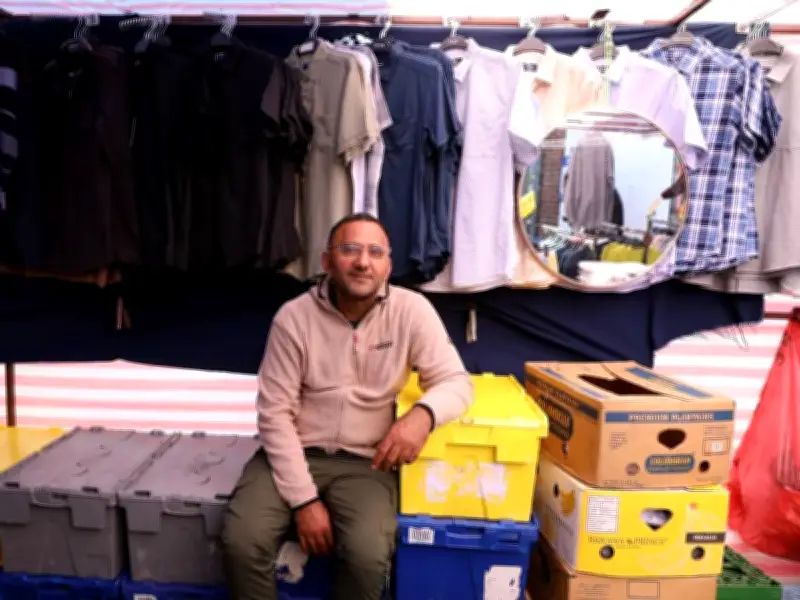
Imran Butt, who runs a clothing stall halfway along the market and has lived in the borough for 30 years, said conditions have worsened. When asked if Barking is welcoming, he replied, "It used to be." He said he regularly sees distressed people who have been pickpocketed and observes shoplifters targeting the nearby JD Sports. He is reluctant to let his teenage children go into the town centre alone. "It's dangerous. It's not a safe place," he said.
Deprivation and funding pressures
The borough faces significant challenges. Its Index of Multiple Deprivation rating is 10, the poorest possible, placing it among the five most deprived local authorities in England, alongside Newham. About 29% of residents live in poverty, and 42% of children experience childhood poverty. Additionally, 23% of residents earn low wages, the highest proportion of any London borough. The borough also has the highest level of excess weight among Year 6 pupils nationally and falls in the worst quintile for excess weight among adults.
Councillor Dominic Twomey, Leader of Barking and Dagenham Council, highlighted funding pressures. "In real terms, we receive 40% less funding than 15 years ago and barely 17% of our funding comes from Council Tax paid by residents. Like many other councils we are caught in a perfect storm. Funding for local services has not kept up pace with demand or the cost of providing services which has risen sharply," he said. "2025 is the first time in years the core funding we receive from the government has risen. But this does not make up for the lack of funding since 2010/11."
All those interviewed agreed that Barking was previously a more welcoming community. At the other end of the scale, the Isles of Scilly, South Ham, and the Derbyshire Dales were recognised as the three most welcoming places in the nation. Residents can submit their own responses to the survey until October, or email webtravel@reachplc.com to share their thoughts.




