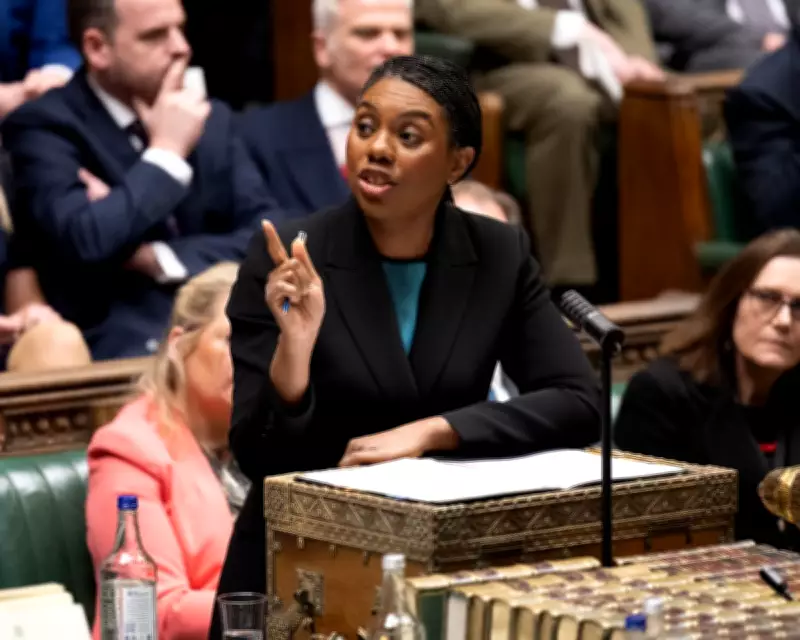
During a critical Prime Minister's Questions session, Kemi Badenoch delivered a performance that many observers described as borderline disgraceful, turning the debate into a stark contrast between Keir Starmer's measured approach and her own confrontational style. The session focused on the escalating tensions in the Middle East, particularly concerning Iran, yet Badenoch's contributions were widely seen as lacking in substance and seriousness.
A Serious Context Overshadowed by Political Theater
The backdrop to this PMQs was the grave threat of all-out war in the Middle East, sparked by Donald Trump's actions in Iran. In such times, political leaders are expected to set aside usual hostilities for national security, as Starmer did during the Ukraine conflict by supporting Boris Johnson. However, Badenoch's approach was markedly different, with critics arguing she failed to grasp the geopolitical ramifications or offer constructive insights.
The Clash of Styles: Sanity Versus Distortion
Starmer began the session with a sober assessment, prioritizing the protection of UK nationals in the region. In contrast, Badenoch quickly escalated the rhetoric, questioning why the UK hadn't joined in bombing Iran and displaying a troubling lack of nuance. Her comments, such as suggesting that Brits abroad deserve their fate, were met with disbelief, highlighting a tonal deficit that undermined her credibility.

Further missteps included Badenoch's embarrassing lack of knowledge about military capabilities, like the F35 missile systems, and her rant about the state of the British armed forces, which Starmer pointed out was a result of Tory cuts over 14 years. This led to a chaotic exchange, with shadow defence secretary James Cartlidge becoming visibly agitated, underscoring the disorder in the opposition's response.
Broader Implications for the Conservative Party
Badenoch's performance has raised concerns about her leadership within the Conservative Party, with some labeling her the worst leader in living memory. Her inability to engage seriously on foreign policy issues, coupled with a self-delusional narrative where she portrays herself as a heroine despite poor polling, suggests a severe disconnect from reality. This was compounded by other Tory figures, like Gareth Bacon, who also misjudged the special relationship with the US, framing it as blind loyalty rather than mutual defense.
Ultimately, the session served as a reminder of the stakes in political leadership during crises. While Starmer's approach may have been criticized domestically, Badenoch's borderline disgraceful display highlighted the dangers of having leaders who prioritize theatrics over substance, especially when global stability hangs in the balance.