
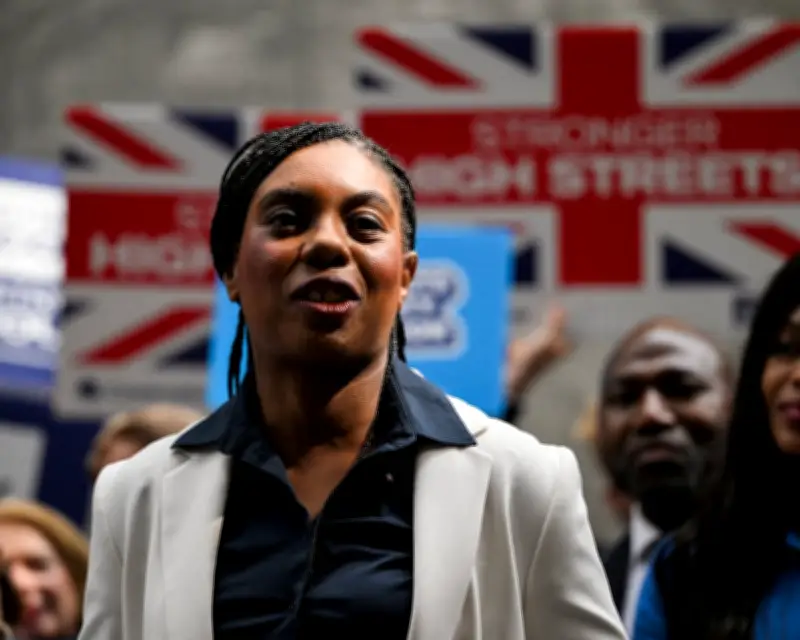
The Conservative Party under Kemi Badenoch faces a deepening crisis of identity and judgment following her ill-fated defense of a former neo-Nazi selected to stand as a local councillor in Somerset. Joshua Bonehill-Paine, who has convictions for racially aggravated harassment of a Jewish Labour MP and assaulting a police officer, withdrew his candidacy on Wednesday amid mounting pressure on the party leader to repudiate him. The episode underscores a broader strategy by Badenoch to purge moderate voices from the party, a move that critics argue is alienating mainstream voters and failing to revive Tory fortunes.
Badenoch's Second Chance Defense Draws Scrutiny
Badenoch had defended Bonehill-Paine by citing his renunciation of past extremism and his involvement in anti-extremism training, using his personal history as a cautionary tale. She stated, "I believe in giving people a second chance." However, this stance contrasts sharply with her treatment of Labour's Louise Haigh, who resigned from the cabinet over an old, minor fraud offence. Badenoch then declared, "The country needs conviction politicians, not politicians with convictions," showing an inconsistent application of her purported ethos.
When challenged on the discrepancy, Badenoch argued that a "higher threshold" applies for MPs compared to councillors, whose duties she dismissed as limited to "parking and bins." This justification sits uneasily with her praise for Bonehill-Paine's rehabilitation. If his anti-extremism work were truly exemplary, she might have sought to amplify his message rather than confine him to local government. The logic that a former neo-Nazi is unfit for Parliament but acceptable to run Somerset's services is both absurd and insulting to local residents.
Selection Standards Under Fire
All political parties apply stricter vetting for parliamentary candidates than for council hopefuls, given the greater responsibilities and limited resources. Yet, every party has faced embarrassment over extremists slipping through local lists. Badenoch's contortions, however, reveal a more profound issue: the Conservatives are struggling to define themselves in a fragmented political landscape. Her diagnosis of the 2024 electoral defeat is that the party "talked right but governed left," leading to a strategy that involves refusing to challenge Reform UK or its offshoot Restore, while anathematizing the Tories' liberal, one-nation tradition.
Under Badenoch, prospective Tory MPs must be "serious people who understand common sense," a test that explicitly excludes those who support net zero targets or Britain's membership in the European Convention on Human Rights. Former MPs, including senior ministers with such views, are unwelcome. Voters concerned about climate change or maintaining strong ties with European democracies are effectively told to look elsewhere.
Strategy Fails to Boost Support
This repudiation of mainstream centre-right politics in favor of a radical nationalist agenda has failed to lift Conservative support. Polls consistently show the party trailing Labour and, at times, Reform UK. The strategy appears to alienate moderate voters without winning over hard-right enthusiasts, leaving the Tories in a political no-man's land.
Badenoch's leadership is now under intense scrutiny, with critics questioning her judgment and fitness to lead. The Bonehill-Paine affair is symptomatic of a broader problem: a leader who prioritizes ideological purity over electoral viability and common sense. As she claims to champion "serious people who understand common sense," she might do well to apply that test to her own candidacy for prime minister.
Impact on Conservative Future
The episode has sparked internal debate and public criticism, with some Tory members expressing dismay at the party's direction. The lack of a clear, inclusive vision threatens to further erode the party's base, which has already shrunk significantly since 2019. The Conservatives' ability to recover may depend on whether Badenoch can recalibrate her approach and embrace a more balanced conservatism that appeals to a broader electorate.
As the party navigates these turbulent waters, the question remains: can Badenoch reconcile her hardline stance with the need to rebuild a coalition of voters? The coming months will be telling, but for now, the party's credibility is at stake, and the public is watching closely.




