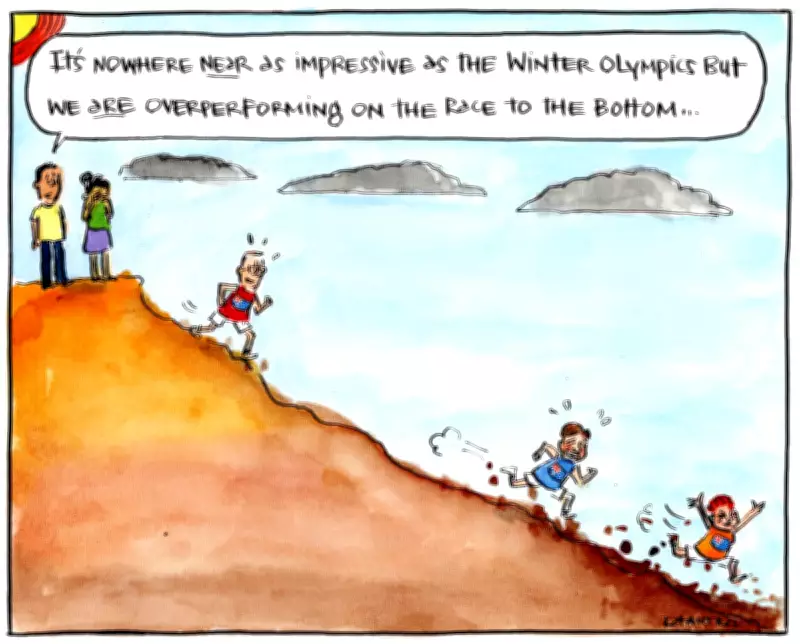
In a surprising turn of events, Australian politicians have captured public attention by staging their own downhill event, a move that has drawn sharp comparisons to the Winter Olympics. This metaphorical competition, unfolding in the political arena, has sparked widespread debate and criticism, highlighting the intense rivalries and high-stakes maneuvers characteristic of contemporary Australian politics.
The Political Downhill: A New Spectacle
The concept of a downhill event in politics refers to the rapid and often reckless descent into conflict and controversy, mirroring the speed and danger of Olympic skiing. Australian politicians, from various parties, have been accused of engaging in this behavior, with public statements and policy decisions creating a sense of chaos and instability. Observers note that this event lacks the athleticism of the Winter Olympics but compensates with dramatic flair and political posturing.
Key Players and Their Roles
Several prominent figures have been identified as key participants in this political downhill. Leaders from both major parties have made headlines with aggressive tactics, while backbenchers and minor party members add to the turbulence. The event is characterized by swift policy shifts, heated parliamentary debates, and media confrontations, all contributing to a perception of a government in freefall.

Critics argue that this downhill event distracts from substantive issues, such as economic management and social welfare, instead focusing on short-term gains and partisan victories. Supporters, however, view it as a necessary part of democratic competition, where strong positions and bold moves are essential for progress.
Comparisons to the Winter Olympics
The analogy to the Winter Olympics is not merely superficial. Just as downhill skiing requires precision, speed, and risk-taking, so too does this political event. However, unlike the Olympics, which celebrates physical achievement and international unity, the political version often results in division and public disillusionment. The timing, coinciding with global sports events, has amplified the contrast, with many Australians expressing preference for athletic competitions over political drama.
Public Reaction and Media Coverage
Media outlets have extensively covered this political downhill, with headlines emphasizing the spectacle over substance. Social media platforms are abuzz with memes and commentary, often mocking the politicians involved. Public opinion polls indicate a growing frustration with the perceived lack of decorum and focus, with calls for more collaborative and stable governance.
Experts in political science suggest that such events can have long-term consequences, eroding trust in institutions and deterring public engagement. They warn that while political competition is healthy, an excessive focus on downhill-style tactics may undermine democratic values and policy effectiveness.
Implications for Australian Politics
This downhill event raises important questions about the future direction of Australian politics. Will it lead to meaningful reforms or simply more of the same? Some analysts predict a potential backlash, with voters demanding greater accountability and less theatricality. Others foresee a continuation of the trend, as politicians adapt to a media landscape that rewards controversy.
In conclusion, the Australian political downhill event serves as a poignant metaphor for the current state of affairs. While it may lack the glamour of the Winter Olympics, it offers a stark reminder of the challenges facing modern democracies. As the event unfolds, its impact on policy, public trust, and political culture will be closely watched, with lessons that could resonate far beyond Australia's borders.