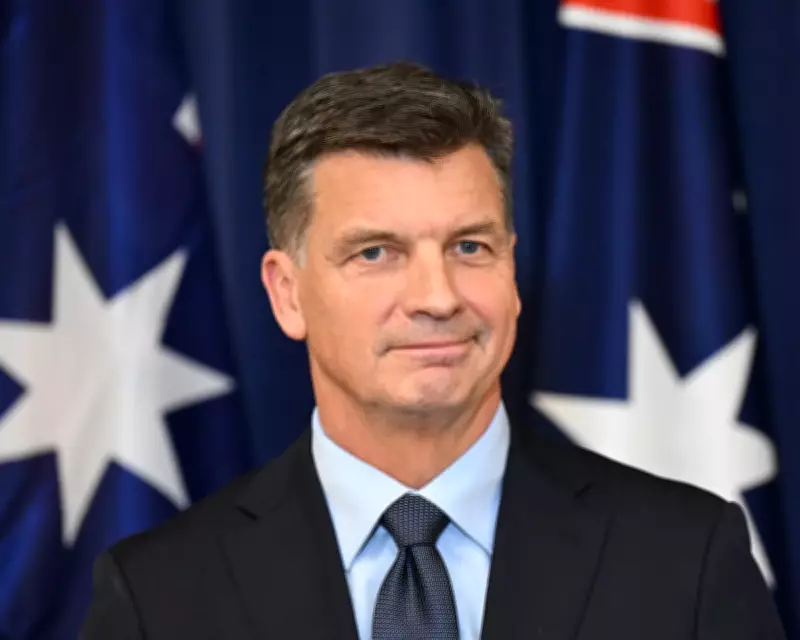
Angus Taylor Joins Political Insults Hall of Fame with Bizarre Comparisons
Australian Treasurer Angus Taylor has recently found himself on the receiving end of some particularly vivid and unusual insults, being compared to a desiccated coconut and a grub. These remarks have sparked both amusement and debate, but they place Taylor in a long and storied tradition of political name-calling that spans the globe, with Westminster in London being a particularly fertile ground for such verbal barbs.
A Tradition of Colorful Political Insults
The world of politics is no stranger to sharp-tongued exchanges and creative put-downs. In the United Kingdom, the halls of Westminster have echoed with insults for centuries. Figures like Winston Churchill were masters of the craft, famously describing a political opponent as "a modest little man with much to be modest about." More recently, former Prime Minister Boris Johnson has been labeled a "greased piglet" and a "clown" by critics, showcasing how personal and imaginative these attacks can become.
This culture of insult is not confined to the UK. In Australia, the political landscape has its own rich history of verbal sparring. The comparisons to a desiccated coconut and a grub directed at Angus Taylor are just the latest examples. Such insults often serve to highlight perceived weaknesses or characteristics, whether it's a lack of substance (as implied by the desiccated coconut) or underhanded behavior (suggested by the grub).

The Impact and Purpose of Political Insults
While these insults might seem frivolous, they play a significant role in political discourse. They can:
- Undermine credibility: By painting a politician in a negative light, insults aim to reduce their public trust and authority.
- Mobilize support: For supporters, such attacks can reinforce loyalty and rally against a common enemy.
- Shape public perception: Vivid metaphors like "desiccated coconut" can stick in the public's mind, influencing how a figure is viewed long-term.
In the case of Angus Taylor, these insults come amid his tenure as Treasurer, a role where economic policies and financial management are under constant scrutiny. Critics may use such language to express dissatisfaction with his performance or approach, though Taylor has largely brushed off the comments, focusing on his policy agenda.
Angus Taylor in Good Company
Despite the sting of being called a grub or a desiccated coconut, Angus Taylor is in good company. Many prominent politicians have endured far worse. For instance, former US President Donald Trump has been labeled a "orange buffoon" and a "tyrant" by opponents, while in the UK, former Labour leader Jeremy Corbyn was often mocked as a "mugwump" or "useful idiot."
These examples show that political insults are a universal phenomenon, cutting across party lines and national borders. They reflect the high stakes and passionate debates inherent in governance. For Taylor, the experience may even be seen as a rite of passage, signaling his prominence on the political stage.
As the dust settles on these latest insults, the broader lesson is clear: in politics, words are weapons, and creativity in criticism is often celebrated. Whether it's a desiccated coconut in Australia or a greased piglet in the UK, the tradition of political insults shows no signs of drying up, much to the fascination of observers and participants alike.