
Andy Burnham, the likely next prime minister, is known for his empathy and humility, traits that could redefine British politics. John Harris, a Guardian columnist, shares two anecdotes from his interactions with Burnham that illustrate these qualities.
Glastonbury 2022: A Humble Start
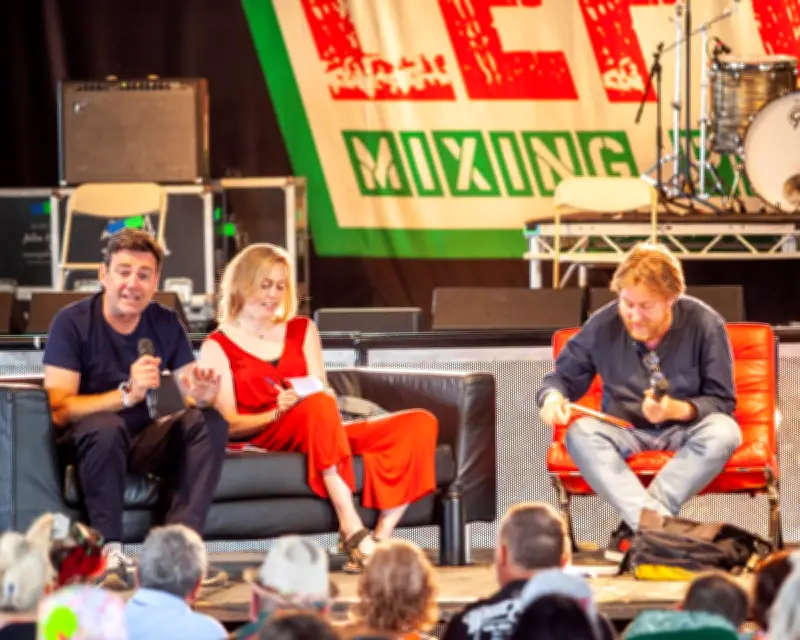
In the summer of 2022, Burnham attended Glastonbury Festival for the first time, appearing on the Left Field stage organized by Billy Bragg. Harris helped chair the debate session titled "State of the Nation: Politics in Crisis." Burnham, accompanied by his wife Marie-France, arrived backstage thrilled but with a miniature beach tent mistakenly grabbed from home, which could only accommodate a lone toddler. Bragg's brother lent them a suitable tent. Burnham's talk focused on "rewiring" the UK by devolving power from Westminster, and he engaged with a hungover audience of 1,000, even being gracious to disruptive Trotskyists.
A Mayor Who Doesn't Pull Rank
Later that year, at the Labour party conference, Harris mentioned reviewing Bob Dylan in Oslo for free. Burnham expressed envy, and Harris suggested he could get tickets for his family as mayor of Manchester. Burnham looked genuinely stumped, as if the possibility hadn't occurred to him. This contrasts with typical politicians who might exploit their position. Harris notes that Burnham, despite ambition and self-confidence, can be humble and shy, avoiding rank-pulling or entitlement.
Background and Policy Agenda
Burnham grew up in a working-class family in Culcheth, Cheshire, attending a comprehensive school. His book "Head North" discusses his "gnawing self-doubt" about fitting into Westminster. This background informs his policy agenda, which emphasizes devolution and empowering "forgotten places." Unlike Tony Blair, who was uneasy with devolution, Burnham is committed to giving power away, weakening his own authority to give voice to communities like his hometown.
Challenges and Contradictions
Despite his popular appeal, Burnham faces challenges. He is a lonely figure with wide but shallow support among MPs. His radical agenda—rolling back neoliberalism and building council houses—conflicts with his inner circle, including potential chancellor Shabana Mahmood and chief of staff James Purnell, a former Blairite. Harris notes a tension between Burnham's radicalism and the people meant to implement it, recalling Harold Wilson's quip about running a Bolshevik revolution with a tsarist shadow cabinet.
Questions also arise about his ability to handle tough diplomacy with figures like Donald Trump and Vladimir Putin, given his consensus-building style. However, Harris argues that past failures from puffed-up leaders—Iraq war, banking crisis, Brexit—suggest a more humble approach could be beneficial.
As Burnham prepares to enter Downing Street, Harris expresses cautious hope that his emphasis on modesty, listening, and devolution could make the country fairer and less broken. The Burnham regime, Harris concludes, evokes a mix of nerves and excitement, much like the politics of the big tent.




