The question of whether Donald Trump operates outside the law or has crafted a unique legal philosophy for himself dominates political discourse. His approach to legal and constitutional norms presents a fundamental challenge to established systems, prompting intense debate about the boundaries of power and accountability.
The Core of the Trump Legal Doctrine
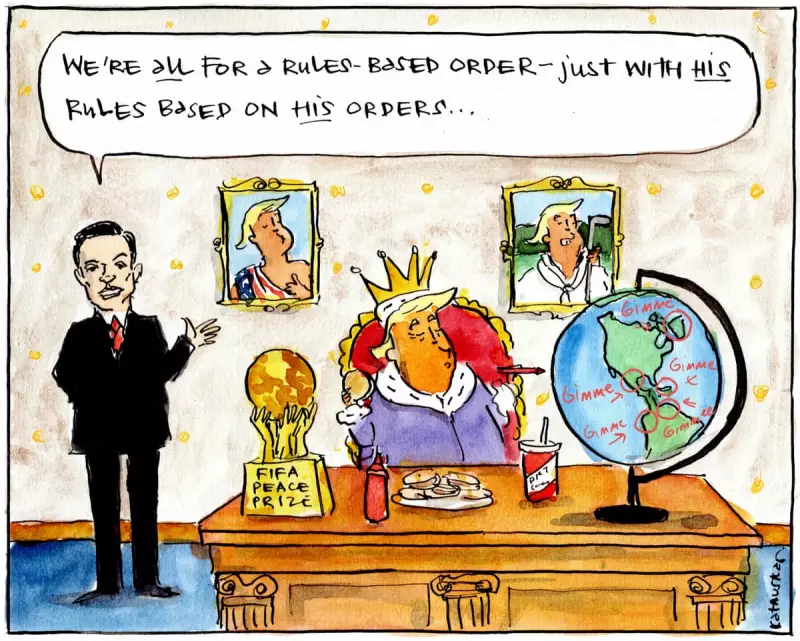
Observers note that Trump's strategy often appears to be a deliberate testing of limits rather than simple ignorance of the law. His actions and public statements frequently centre on a maximalist interpretation of executive power and personal immunity. This is not merely about breaking rules but about attempting to redefine them, arguing that certain laws and oversight mechanisms simply do not apply to a sitting, or former, president.
This doctrine manifests in several ways: through aggressive litigation designed to delay proceedings, public attacks on judicial figures and the justice system itself, and a consistent narrative of being targeted by a partisan "deep state." The tactic extends beyond personal defence, seeking to reshape public perception of the legal process as inherently political and illegitimate when applied to him.

A Calculated Challenge to Established Norms
The central issue is whether this constitutes true lawlessness or a form of being "a law unto himself." The distinction is crucial. Pure lawlessness suggests chaos and a lack of strategy. In contrast, operating as a law unto oneself implies creating a parallel framework where traditional accountability is void, replaced by a personal code justified by a unique position or mandate.
Trump's approach has involved systematically challenging subpoenas, invoking executive privilege broadly, and questioning the authority of courts and Congress to investigate a president. This is a calculated legal and political manoeuvre, leveraging the slow pace of the judicial system and the fierce loyalty of his base to create a protective shield. It is a form of conflict where the process itself becomes the battlefield.
Implications for Democracy and the Rule of Law
The long-term consequences of this strategy are profound. It tests the resilience of institutions designed to check power. When a prominent figure consistently frames legal accountability as persecution, it can erode public trust in the pillars of democracy itself. The rule of law relies on a shared belief in its fairness and equal application; undermining that belief is a central effect of this playbook.
Furthermore, it sets a potentially dangerous precedent for future leaders. If the strategy is seen to be successful—either in avoiding legal consequences or in solidifying political support—it may become a template, normalising behaviour that previous generations would have considered beyond the pale. The debate, therefore, is not just about one individual but about the future contours of presidential power and legal accountability in the United States.
Ultimately, framing Trump simply as "lawless" may miss the strategic, albeit norm-shattering, nature of his actions. He appears less as an anarchist disregarding all structure and more as a figure attempting to impose his own structure—one where his personal and political interests are elevated above established legal frameworks. This makes the challenge to democratic institutions more complex and potentially more enduring.