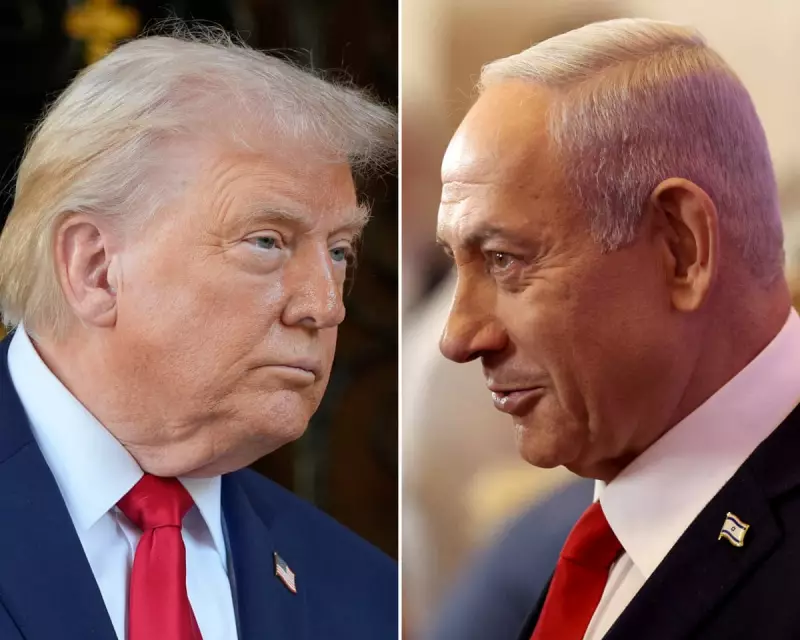
As the new year begins, a pressing hope emerges from the political turmoil of recent times: that 2026 might finally be the year when leaders who have inflicted profound damage on their nations are held to account. This is not a prediction, but a plea for justice and democratic correction. The figures at the forefront of this call are Donald Trump and Benjamin Netanyahu, both of whom face pivotal electoral tests that could redefine their power.
The American Crucible: Trump's Midterm Judgment
All eyes are on the United States, where the midterm elections on 3 November 2026 will serve as a de facto referendum on Donald Trump's second presidency. Although his name won't be on the ballot, the outcome will deliver a stark verdict on his return to power. A significant defeat for his Republican party in the House of Representatives would shatter the aura of invincibility he has cultivated and render him a lame duck, stripped of his ability to push legislation through a hostile Congress.
More importantly, a Democratic-controlled House would be empowered to launch serious scrutiny. Armed with subpoena power, investigations could delve into the economic impact of Trump's tariffs and the patterns of corruption alleged to have marked his administration. The spectre of a third impeachment trial would also loom. Fearing this reckoning, Trump is already working to distort the electoral landscape through gerrymandering and measures to suppress votes in Democratic areas, setting the stage for a fierce battle over the very mechanisms of American democracy this year.

Netanyahu's Fight for Political Survival
Across the Atlantic, a parallel drama is unfolding. Benjamin Netanyahu, Israel's perennial prime minister, faces an election due by October 2026 that could finally end his political dominance. For many Israelis, the vote represents a long-overdue opportunity to hold him accountable for the catastrophic security failures of 7 October 2023, the deadliest day in the nation's history. While global attention focuses on the war in Gaza, domestic anger centres on the complacency that left communities exposed to Hamas's attack.
Netanyahu has steadfastly refused to accept responsibility or establish an independent commission of inquiry. With corruption charges still pending against him, remaining in office is intrinsically linked to staying out of prison. Consequently, he is expected to pull out all the stops to secure victory, continuing his protracted assault on Israel's judiciary and independent media. Campaigners within Israel warn this election may be the last chance to salvage core democratic institutions from his sustained attacks.
A Wider Demand for Accountability
The demand for a reckoning extends beyond these two figures. In Iran, renewed protests against the 47-year-old regime have been met with brutal force, though signs suggest some security forces are growing reluctant to crack down. The population's fury at economic pain and the regime's regional adventurism continues to simmer, with scholar Ali Ansari noting that "sooner or later something will have to give."
In Europe, Hungary's Viktor Orbán also faces voters this year, while in Britain, the Labour government braces for potentially punishing local elections. And while it seems unlikely, there are those who argue that Nigel Farage should be called to account for his central role in the Brexit referendum, which marks its tumultuous tenth anniversary in June 2026.
The coming months will test the resilience of democratic systems. The central question is whether the ballot box, or street-level pressure, can successfully deliver accountability to leaders accused of causing deep harm. For the sake of their nations and the international order, 2026 must be the year that question is answered.