
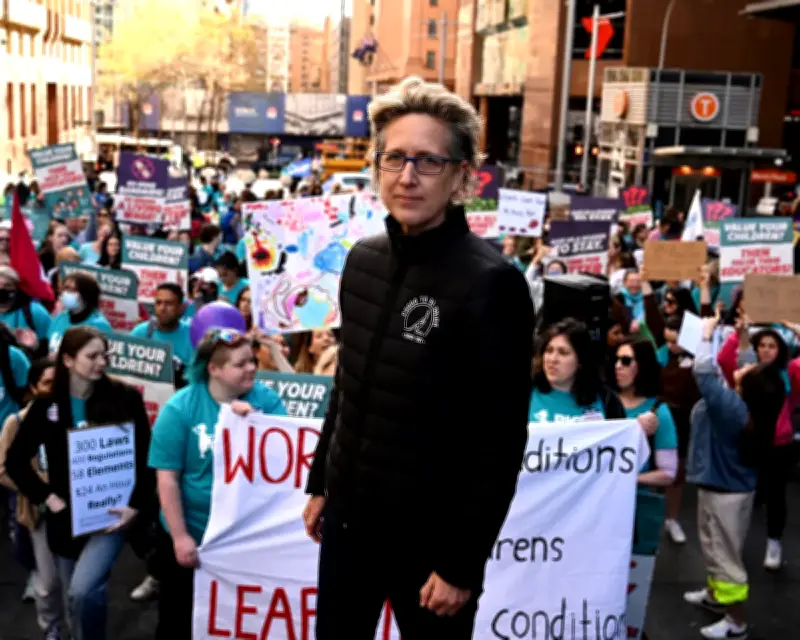
Sally McManus, the secretary of the Australian Council of Trade Unions (ACTU), is stepping down after nine and a half years in the role, citing the relentless nature of the job and a desire to take a break. In her final weeks, she plans to focus on personal pursuits, including birdwatching and undergoing surgery for a cochlear implant to address hearing loss.
A Decade of Industrial Change
McManus, who has been a union official for 33 years and a leader for 22, said the decision to leave was not made lightly. "It's been 33 years as a union official, 22 of them as a leader, and nine and a half as ACTU secretary. It never stops," she told Guardian Australia.
Her tenure has been marked by significant industrial reforms, including campaigns for same job, same pay protections, the right to disconnect, wage theft criminalisation, and minimum standards for gig economy workers. She has worked with three prime ministers—Turnbull, Morrison, and Albanese—and navigated the economic disruption of the Covid-19 pandemic.
McManus and ACTU president Michele O'Neil, who also announced her departure, were described by Prime Minister Anthony Albanese as "giants of the labour movement." They were the first all-female leadership team in the ACTU's 99-year history.
Challenges and Threats
McManus has faced intense criticism since her election in March 2017, including death threats and online abuse. She noted that the situation has worsened significantly, influenced by changes on social media platforms like X. "I would say it has become 10 times, maybe 20 times, worse," she said, attributing the increase to the monetisation of social media.
Despite the challenges, McManus highlighted victories such as wage rises for low-paid workers, support for women and children affected by domestic violence, and strengthening early childhood education and aged care sectors. She also pointed to the recent 4.75% pay rise for about 3 million workers on the minimum wage, as determined by the Fair Work Commission.
Future Concerns and Priorities
McManus expressed concerns about the future of work, particularly the impact of artificial intelligence on employee rights. She advocates for a four-day work week, suggesting that if AI replaces jobs, reducing working hours without loss of pay could be a viable solution. "The way to do that is to cut working hours with no loss of pay … and that's something that we could actually do in Australia," she said.
She also identified the growing political support for Pauline Hanson and One Nation as a priority for the labour movement, warning that the party would end unfair dismissal laws if it gained power.
Regarding the CFMEU, McManus stated that some leaders had betrayed union values. "Somewhere along the line, it's hard to actually know when, the previous leaders of the CFMEU in at least three of the states completely walked away from union values," she said. She emphasised that the rest of the union movement has drawn a clear line against corruption and violence.
Personal Plans and Succession
McManus, 55, has no plans to enter politics. Instead, she will have surgery for a cochlear implant, a decision she does not take lightly. "It takes some significant attention in terms of rehab, and I want to give myself the best chance of getting as much of my hearing back as I can," she explained.
Melissa Donnelly, national secretary of the Community and Public Sector Union, will succeed McManus as ACTU secretary on 31 August.




