
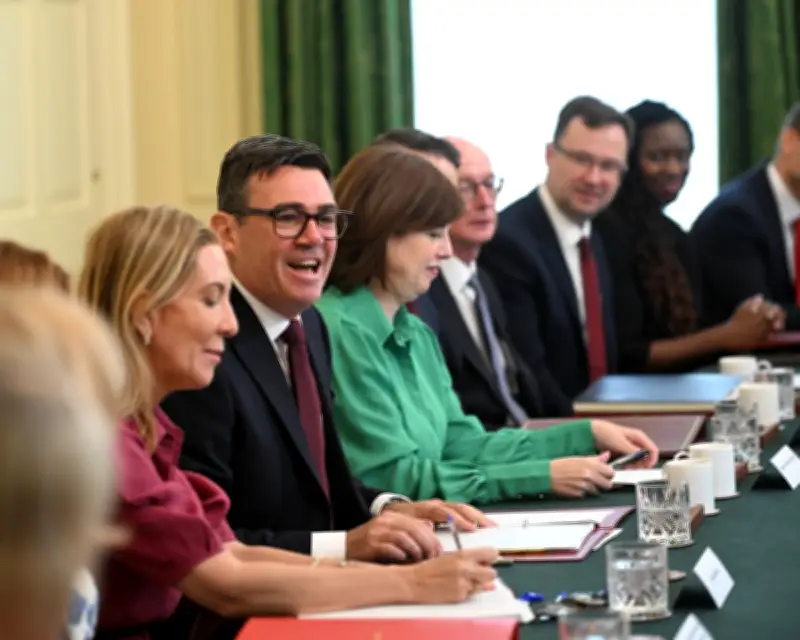
Andy Burnham held his first cabinet meeting on Tuesday, with a team that has sparked debate about social mobility and representation. While the prime minister's top ministers should be competent, the question remains: do they need to be representative too?
Cabinet Makeup: A Mixed Picture
More than a fifth of Burnham's cabinet attended private schools for most of their education, a rise from the previous government under Keir Starmer, where every senior minister went to a state school. Notably, 54% of ministers went to Oxford or Cambridge, up from 29% under Starmer, compared to just 1% nationally. However, half of the cabinet represent northern constituencies, and for the first time, the cabinet has equal numbers of women and men.
One cabinet member, Energy Secretary Miatta Fahnbulleh, was privately educated after arriving in Britain as an asylum seeker from Liberia in 1986. Another, AI Minister Kanishka Narayan, attended Eton on a full scholarship after moving from India to Cardiff at age 12, where his family ran a petrol station.
Does Background Matter?
Nick Harrison, chief executive of the Sutton Trust, argues that background matters: “Of course, the background of the cabinet matters. If they’re meant to be representing the country, they should be representative of the country. We would absolutely say that you get better decisions if you have a wide range of views, perspectives and backgrounds around the table.”
Sam Friedman, a sociology professor at the London School of Economics, notes that the cabinet's makeup is symbolic of wider access to power. His research shows that pupils of the nine most exclusive private schools are 52 times more likely to reach elite positions than those from other schools. Oxbridge graduates born in the 1960s and early 1970s were more than 250 times more likely to reach the British elite than non-graduates.
Beyond the Cabinet: The Elite Iceberg
Friedman argues that the cabinet is just the tip of an iceberg of powerbrokers, where elite backgrounds shape government decisions. He says, “Those who are brought up in more privileged backgrounds tend to tilt to the right,” and that ministers interact with civil servants and business leaders who also come from elite backgrounds.
Lee Elliot Major, a professor of social mobility at the University of Exeter, cautions that “counting private schools and Oxbridge degrees only tells part of the story. The real challenge is whether ministers understand how Britain’s contemporary opportunity system now works.” He highlights that today's divides are shaped by wealth, place, networks, and hidden cultural codes.
The Bigger Challenge
Major emphasizes that the test for the government is not whether ministers are socially mobile, but whether they can create a society where more people have genuine opportunities to flourish. Dr. Daniel Evans of Swansea University agrees, stating, “The origin story [of politicians] is a bit of a red herring. The bigger story is the total collapse of the graduate premium and the debt that students are getting into in university and how brutal the job market is for graduates.”




